Part I: Will Linscott
The day of our final studio review has come, and though we will be presenting our projects in front of professionals who have dedicated significant portions of their lives to the development of Nieuw Land Nationaal Park, our project site, the mood on the train to Lelystad, where our review will take place, is calm. Our professors have reserved a room in the Batavia harbor museum, adjacent to the harbor from which we set sail on our week of site investigation from a sailboat. The museum itself is interesting, a horizontal oval cylinder that sticks out in the low horizon of Lelystad. Inside, once all four groups have their boards taped to the walls of the room, everyone sits and the presentation begins.
All four groups had similar scopes, most working on the Oostvaardersplassen section of the national park as it is by far the largest as well as the central piece. The ideas and main objectives, however, varied greatly from presentation to presentation. While some groups focused primarily on programming and the experience of moving through and resting in space, other groups took a much more ecological approach, adding flood gates or ecological corridors on the outside of the dike wall, a piece of the park that seems largely ignored.
The presentations were all well received, with our main critics, Jan Wouter Beerekamp and Tom Oslund, offering a wide array of ideas of how projects could potentially move forward, or how they could be adjusted to even better fulfill their goals.
As the presentations came to a close, Jan Wouter asked the group what really stood out to us about our time in Flevoland and our experience working on our projects. One main theme was that the Dutch definition of the term “nature.” Because the Dutch landscape has been so severely altered and redesigned, nature in the eyes of the Dutch is an open ended function, with humans almost always playing a role in its development, rather than the unilateral perception of what nature is and has to be in many of the national parks of the U.S. Our group agreed that we would keep this perspective in mind moving forward, as we are well into the Anthropocene, and there is no going back.
Part II: Mattie Wong
This project has been unlike other projects we have had so far in school; mainly, in this project we have been creating and presenting ideas for the people who have the power to actually use those ideas. This close cooperation with clients has helped us hone in on how we interact, synthesis, and create good and productive relationships with those we are designing for.
Our projects today were the result of teamwork and critique from Jan, a retired landscape architect from the area, Perry, an ecologist with the Oostvaardersplassen, and from Mayke, an urban planner from Eindhoven. These separate perspectives were important to hear from, however, we definitely got our first dose of frustration about numerous and conflicting goals. In this sense, it was important for every group to keep their main concept in mind in order to organize priorities.
Each project had a slightly different priority as its main focus. One group focused on simple ecological interventions that could be started immediately and then built upon, another on the idea of various levels of exchange between the Oostvaardersplassen and the Markermeer, a third on the experience of the visitor throughout the park by all modes of transportation, and the last on questioning the current placement of transportation options to optimize ecology.
Each group found themselves circling around, doubling back, and at times scraping work for the week after feedback from clients. It seems, however, that all members of the teams were able to rely on each other well, so that no project screamed the work of one individual. In this way, we were able to create intricate projects that helped start the conversation on what do to connect all the disparate parts of the soon-to-be Nationaal Park Nieuw Lands
Images: 1-4; Alexis Kautzman, 5-7; Dakota Carlson
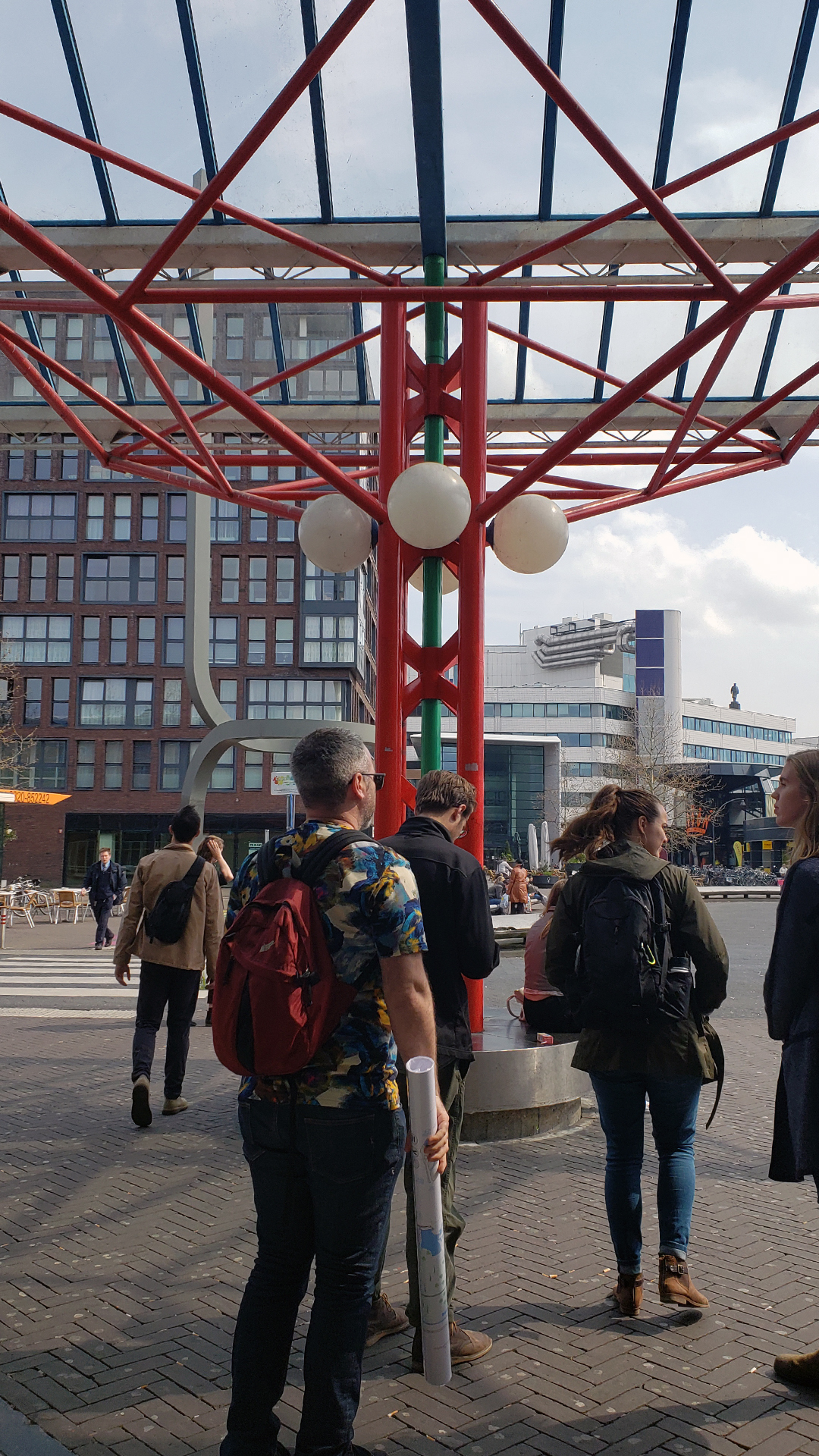
Group waiting for the bus outside the Lelystad Station before the final project presentation. This train station has a colorful red support structure system making it one of the most unique stations in the area.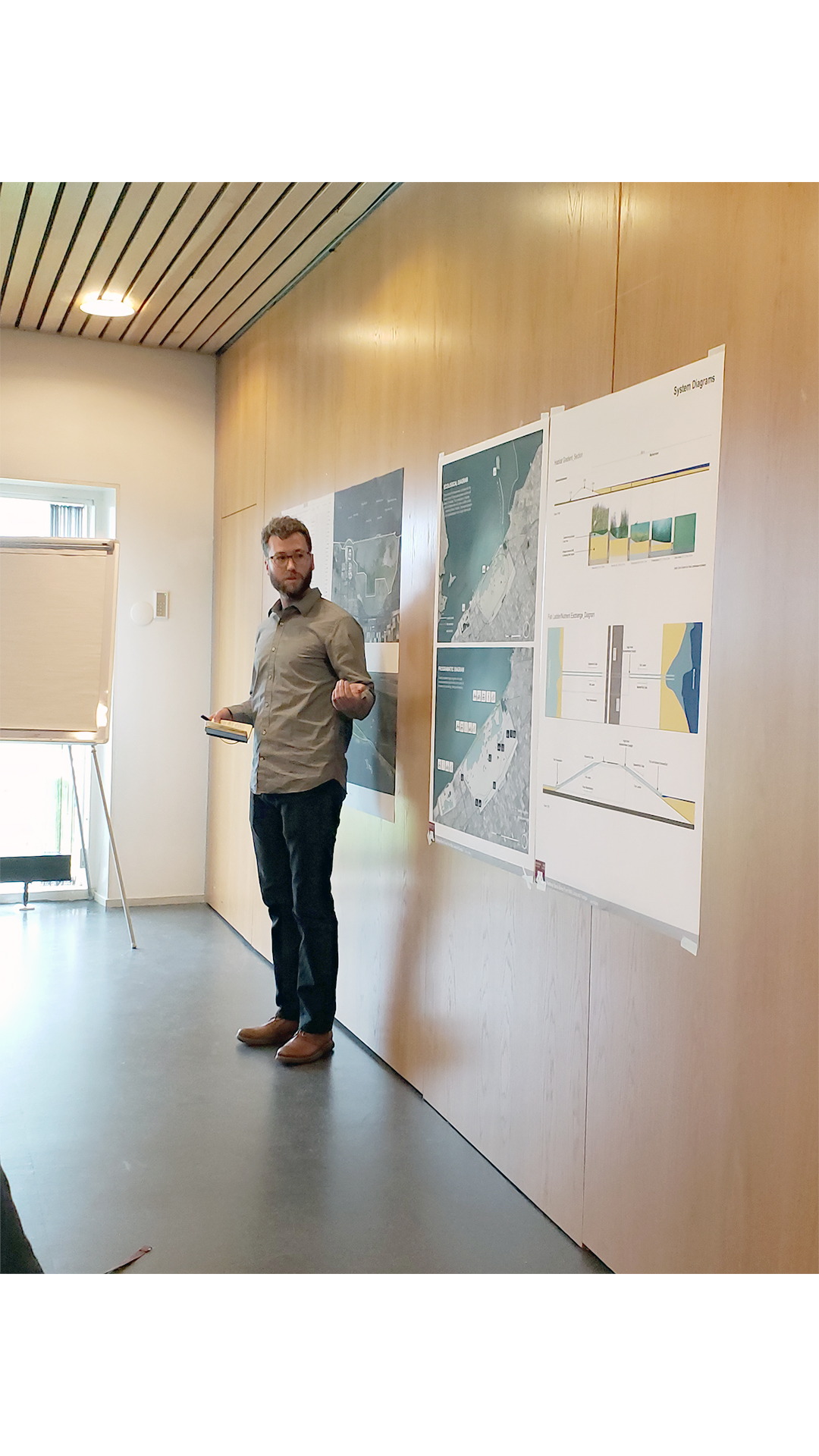
Will Linscott explaining part of his groups project addressing their solution to improve the ecological gradient along the dike in Oostvaardersplassen.
Before presentations started, everyone enjoyed some delicious pie, coffee, and tea. Pictured is Nikolai taking advantage of the opportunity.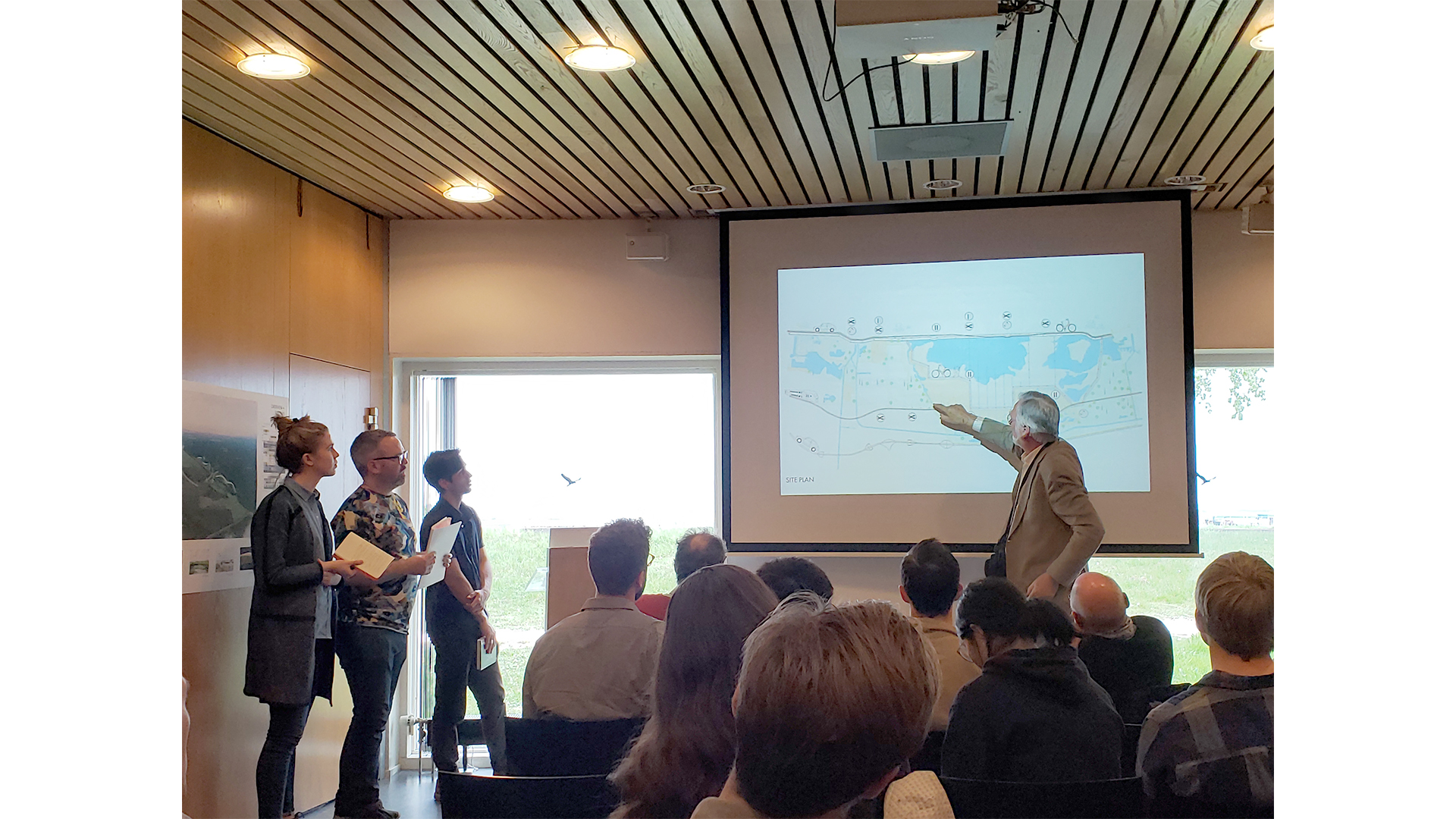
After each group’s 5 minute presentation, 30 minutes of discussion was given for reviewers and students to explore their projects further. Here we can see Jan explaining some possibilities for consideration to Sydney, Nikolai, and Matthew.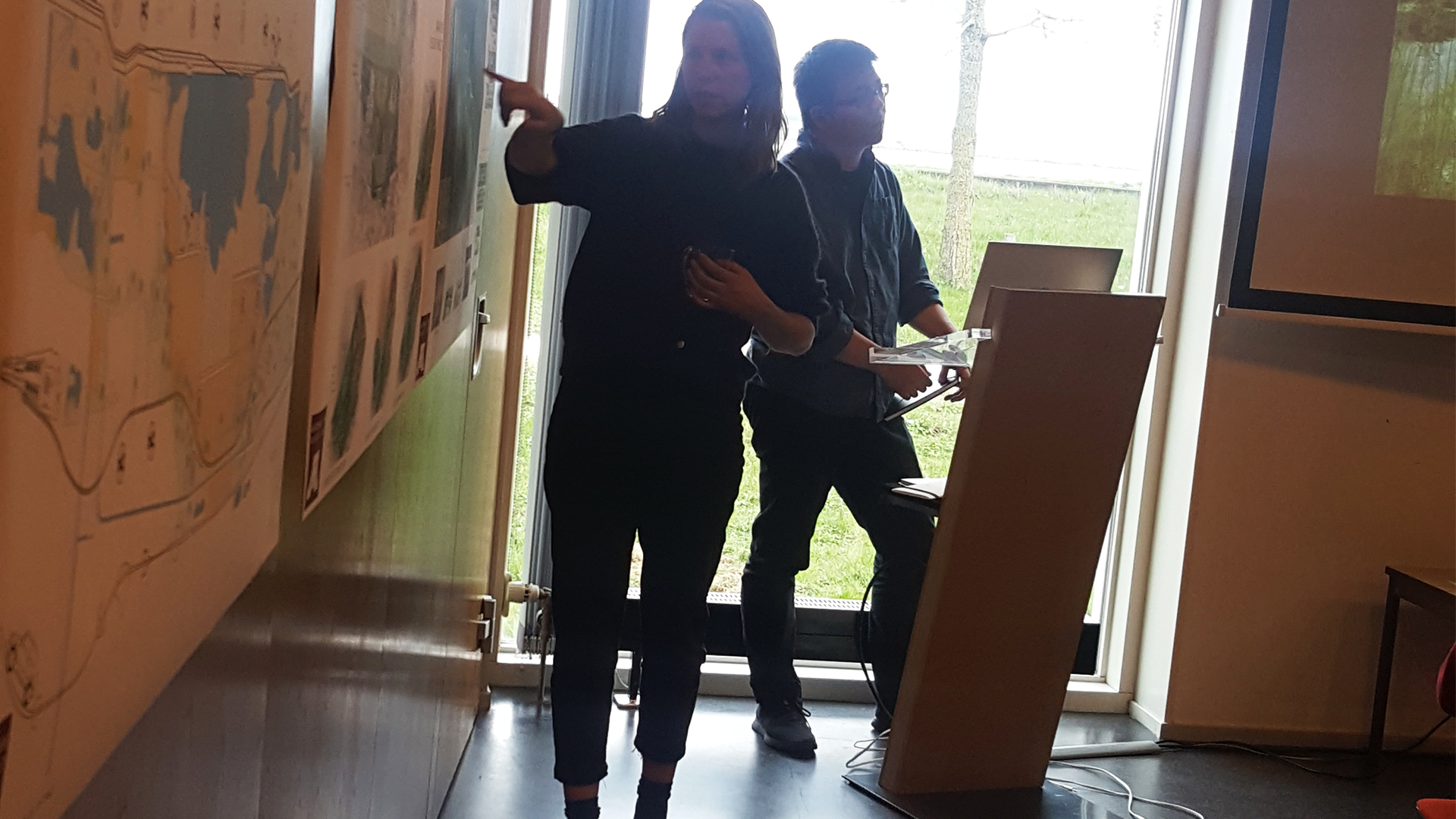
Mattie clarifying where the Oostvaardersplassen’s dike interventions are taking place, that have a focus of creating ecosystems based on creating bird habitat.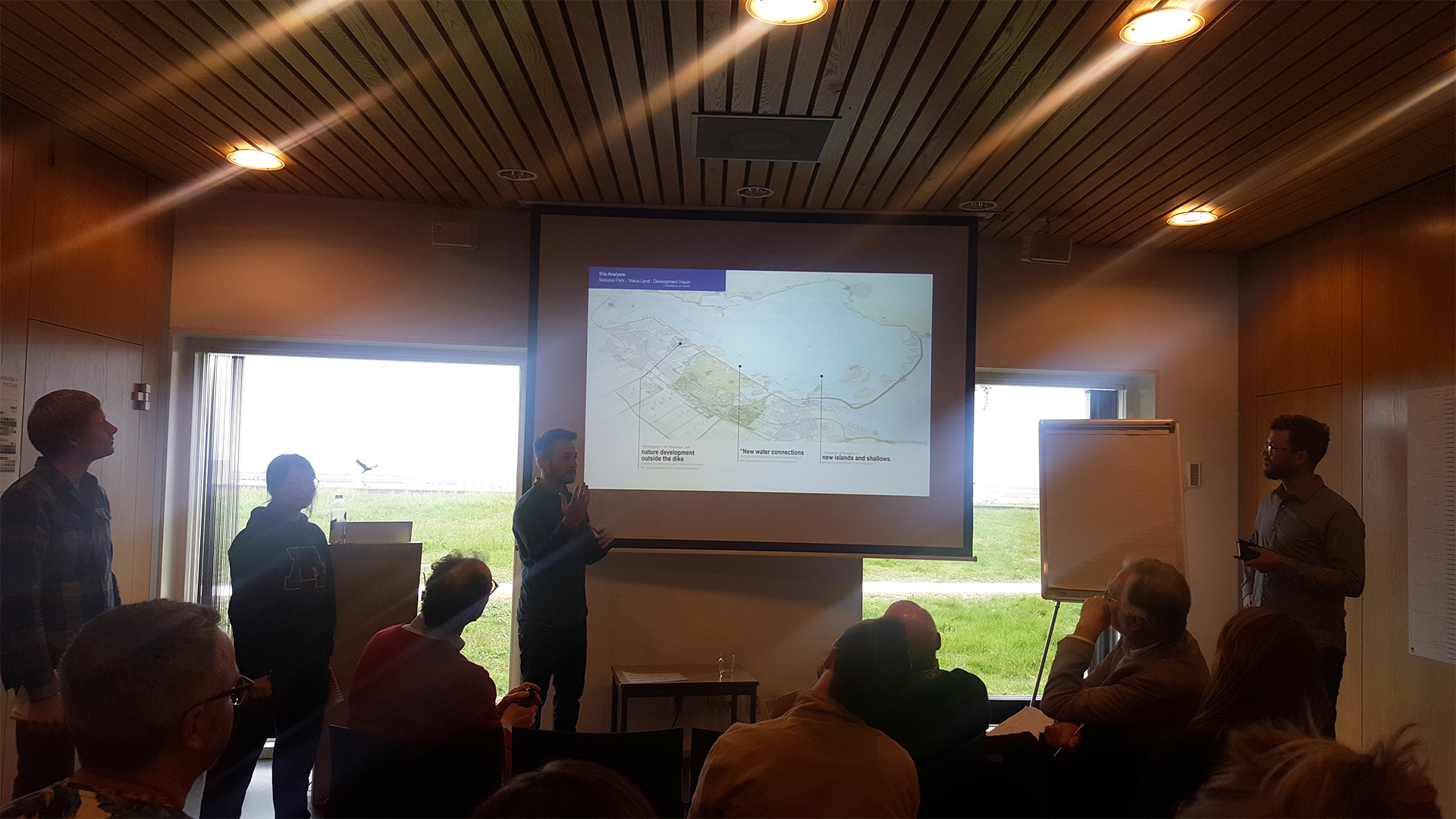
Andrew presenting the locations of his groups interventions along the dike between Almere and Lelystad that focuses on creating self forming ecosystems.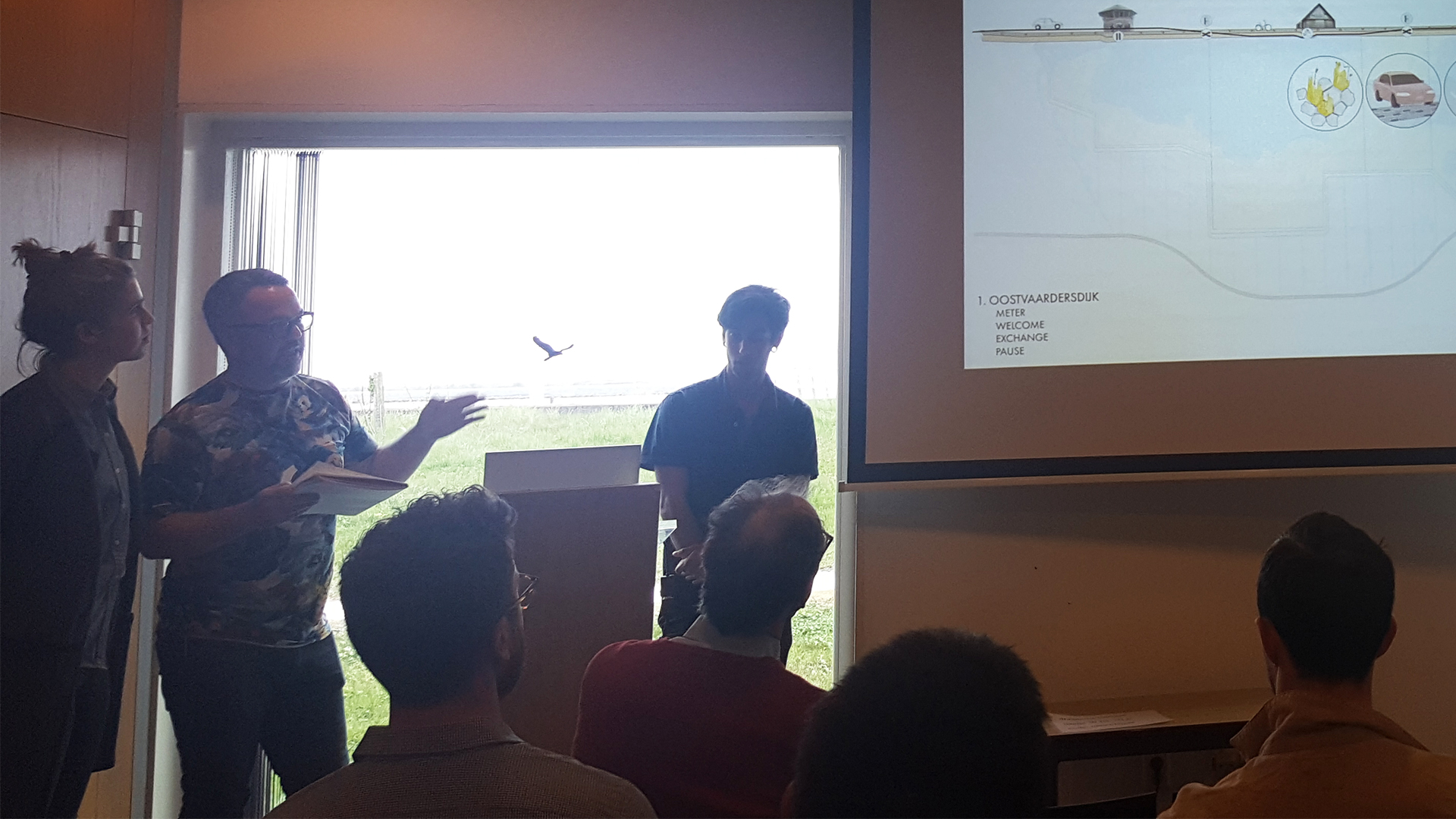
Matthew further explaining the intent of his groups design of further framing the long horizon through the existing transportation modes around the Oostvaardersplassen.
 Cities on Water 2019