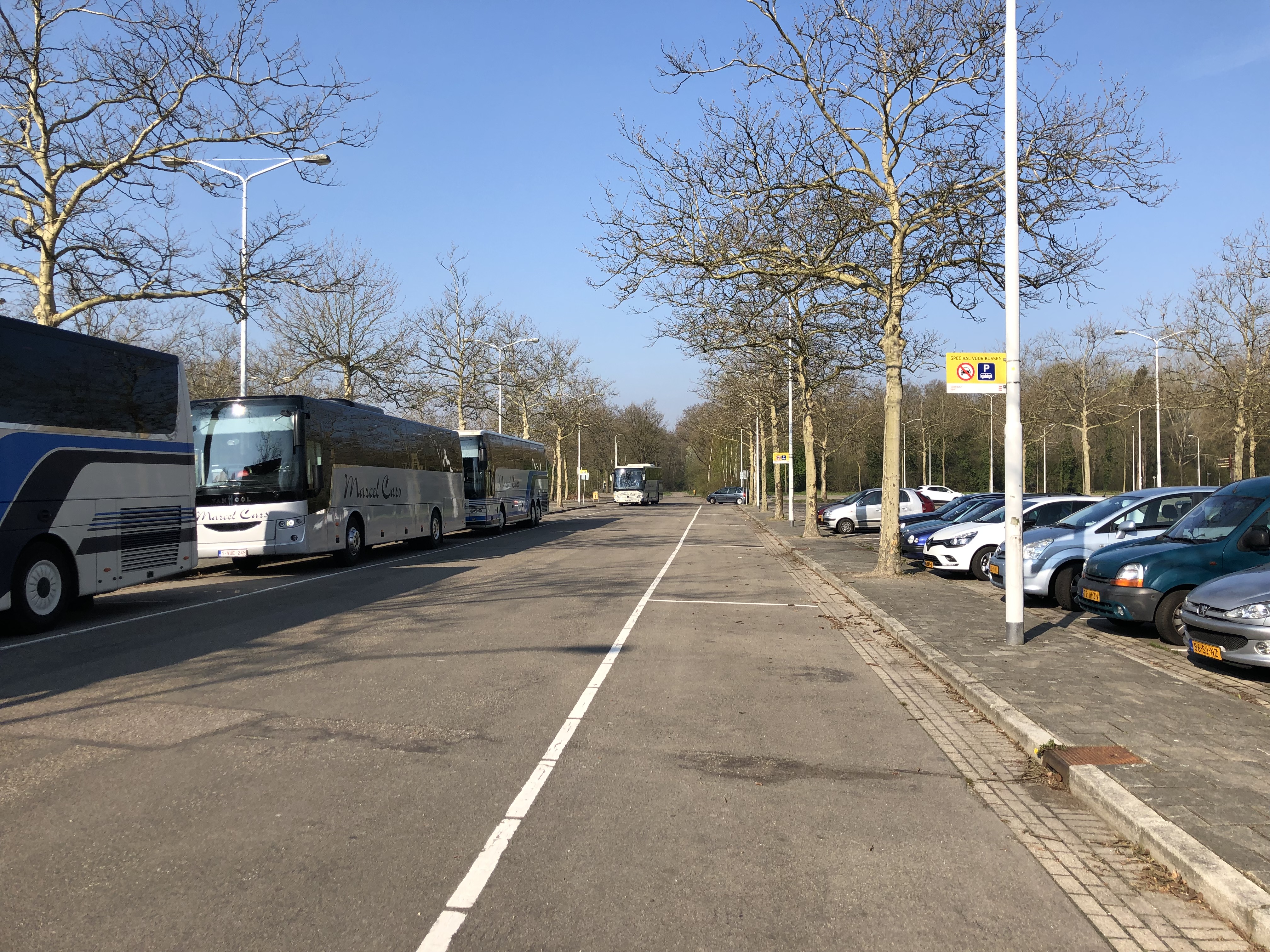
This photo is of the parking lot that our group was working on. We were envisioning a more soft scape surface as the parking surface, one of grass that could be mown down as needed for the amount of cars that would be occupying the space.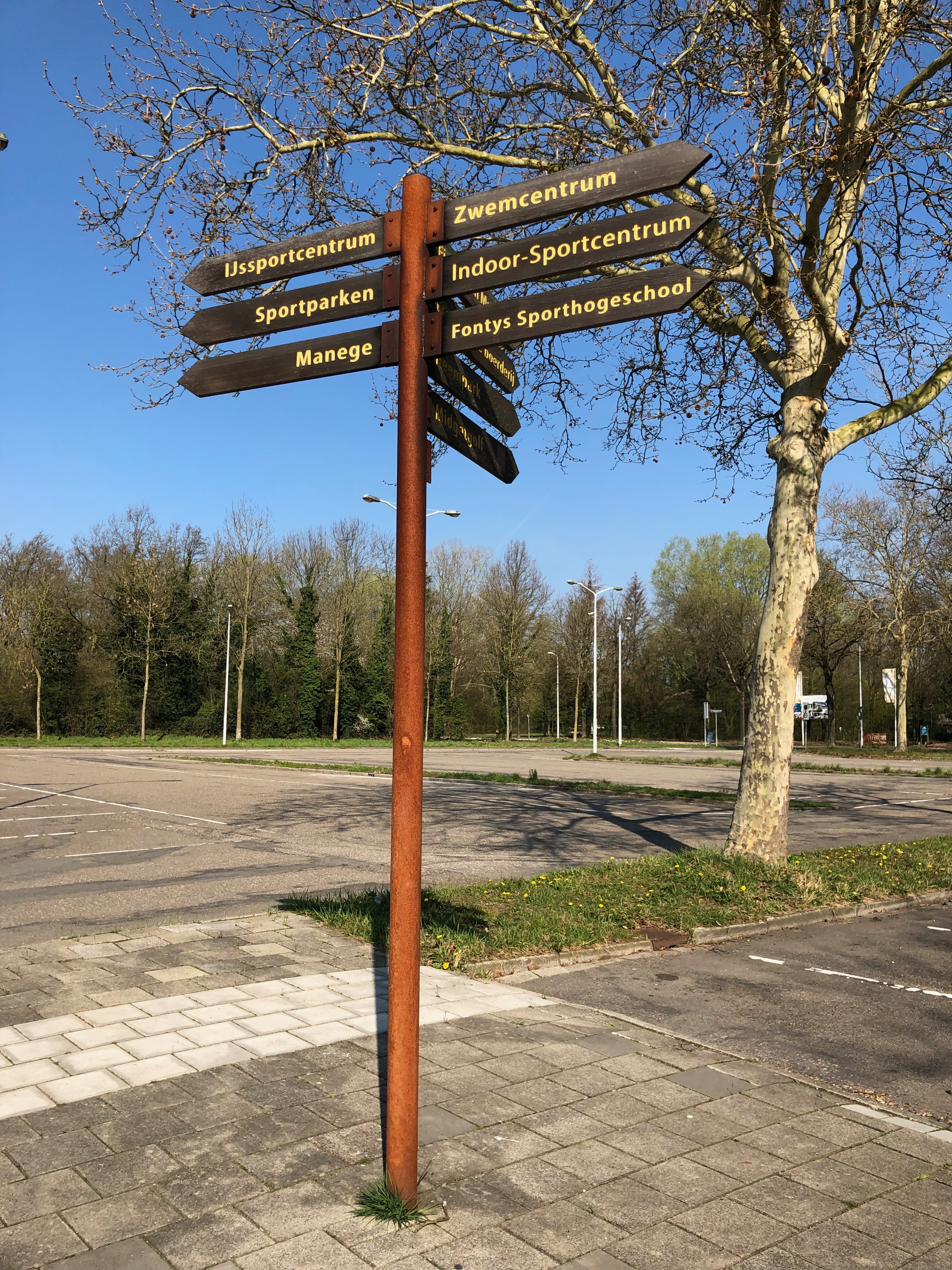
This is a photo of one of the signs in the parking lot. Our scheme here was re-envisioning the signage around our site to make it more cohesive.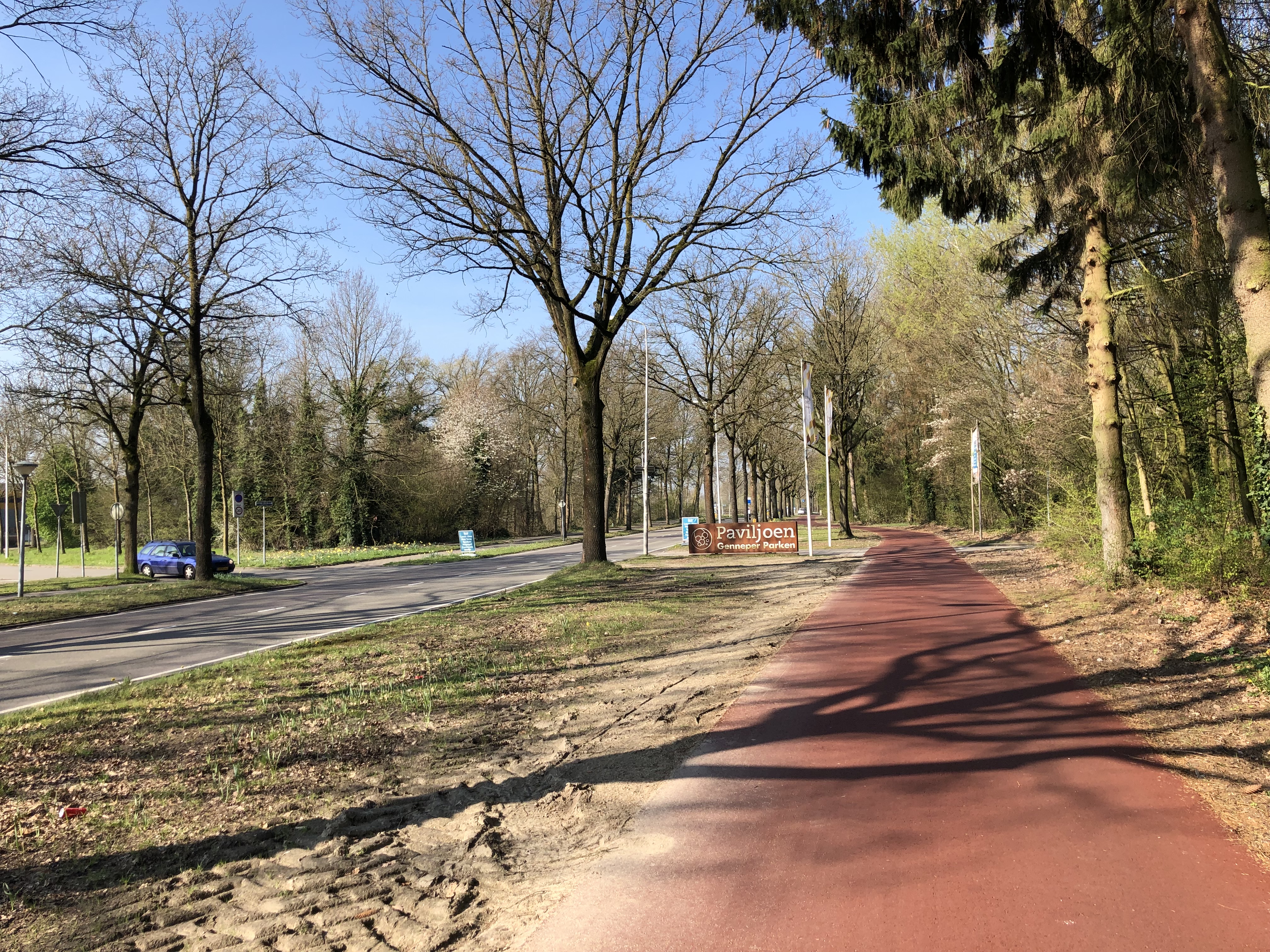
This image was taken at the entrance of a family gathering center.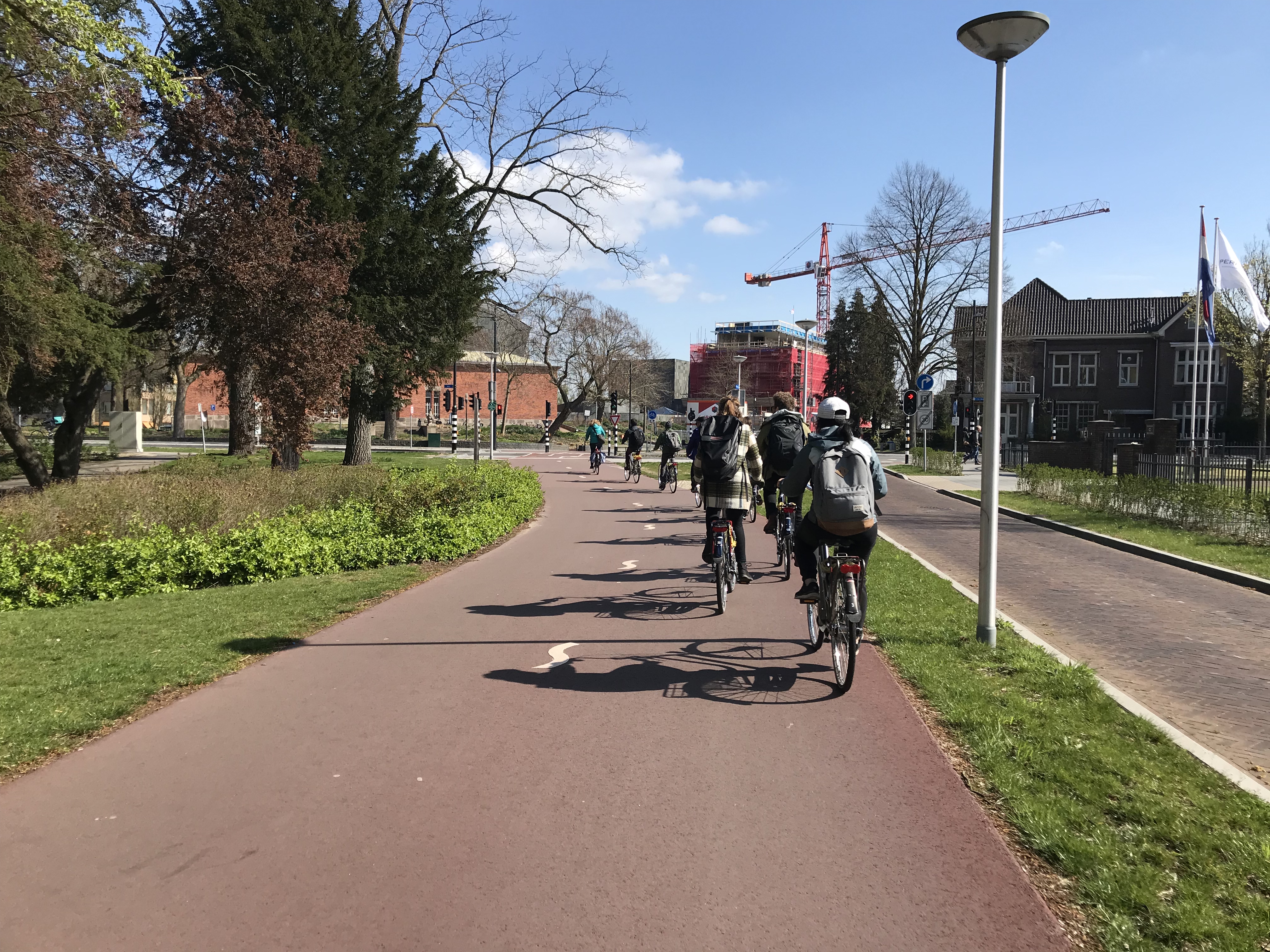
Bike ride in Eindhoven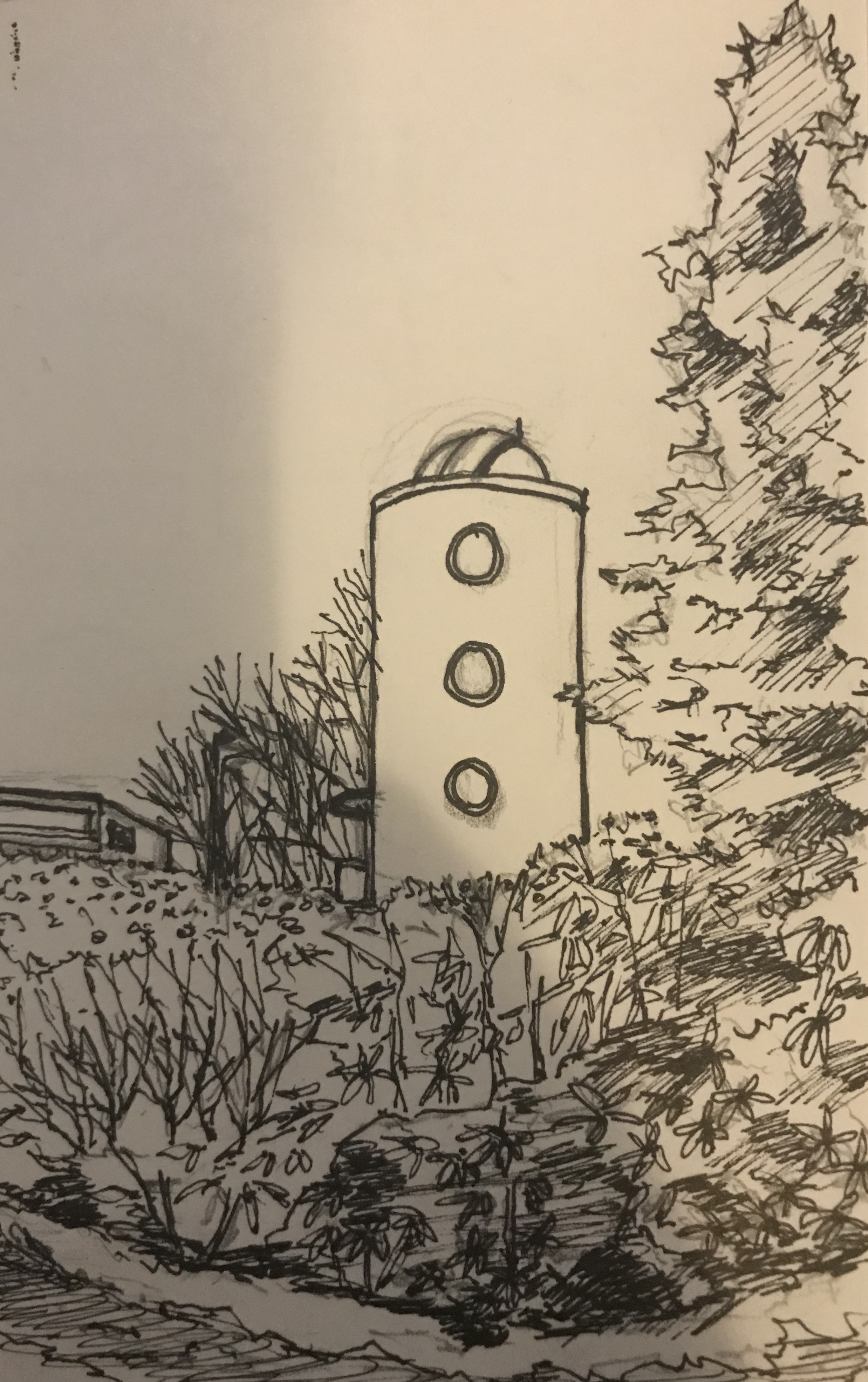
Philips Observatory in Stadswandel Park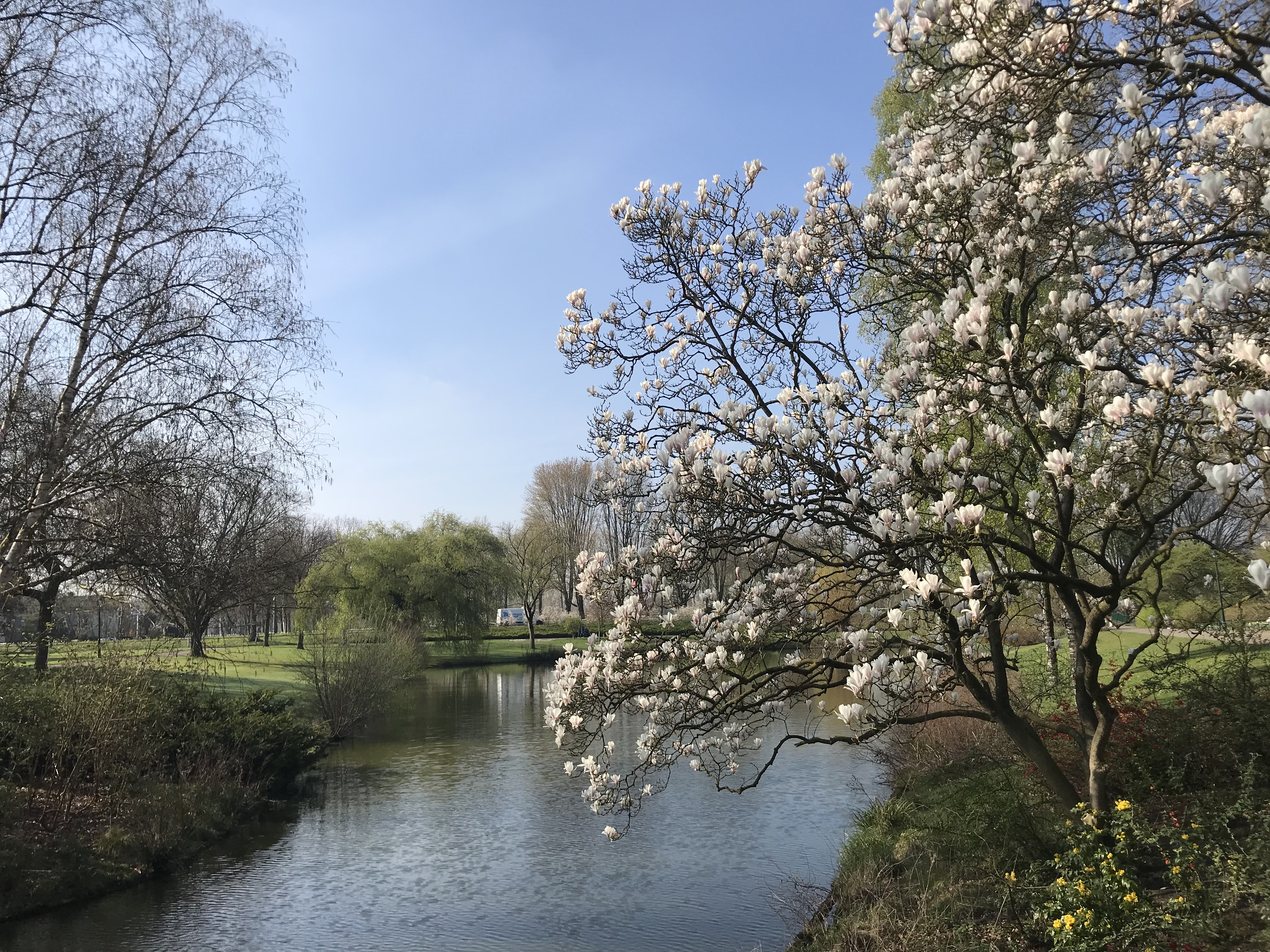
Midsummer Park
Images by: Evan Furr, Jiangchen Zhu
Part 1: Andrew Beck
Today we participated in an accelerated design charette to help the city of Eindhoven brainstorm and visualize solutions to connectivity issues in Genneper Park. The day began with a bike ride through the streets of Eindhoven. Having cautiously avoided being hit by the streams of bicycles that careen around Utrecht over the past few weeks, it was a nice to join the stream and experience Dutch city streets the way the Dutch do. With only a few mishaps and almost-collisions, we arrived at the outskirts of Genneper Park.
The park is quite large and defies simple definition and explanation. The river that connects the space moves through sporting areas, a reconstructed prehistoric and medieval town, recreational walking and bike paths, and agricultural and husbandry farms. Additionally, adjacent to the space is an innovation and incubation campus known as the High Tech Campus and concentrated residential neighborhood. One of the primary challenges that the park faces is the disrupted flow of the space caused by the roads that transect the space. Additionally, the park could benefit from greater physical and programmatic connections with the neighboring residential and commercial spaces.
To tackle these issues quickly, we divided into four groups charged with addressing specific locations of disruption and disconnection. Once divided, each group explored their space, taking notes and making sketches to prepare for the design challenge in the afternoon.
Part 2: Nikolai Fjelstad DeSantiago
Our only full day in Eindhoven was spent doing a design charrette for the city. There were four locations around Genneper Park that the city noticed some need for intervention. The location my group given was location number one by the High Tech Campus and the Southwest side of Genneper Park. There were two spots we were looking at this location, both dealing with crossing a busy road and bicycle/moped traffic. Our problem also dealt with creating a connection between the High Tech Campus and the park across the street, and making it feel more permeable rather than two separate private spaces.
Our initial site analysis gave us a lot of information about how different the park was compared to the campus. The park was a large strip of open green turf divided by a small canal that ran alongside the bike path and a straight line of trees that boxed it all together like a pastoral field. It was hard to distinguish what areas of the park were public or private as the park was surrounded by barbed wire, with one main entrance and other closed off areas which had large horses. Across the road at the campus, the space was drastically different, with a purposefully planted, dense patch of birch trees that completely engulfed the main entrance area. Before the buildings were built, they planted all the trees and removed them as needed. This allowed the trees to mature and create a sense of space prior to construction. The rest of the campus was fairly open with many places to sit and the trees were in clusters or alleys next to the sidewalk.
Our proposal was to close this gap and to create a more permeable feeling from the park to the campus. One of the aspects we chose to focus on was to create a more go-to space rather than a go-through space in the main entrance of the campus. Our idea to execute this was to slow down traffic by making the streets into a one-way lane with the option to widen it to two-ways. By doing this, we have created an extra space for street parking mainly for food trucks. For the park, we wanted to create a better circulation network as there was only one entrance. Having more than one entry point would make the park feel more welcoming rather than barbed wires surrounding the whole greenspace. Along with a meandering path through the park, we wanted to also create a strong contrast between the species of trees from the adjacent birch forest on the campus side of the road. We chose Scotch Pine trees to create the contrasting forest as there were many in the surrounding area. By using evergreens, spaces that were not planted too heavily could be used as outdoor rooms, quiet spaces and places to go for a walking meeting.
 Cities on Water 2019