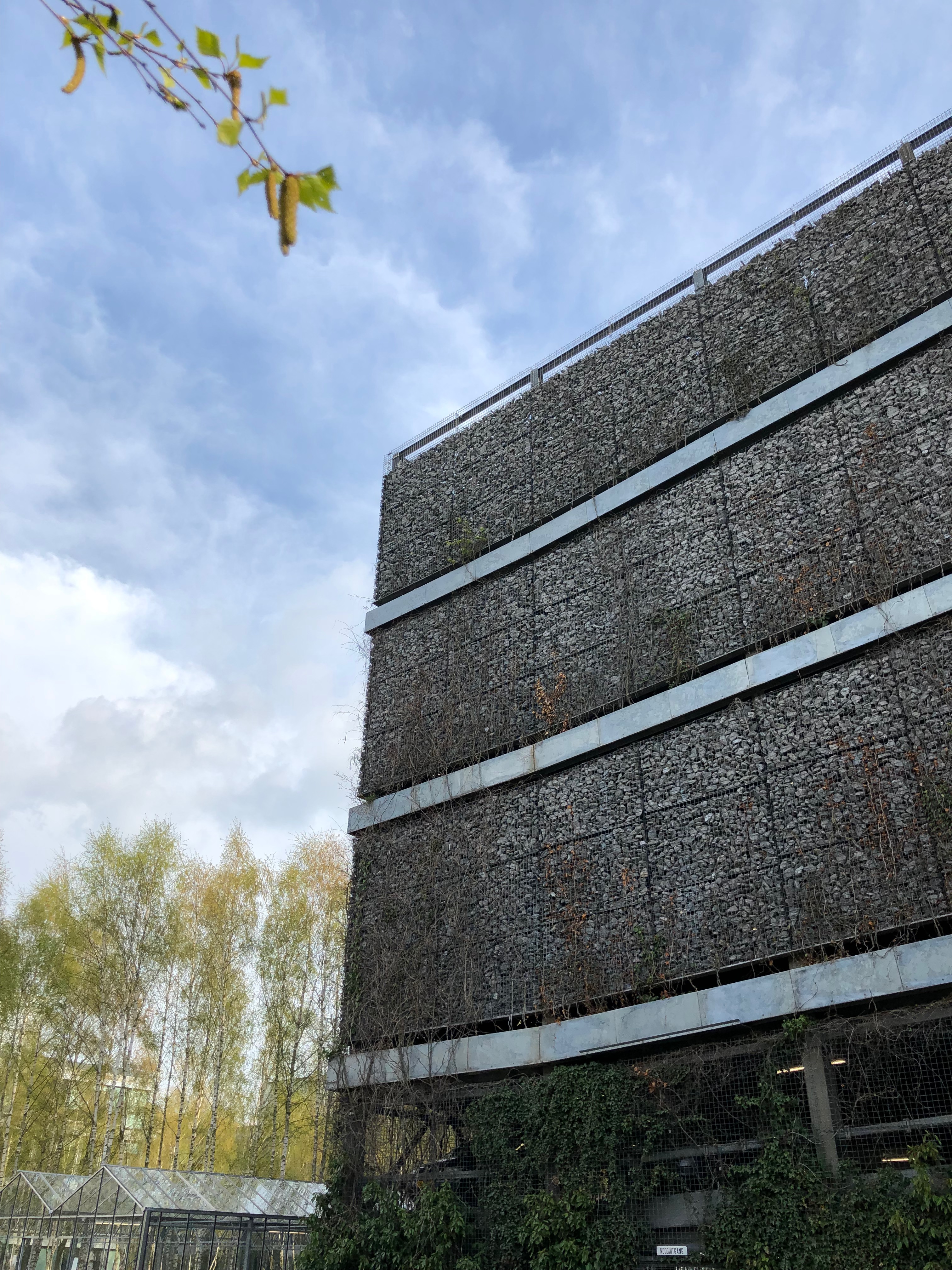
Compact parking garages on the High Tech campus. The parking garages are covered in vines to fit with the green surroundings.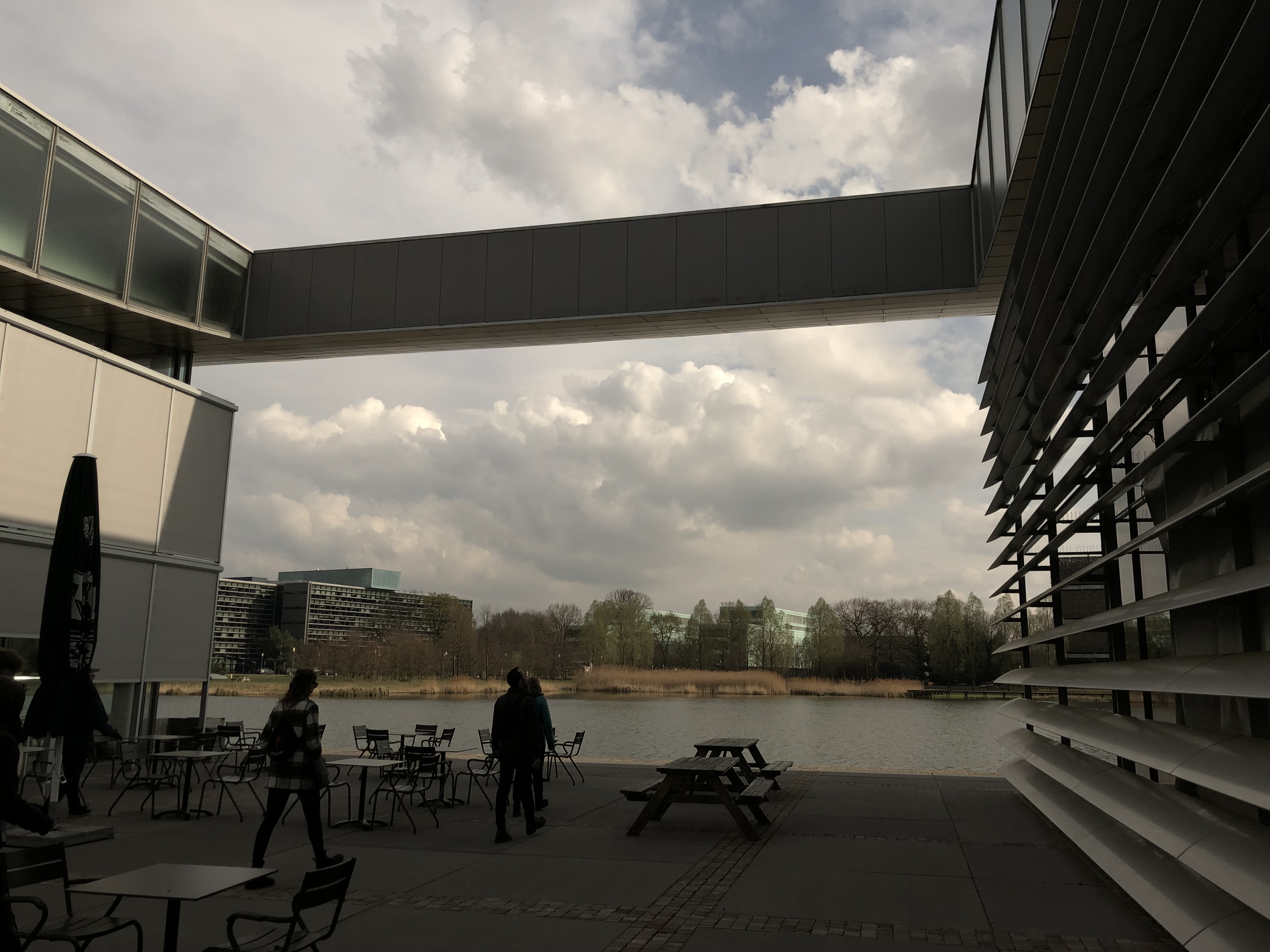
A community meeting point along the main strip of restaurants and collaboration offices at the High Tech Campus. The buildings face open water and marshland.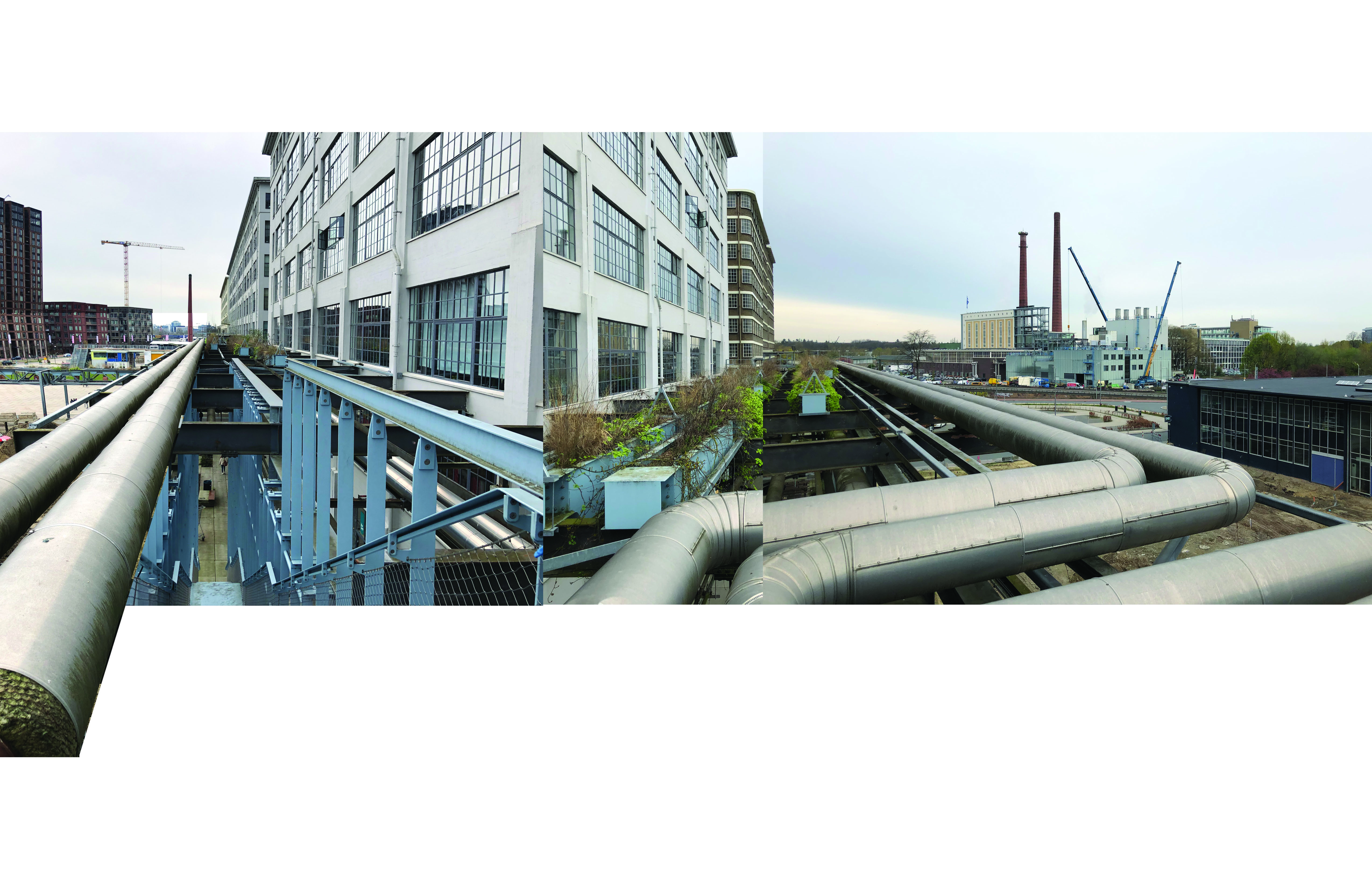
Preservation and redevelopment of Strijp S industrial buildings. The revitalization includes an elevated path and lookout points, retrofitted infrastructure used as planting beds, and mixed use shopping, office space, and residential.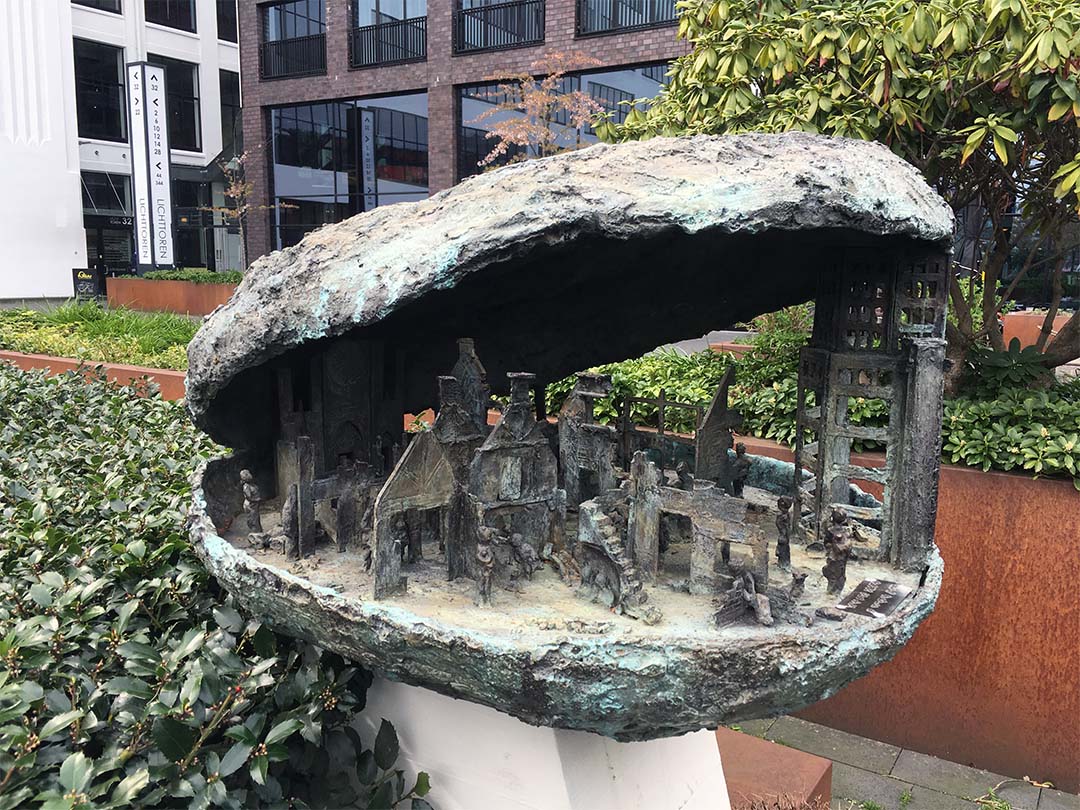
Operation Oyster- A memorial to remember the bombing raids of Eindhoven during WW2.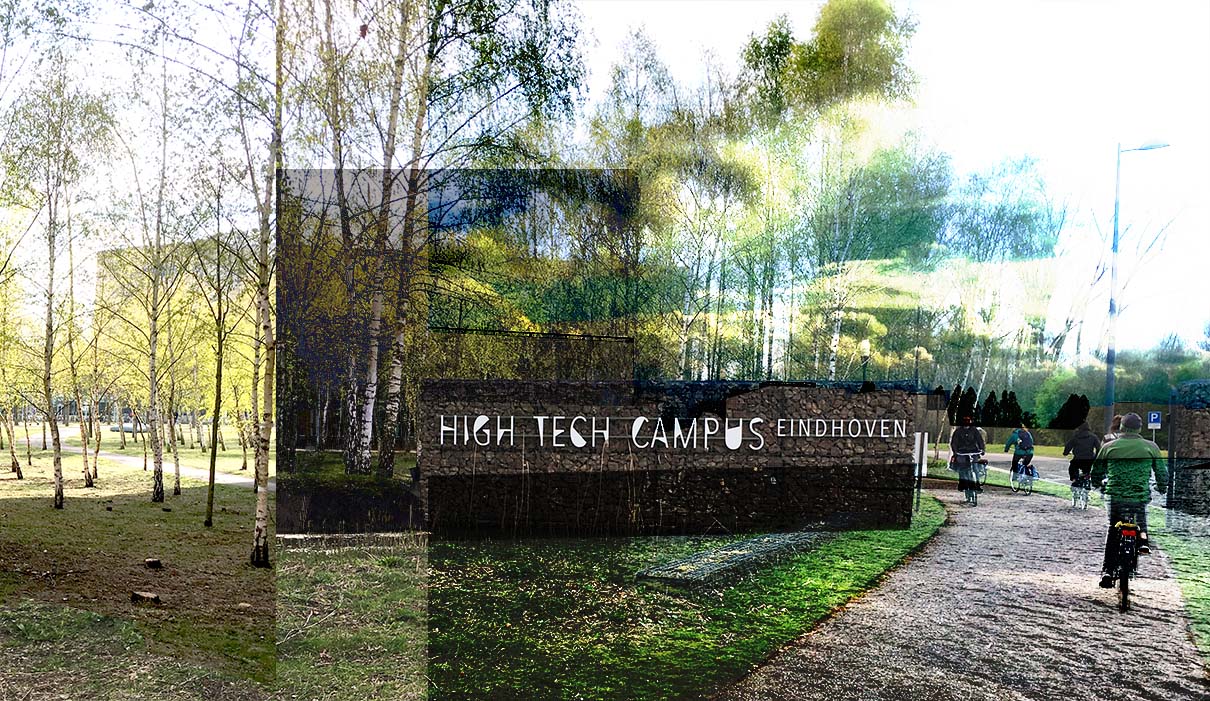
Campus or Forest? Entrance to the Eindhoven Technology Campus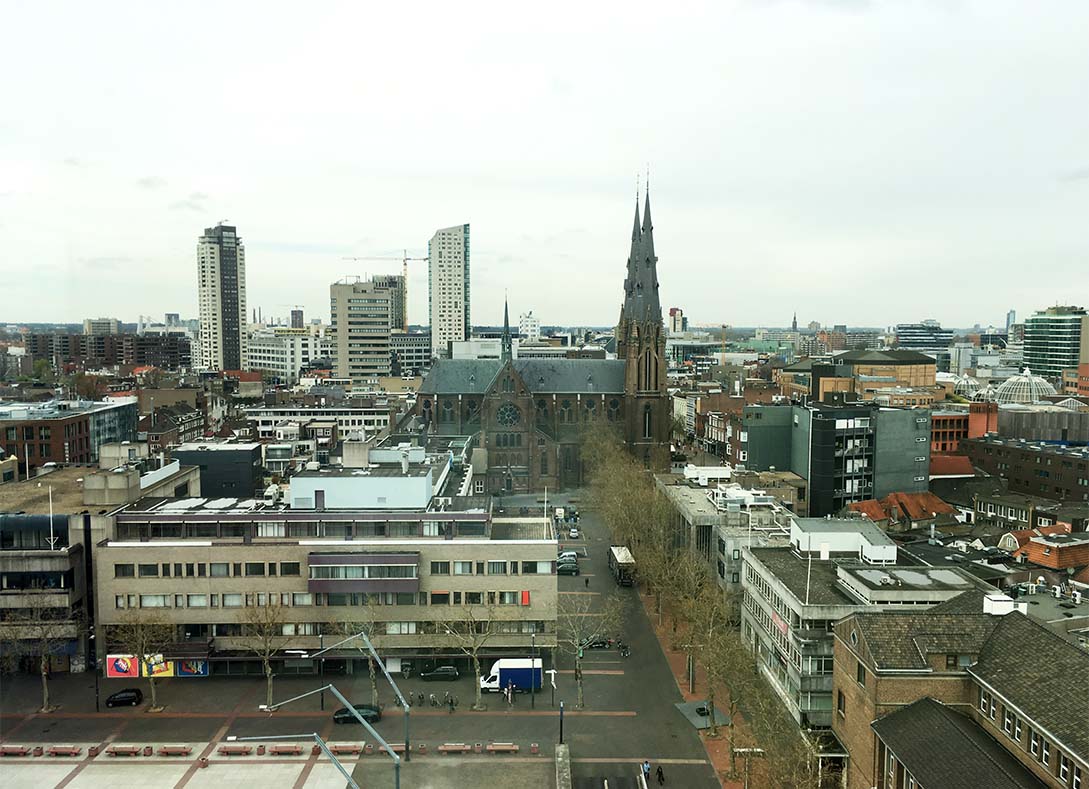
View from the 11th floor of the Eindhoven Municipal Building
Images by: Sydney Shea, Matthew Kunnari
Part 1: Alexis Kautzman
Our group gathered at Utrecht Central Station and got on the sprinter train toward the city of Eindhoven. It was an hour to Einhoven so many people used the time on the train to relax and decompress while enjoying the small amount of ‘private time’. When we arrived in Eindhoven we ended up existing through the wrong door but re-entered and found the door to the bus stop. There was a short bus ride to our accommodations, the Blue Collar Hotel, where we dropped off our items and waited for Mayke to arrive. Once Mayke arrived, she began to give us a walking tour of the area we were staying in and end at the office building we would be working in for our charrette.
Makye began showing us the area around our hotel which she explained as being a former industrial area. In fact, the whole thing was a manufacturing district for the Philips company. Philips was well respected in Eindhoven having taken the town from poverty to one of the most innovative cities in the world and much of Eindhoven still bears his mark. When Philips began shutting down the factories in the area, they sat vacant for several years before the city began a large scale restoration of the area into a new neighborhood. We continued through our walk and looked at former factory worker housing and several iconic buildings built by Philips. Along our path we stopped to look at the football stadium with some innovative elements incorporated into its design. From the outside it looks like a layered donut but the louvre system can be opened or closed to allow for airflow through the structure and to help amplify the sound within the stadium. To accommodate the noise levels of the stadium and neighboring apartment complex was retrofitted with a beautiful glass facade system to help block out sound.
We continued our walk and eventually made it to the office building we would be working in for the next two days which was under construction at the moment. Makye briefly gave us a look and then lead us to a wonderful little indoor marketplace for lunch. We all split up to explore and find something delicious for lunch before we had to meet back at the office building to begin our presentations from several city officials about our upcoming design charette.
Part 2: Dakota Carlson
As we made our way down from the office space located in one of the handful of skyscrapers in Eindhoven. We then made our way to the bikes by walking across an open plaza only occupied by a few skate ramps. At this point those of us not as familiar with bicycling are grabbing there bikes with confidence and any confusion of the back tire lock apparatus has also faded from memory. We began to head towards the Genneper Parken which is our site for the following day design charrette. Before we made our way to the park we stopped along the way to learn about the growth of Eindhoven and the Philips electronic companies heavy hand in its built environment. Our first stop was at the first few blocks of housing built by the Philips company to provide housing for their employees. Previously there was a large boulevard trees that were recently taken out. The outside of some of the buildings had black and white images depicting what it looked like when used primarily by Philips employees. Next we stopped by the stadium which was a very nice scale for having capacity for a sports event but not so large to take away from the surrounding human scale environment.
As we made our way to the park the bike infrastructure is hard to not notice and be envious of. The pavement was so smooth and the lack of any real grade change made the bike ride a leisurely breeze. The ground surface was like butter but the need to be present and pay attention to your surroundings was still present. The curved turn lanes allowed for smooth bike traffic and I always felt separated from other traffic just from having curbs with a few centimeters rise. This allowed an efficient barrier but also low enough to pop up and down onto the other lanes if necessary. We then made a few stops at places that were seen as problem areas along the park path. Almost all seemed to share the issue of disconnection in relation to the park visually and physically. The park at large was very beautiful and the spacing of designed spaces was pleasant. We then continued to the edge of the park where it meets up with the High Tech Campus which was a plot of land designed to have tech companies housed. It reminded me of a mini Mountain View California where Google is located but unlike Mountain view the HighTech Campus had a landscape design present. The land was planted with a grid of Aspens even where the proposed buildings where to be placed then once established the buildings went in. The density of the Aspen trees mixed with the hustle of people and fancy new buildings made for an atmosphere that can and should be replicated.
 Cities on Water 2019