Part I: Will Metcalf
Our first excursion following the first night on the Gulden Ablofte was actually by bike. Because the Nieuwe Land Nationaal Park project includes a long stretch of land along the coast of the Markermeer, we departed from the harbor in the morning and were outside of Lelystad within a few minutes. While riding south on top of the Knardijk, which borders a wetland we are studying, Oostvardersplassen, Jan and Mayke offered much-appreciated interpretation of our surroundings. I’m throwing a lot of Dutch place names into the mix—this is what we also have to contend with while trying to digest the issues and identify opportunities in the region and very much welcome the input of helpful local experts.
We arrived at the visitors’ center of Oostvaardersplassen to meet two Dutch ecologists who gave us an overview of the environmental history of Oostvardersplassen and frame ecological issues we might choose to address in our projects. The wetland, originally formed in 1969, was originally intended to become an industrial center. However, agricultural drainage depleted the local water table. As a consequence, migrating birds no longer stopped in the marsh. The disappearance of wildlife led the Dutch to build another dike in the mid 1970s to sustain the ecological importance of Oostvaardersplassen. Over time, the area suffered ecological damage due to a lack of connections with surrounding canals and water bodies.
From the perspective of my previous experiences, I felt fortunate to go from fairly academic presentations to the actual place being discussed. It’s rare to have that kind of direct connection between information and place. Following the presentations, we headed into a part of Oostvaardersplassen that’s ordinarily closed to the public to begin a day of exploring the park boundaries.
Part II: Mattie Wong
Here, we passed two of the three main grazers in the Oostvaardersplassen: the red deer and the Konic ponies. The third grazer we were fortunate enough to not come across. Heck cattle, a breed with a complicated history, was orginially bred by a Nazi scientist named Heck to “back breed” to the original wild cattle and anscestor of domesitcated bovines, the auroch. Heck cattle are notoriously unfriendly, thus our luck.
As we passed into the publically-restricted part of the Oostvadersplassen, the landscape changed rapidly from a semi-forested area with underbrush to one with heavily grazed short grass and dead trees standing and collapsed. The Oostvaddersplassen, since the beginning of the experiment with the large herbivores, has had issues of overpopulation and not enough resources. In the spirit of the experiment, ecologists suspect that the carrying capacity of the land and population of the grazers will eventually balance out. But for now, the starvation of many of these large herbivores causes a serious PR problem for the project and brings up important questions about nature management and the extent to whether we control or don’t control natural processes.
It is the beginning of spring, and we are starting to see the bright green of fresh grass poke up amongst the experimentally built corrals used to try to protect areas of reforestation. It is an alien feeling landscape, with remnants of its proposed industrial and agricultural past layered around us. As we walk to the bird blind and the purposefully flooded marsh area, we are able to see how the intended agricultural ditches still line up to us in 90 degree angles, just now filled with a cacophony of water birds. From this point it is also easy to distinguish several points on the horizon: the housing towers of Almere, the telefonica tower of Lelystad, and the train that marks the southern edge of the park. It’s a surreal experience to be out in a pseudo-savannah and see a bright yellow and blue elevated commuter train stream by just above the horizon every 15 minutes.
Here, we were immersed in the contradictions and layers of this place, of the intentions of the Dutch and the relentlessness of nature to do as nature pleases, whether that include life or death. The idea of a National Park in The Netherlands is one that is inherently different than the idea of a National Park in the United States- here, National Parks are carved out, created, designed, and for the most part are experiments in human-nature relationships. As we move forward with our project with Niewue Land Nationaal Park, we will keep this experience and all the questions of the Oostvaadersplassen in mind.
Images: 1-3, Dakota Carlson. 4-6, Will Linscott
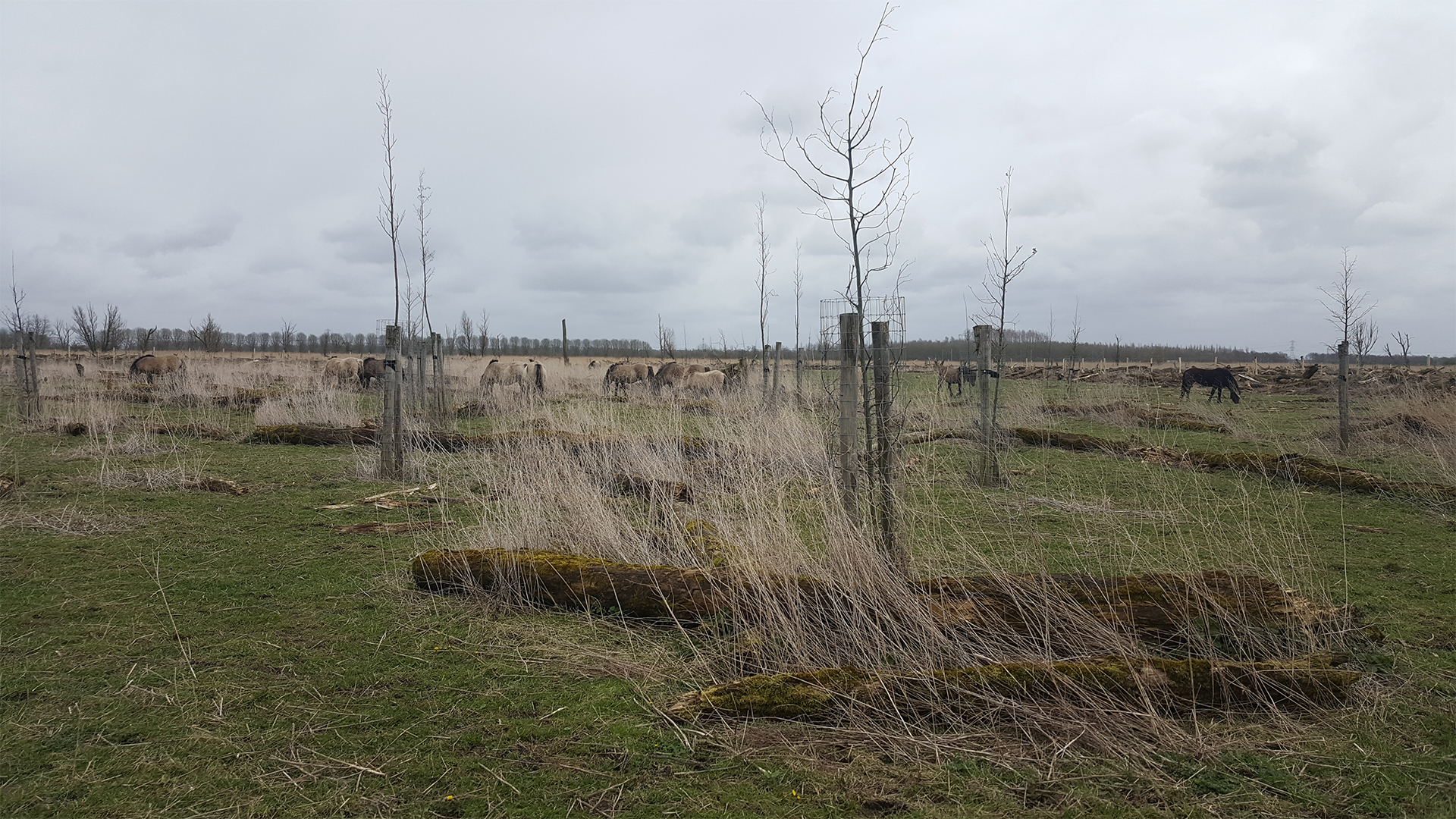
inside the recreational grazing area of the Oostvaardersplassen Lelystad section. Facing the newly planted trees reenforced with fencing to protect from grazing horses.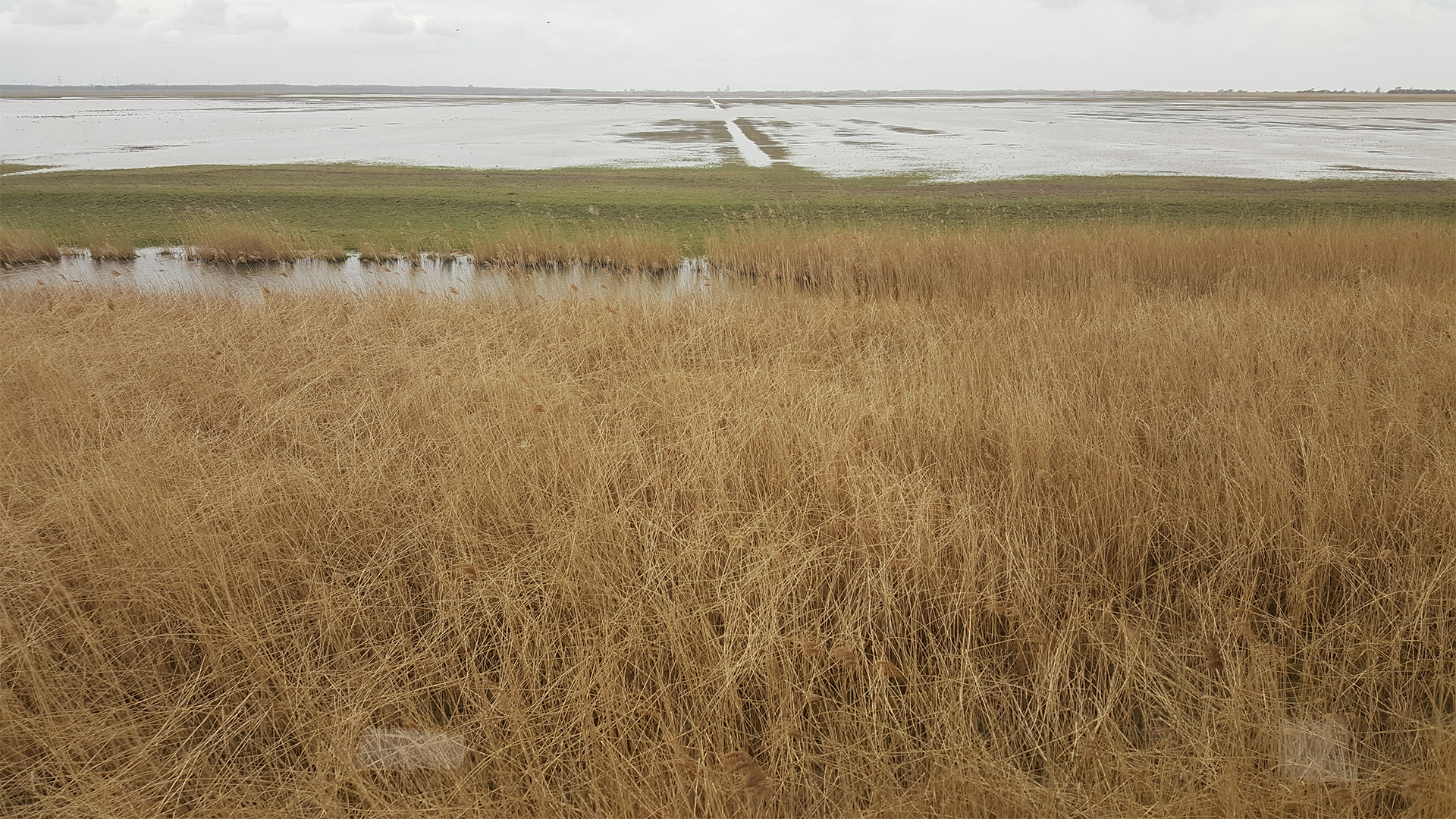
The scene looking out the lookout tower located in Oostvaardersplassen Lelystad section facing towards the Moeras-reset section or the Marsh reset in English. The Horizon line becomes a layer cake of colors made up of sky, water, and vegetation.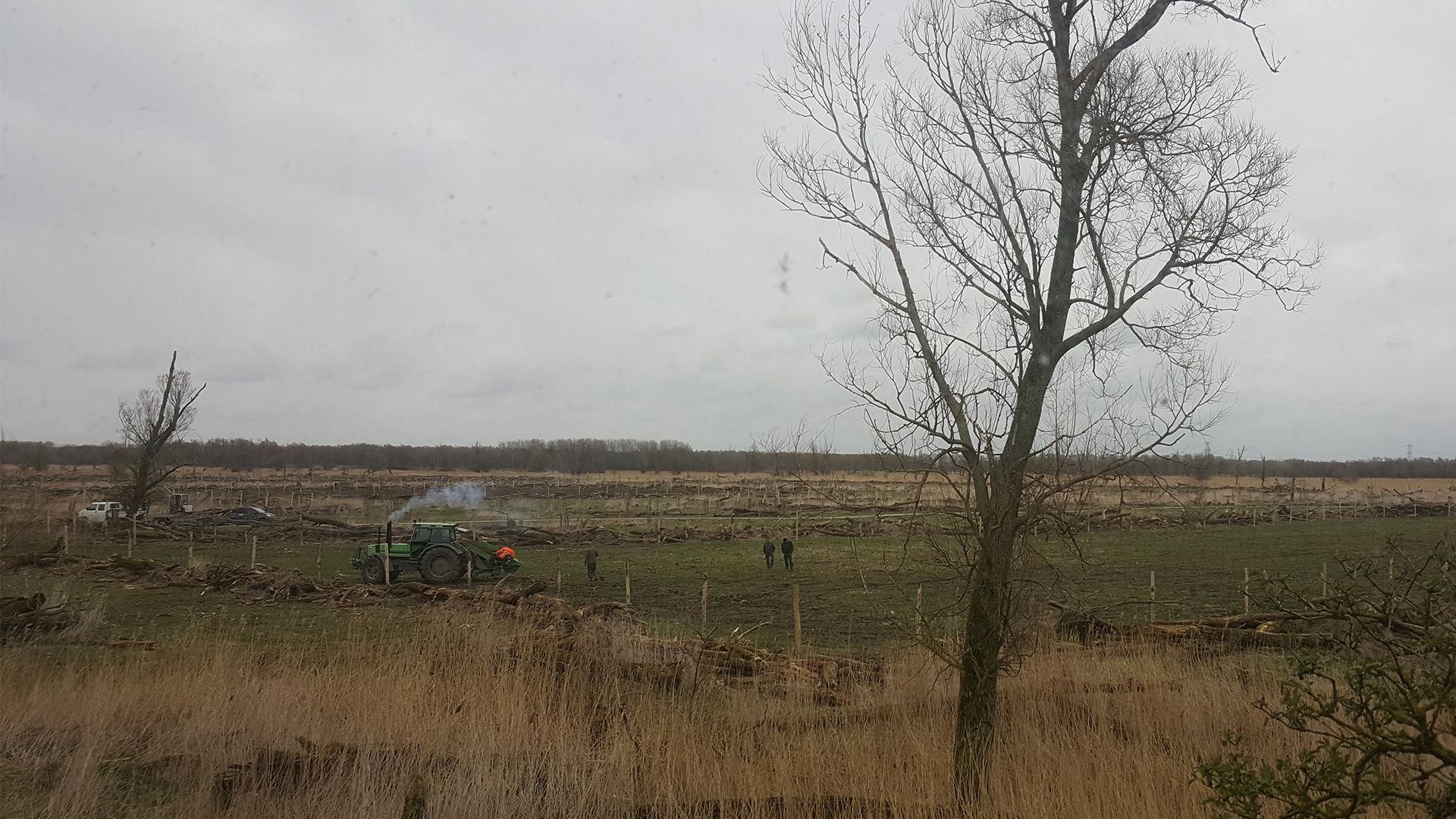
The scene looking through glass at the lookout tower located in Oostvaardersplassen Lelystad section facing towards the Lelystad visitor center. The image includes the efforts of the park to revegetate select patches that will be fenced off from most grazers, but perhaps not the red deer who can jump up to 8 feet in height and are known to be good swimmers.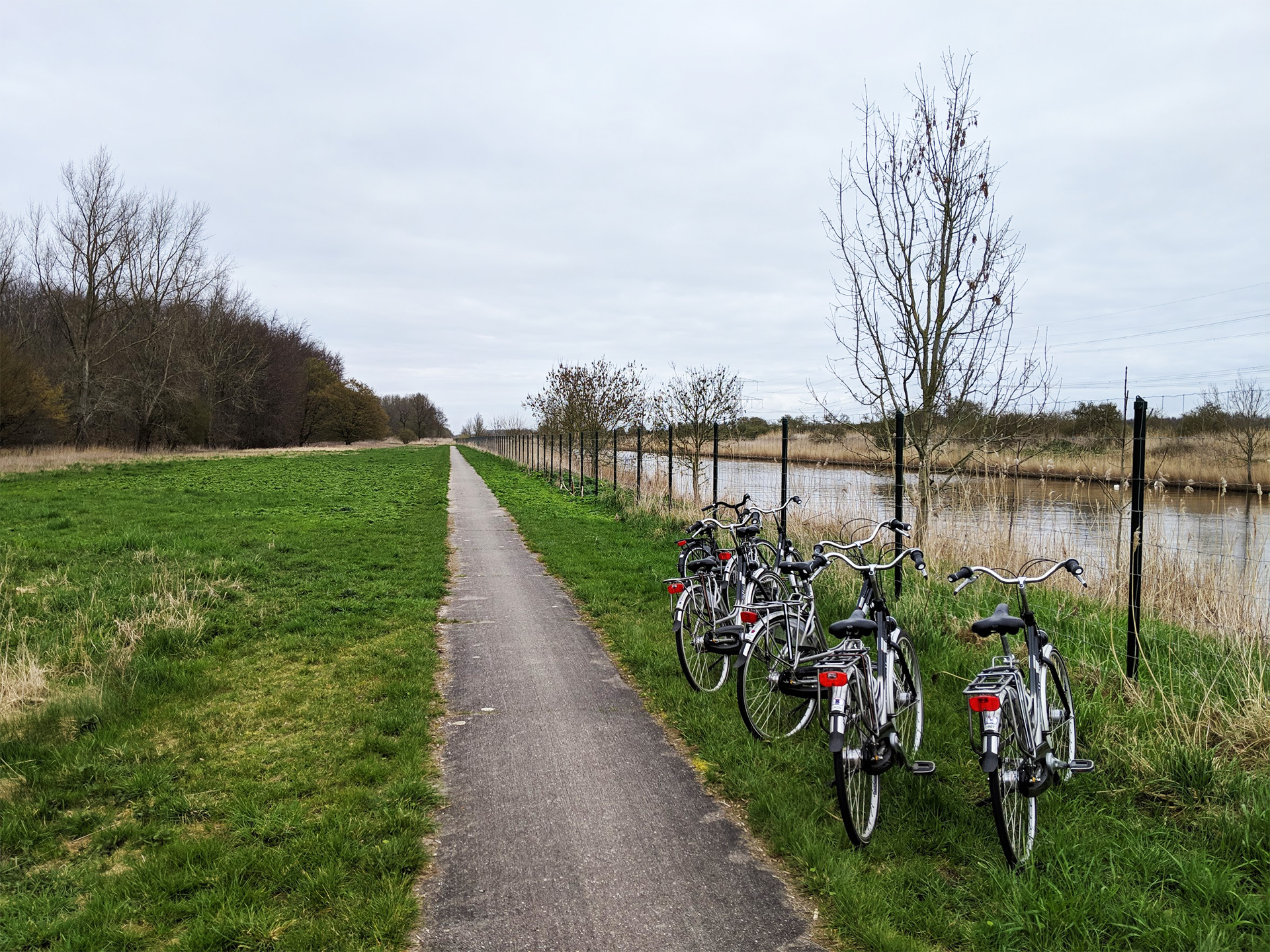
Half of our group’s bikes parked against a fence at the edge of the park. We talked at length about why this fence against the waters edge created an unwelcoming visual barrier.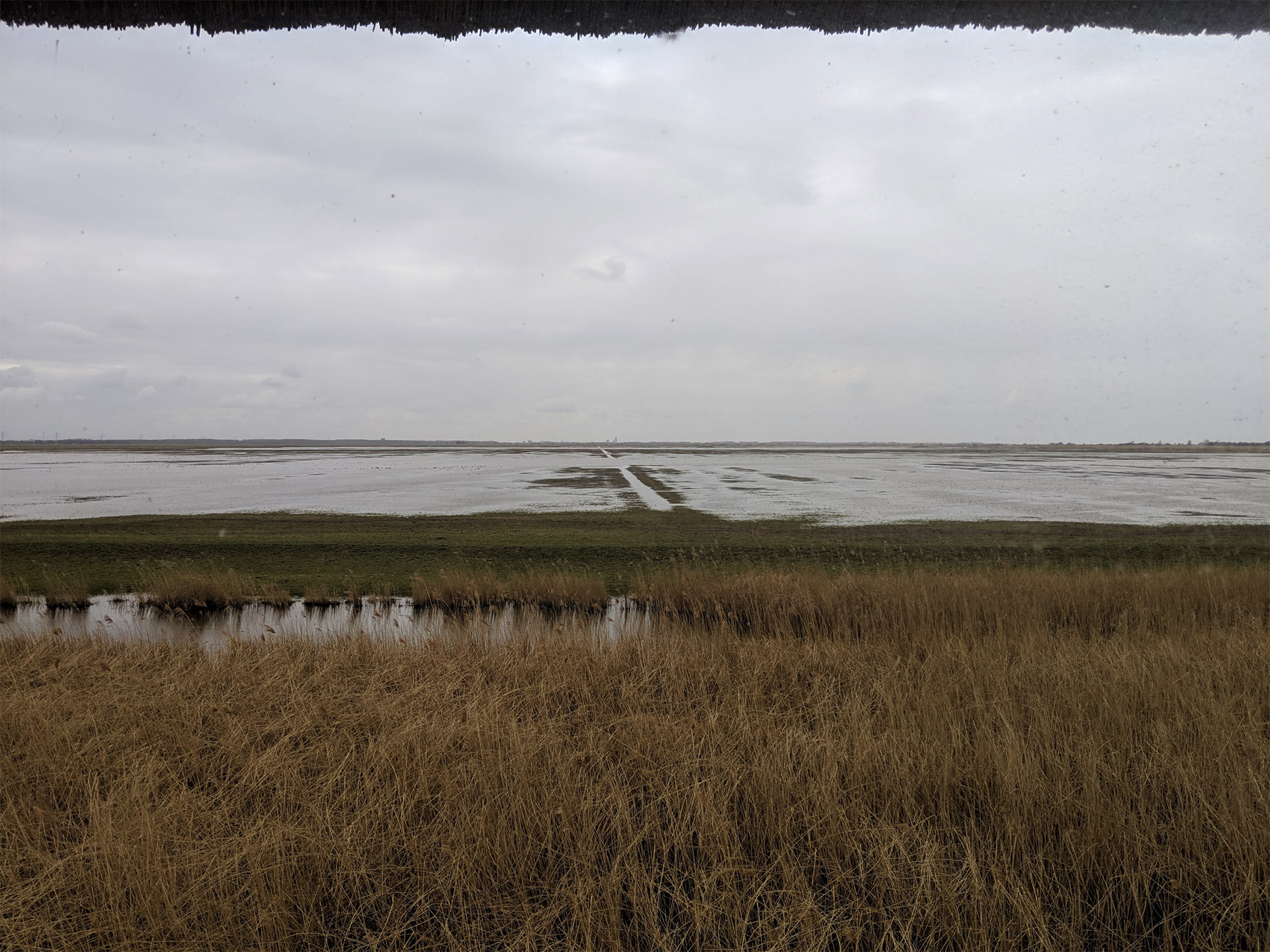
Looking out toward Almere to the south from a bird blind in the northeastern section of the park. These long, virtually uninterrupted horizon lines became a strong design element as it is central to the Dutch perception of landscape, especially in this region.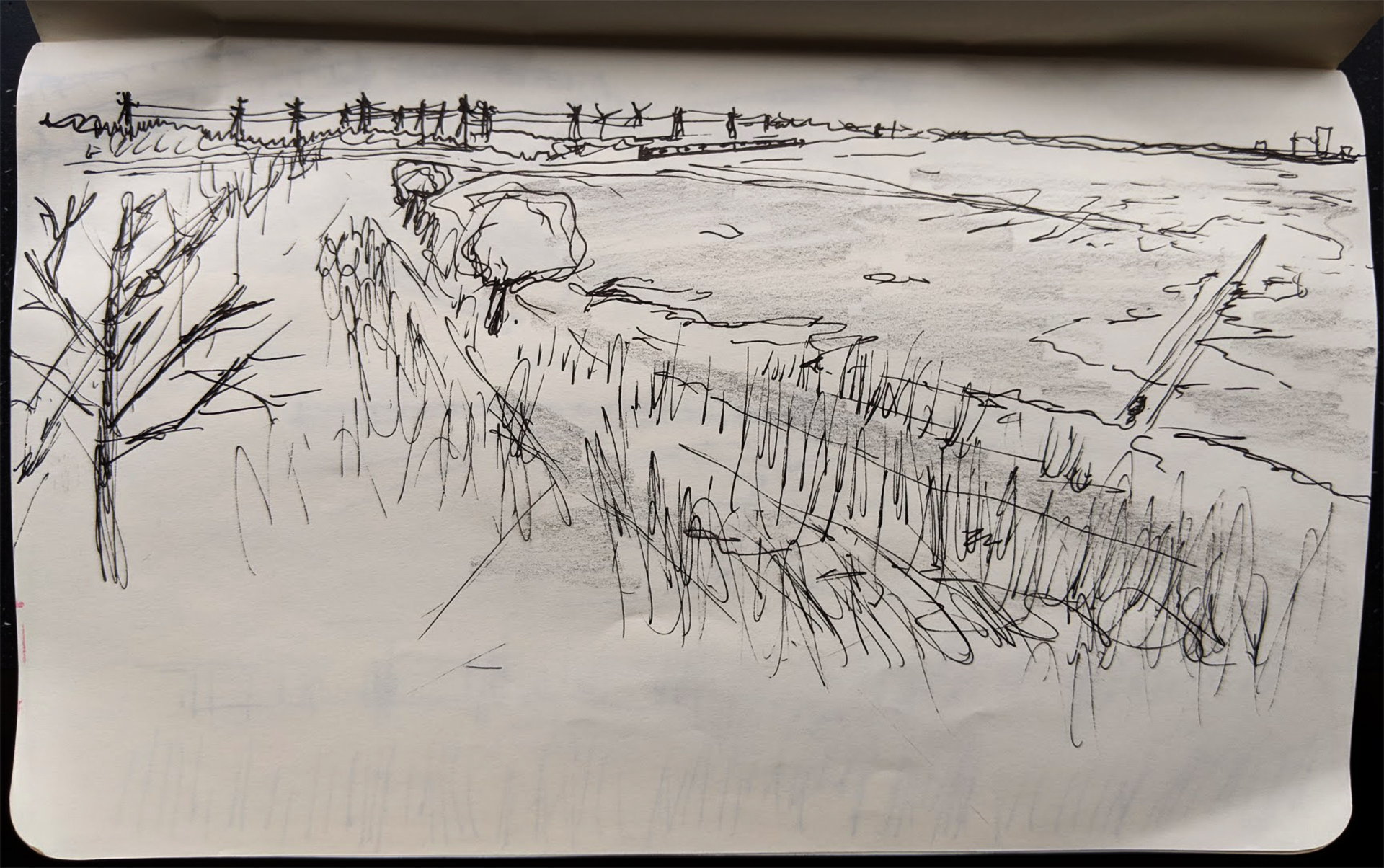
A sketch of the horizon from the same bird blind. To the left side there are train tracks, utility lines, and windmills leading to the few buildings popping above the tree line. To the right, only trees.
 Cities on Water 2019