Part I: Matthew Kunnari
After being docked for two days in harbor, today we finally set sail for the Marker Wadden. Unfortunately, on our voyage there, the winds weren’t in our favor and we had to use engine power to make the trip.
The Marker Wadden is a brand new constructed archipelago of islands on the northeast side of the Markermeer Lake. The Markermeer Lake was constructed for water storage for the surrounding farmland in the 1930s. The lake is encased by tall dykes and thus creates an unnatural steep shoreline, eliminating the typical gradual sloping lake shorelines found elsewhere. Due to these conditions fish, bird and plant populations have been declining. A new ecological vision for the lake began to emerge in the 1980s. The Marker Wadden are a piece of this vision.
The islands of the Marder Wadden are constructed primarily of sand. A chain of tall dunes arch from the southeast to the northwest edge of the site and provide a buffer for the marshes and ponds to the northeast. Soon after the elevation of the islands rose above the surface of the lake, birds inhabited them. Prior to exploring the islands, we had a brief orientation on the ship deck. We learned that the majority of the site is off-limits to humans and is designated specifically for habitat. The background noise of the birds was quite loud. Once on the island, the tumult at times was intense. These birds were quite at home.
A series of bird blinds and loop trails provided hours of exploration in these new islands. The scale of the space was difficult to comprehend because the environment is new, void of tree cover and built things. However, as our group wondered about, the human form became the standard for relating to the space: the heights of dunes, the distance to a blind. Some grasses, reeds and flowering plants have been seeded and are beginning to establish. As plant life gradually matures it will be intriguing to see how more biological process develop and evolve within the Markermeer Lake. Will fish spawn in the shallow waters? How will the water quality change? How will the sitelines transform?
All too soon it was time to disembark from the island to dock at a new harbor. Fortunately, the winds had shifted and we were able to enjoy a couple hours of unassisted sailing across the lake. It provided some time to soak in all we had seen that day. What a satisfying close to an incredible day!
Part II: Alexis Kautzman
After our day in the Oostvaardersplassen, we set our course for the Marker Wadden islands in the morning. The captain gathered us after breakfast and explained the route we would be taking and a few basics about sailing a boat. Extra hands would be needed in helping the two-man crew get the boat ready to sail. Because of the wind direction, the boat would be using the motor to get us to the Marker Wadden taking around 2 -2 ½ hours to reach and then utilize the sails after the boat has left the island and our route worked with the wind. Our slow pace to the islands gave us time to observe and take in our surroundings. I found an interest in the different perceptions of time that the boat offered. Being accustomed to the fast-paced travel methods on land, I found boat travel relaxing and meditative opening up my understanding of the possibilities of different modes of transportation can offer in experiencing the landscape.
We had a quick lunch then set off to explore the man-made island reserve as individuals or with our groups once we docked the boat. The recent construction of the islands was apparent in the sand dune landscape dotted with young vegetation. Even so, it was apparent birds were already utilizing the space as habitat such as goose, duck and sea gulls. It made me excited to think what the park would look like in the next five years as vegetation filled in and the capacity of the landscape is able to support larger and more diverse bird species. After our 3-hour exploration, the boat headed for the town of Almere where we passed through a lock and dam that lowered us below the Markermeer in just 8 minutes. Our whole trip has been a tour in understanding the control of the water and how it has created landscape in the Netherlands, but it wasn’t as eye opening as watching a large boat being lowered 6 meters below a large lake and the vast scale of what is at stake should control of the water falter.
Images: Sydney Shea
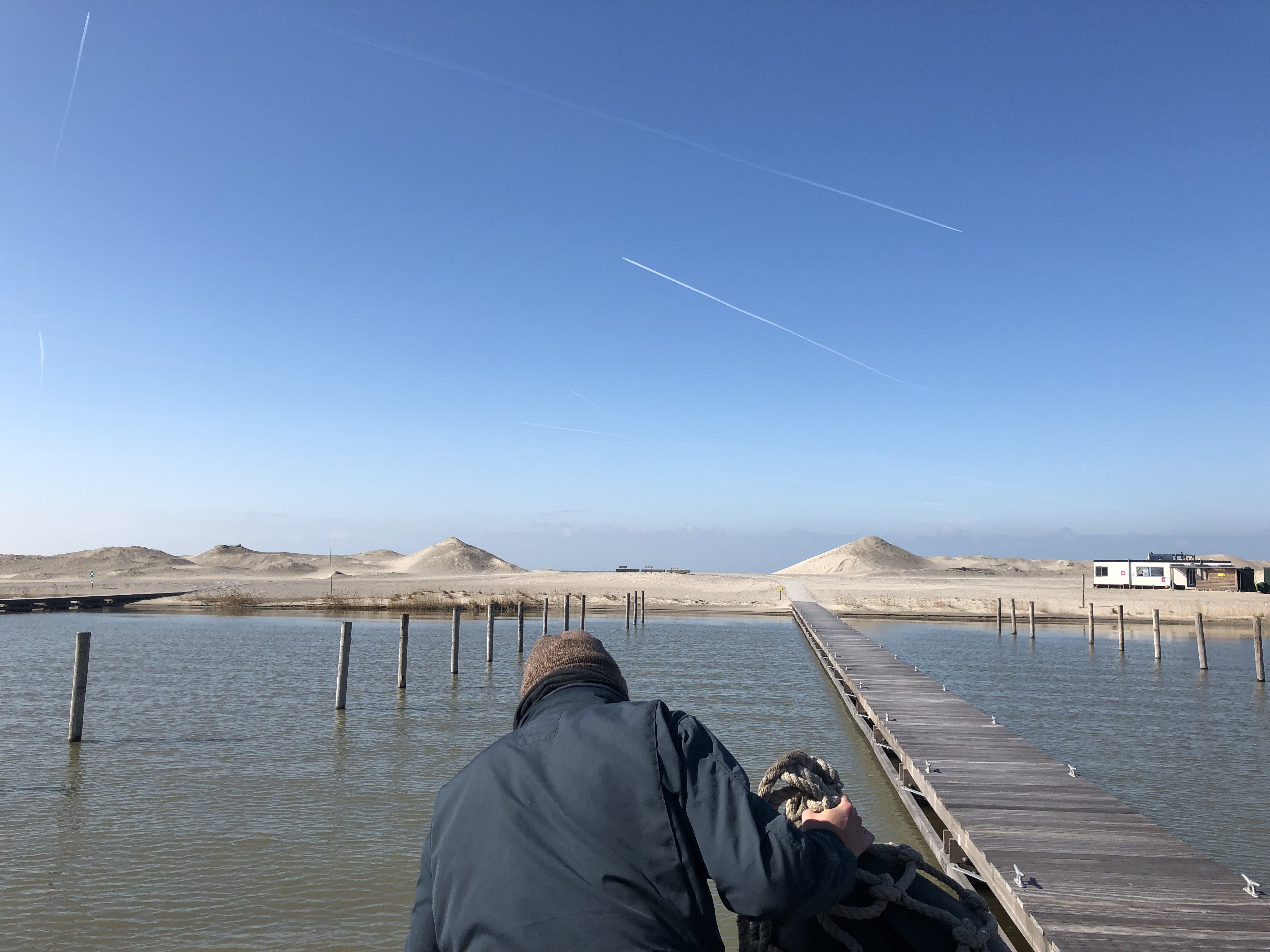
Our view arriving at the Marker Wadden, an artificial archipelago in the Markermeer that is one of three parks included in New Lands National Park.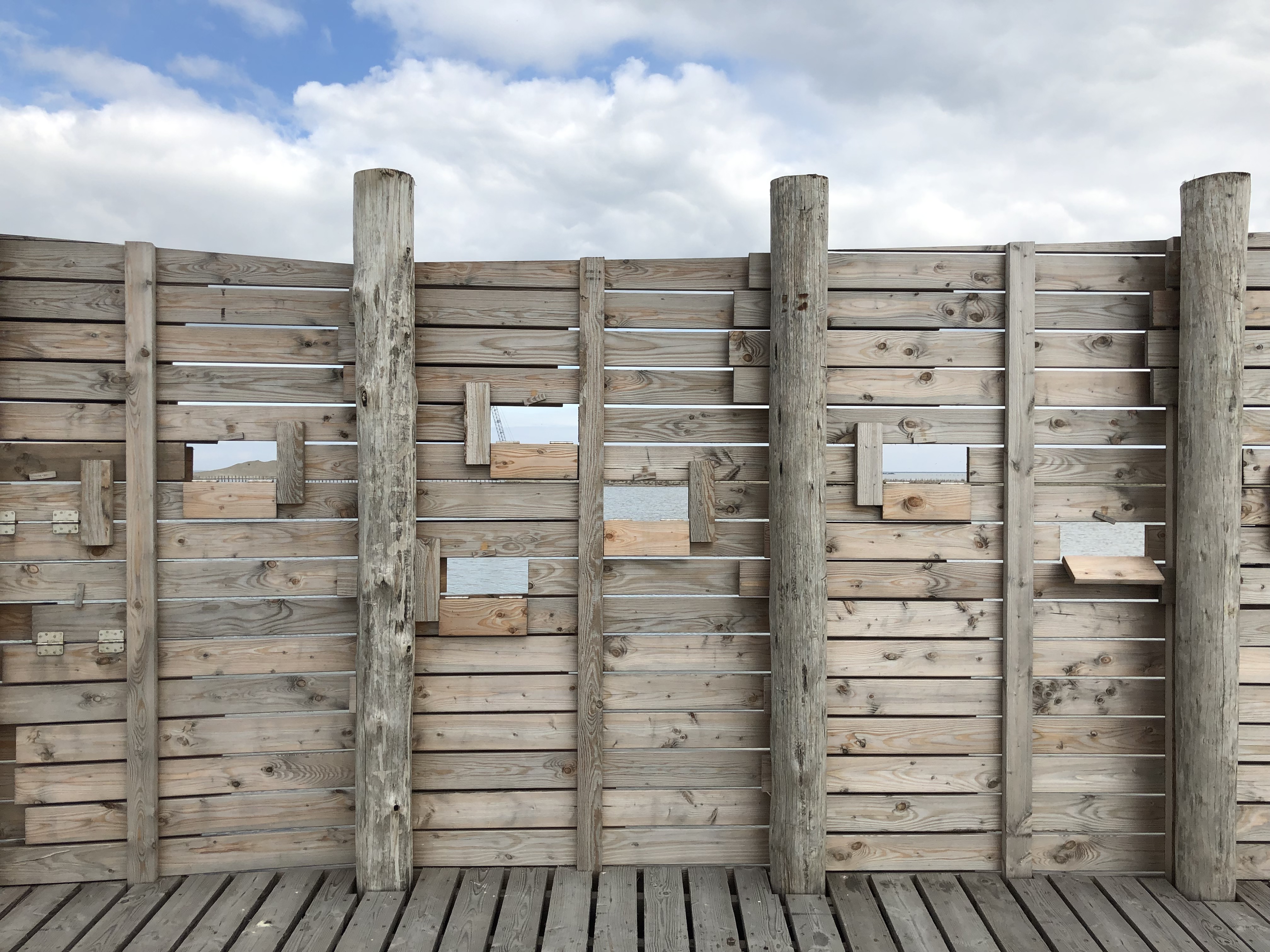
One of a series of bird blinds on the Marker Wadden. The Marker Wadden is part of a protected Natura 2000 area, critical to the migration and nesting patterns of many bird species.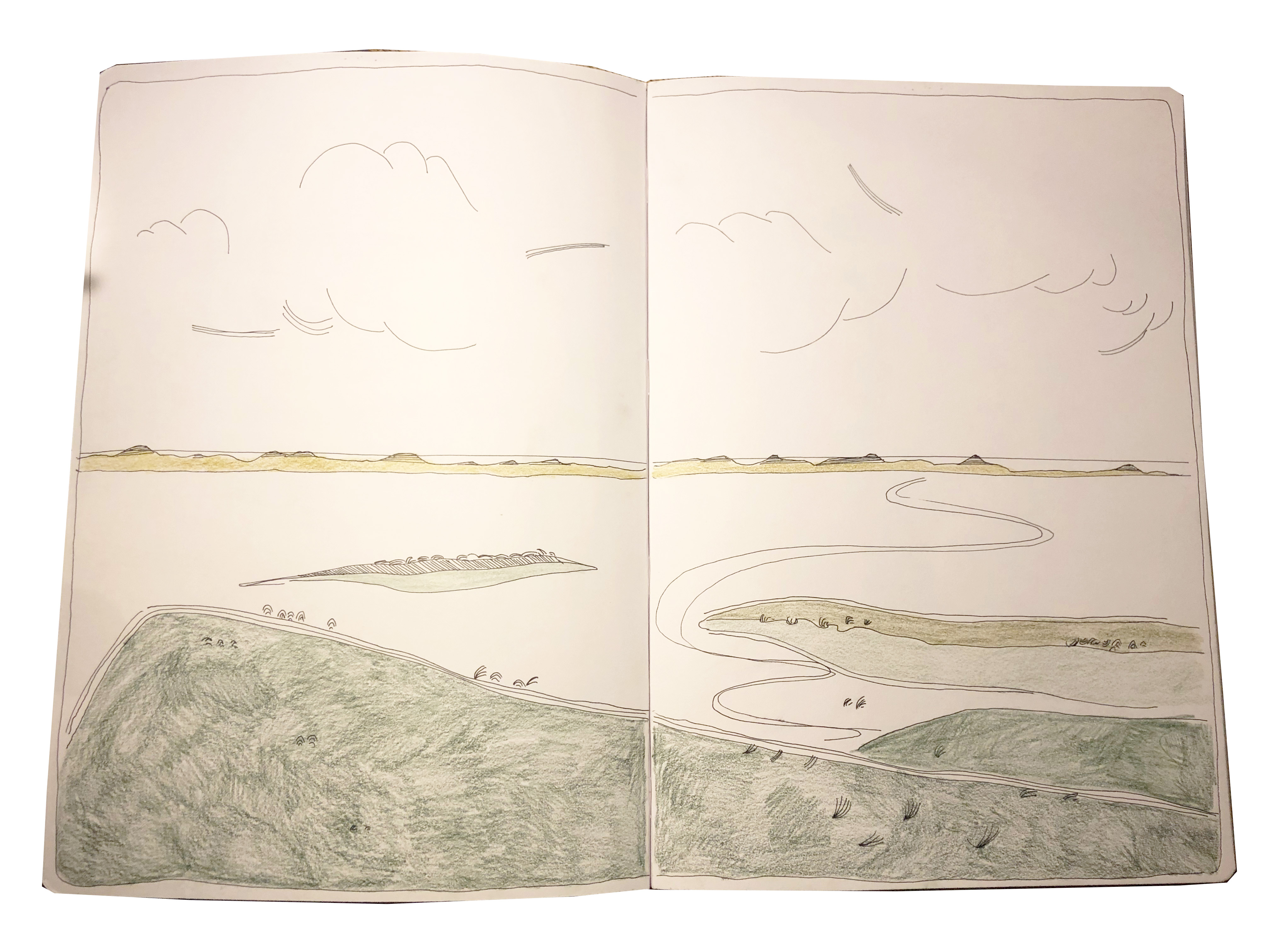
A drawing of the Marker Wadden landscape from an observation tower.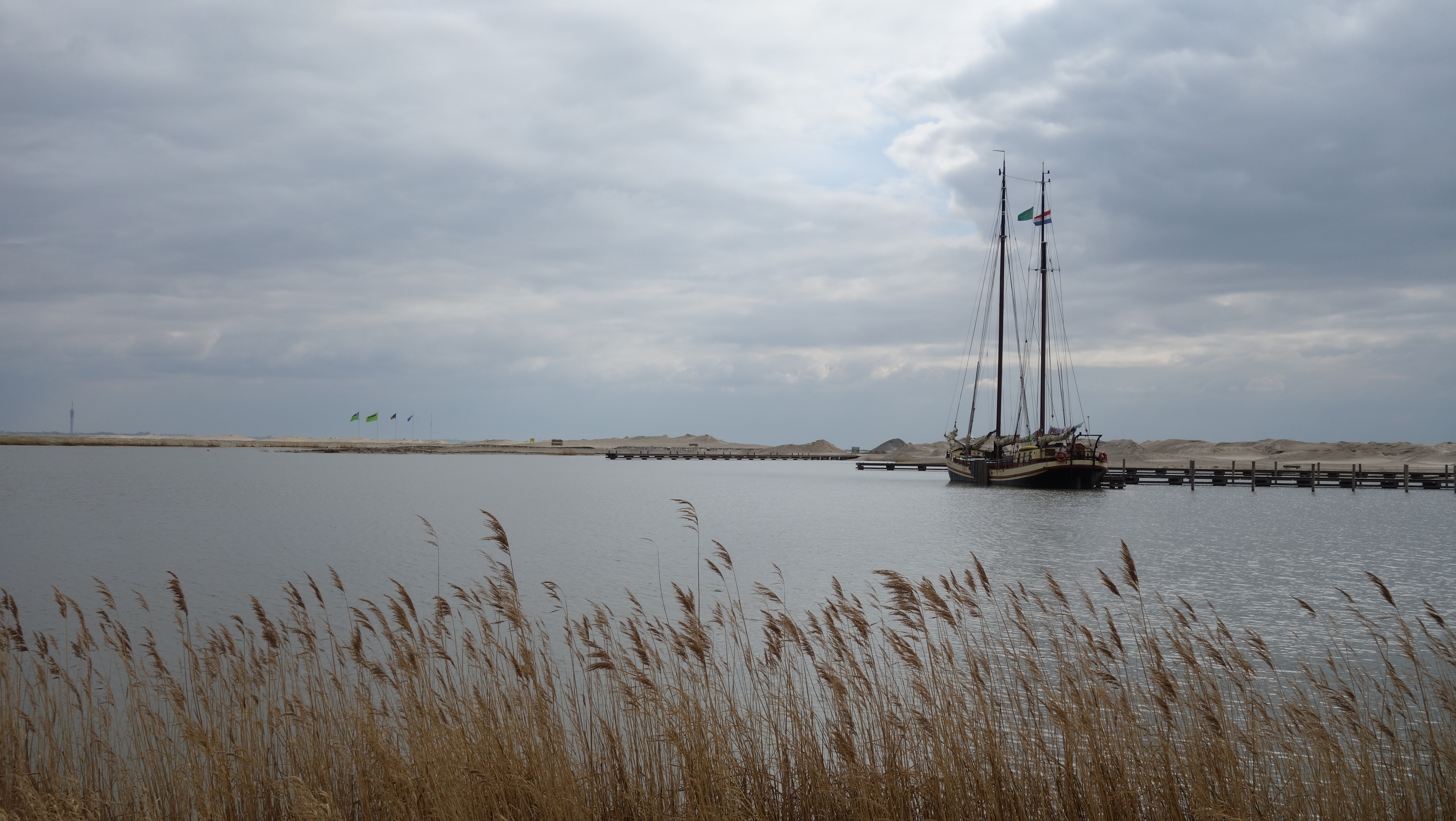
Our boat berth at the Marker Wadden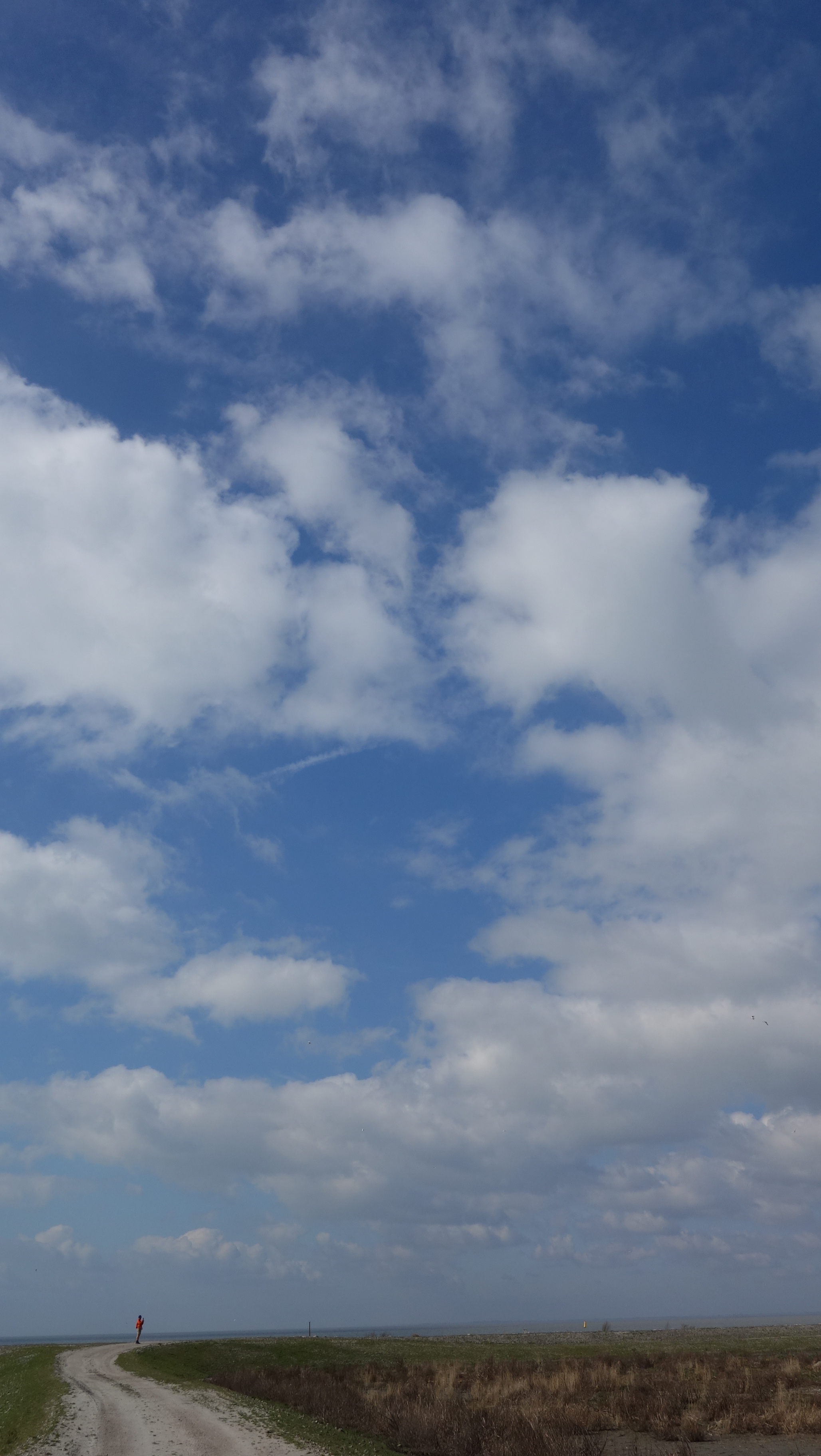
Marker Wadden under the sky (Will L. in the photo)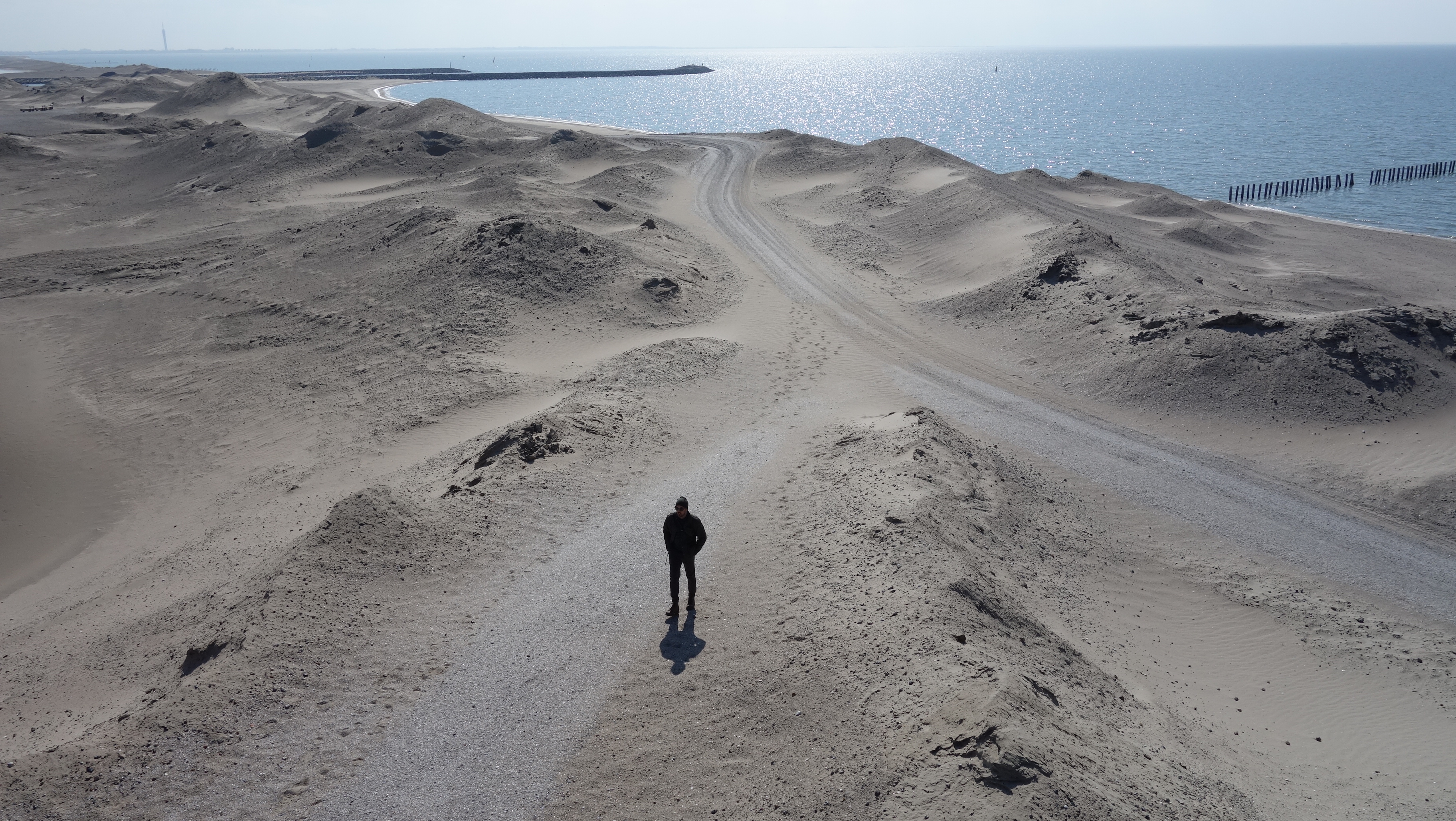
Marker Wadden under the sky (Will L. in the photo)
 Cities on Water 2019