Images by Anya Moucha and Yungui Cai
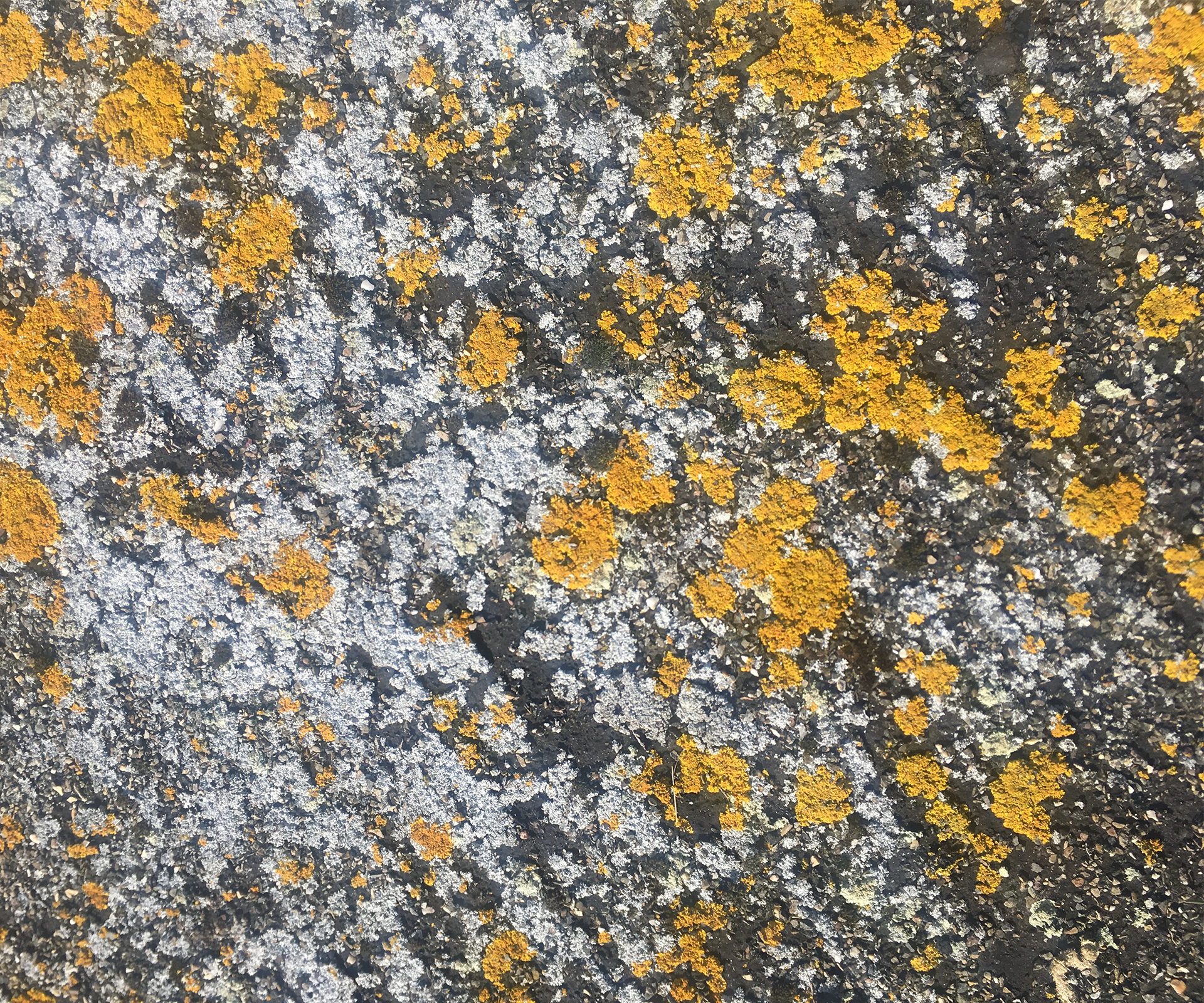
Texture of the asphalt on the armored slopes of a seawall.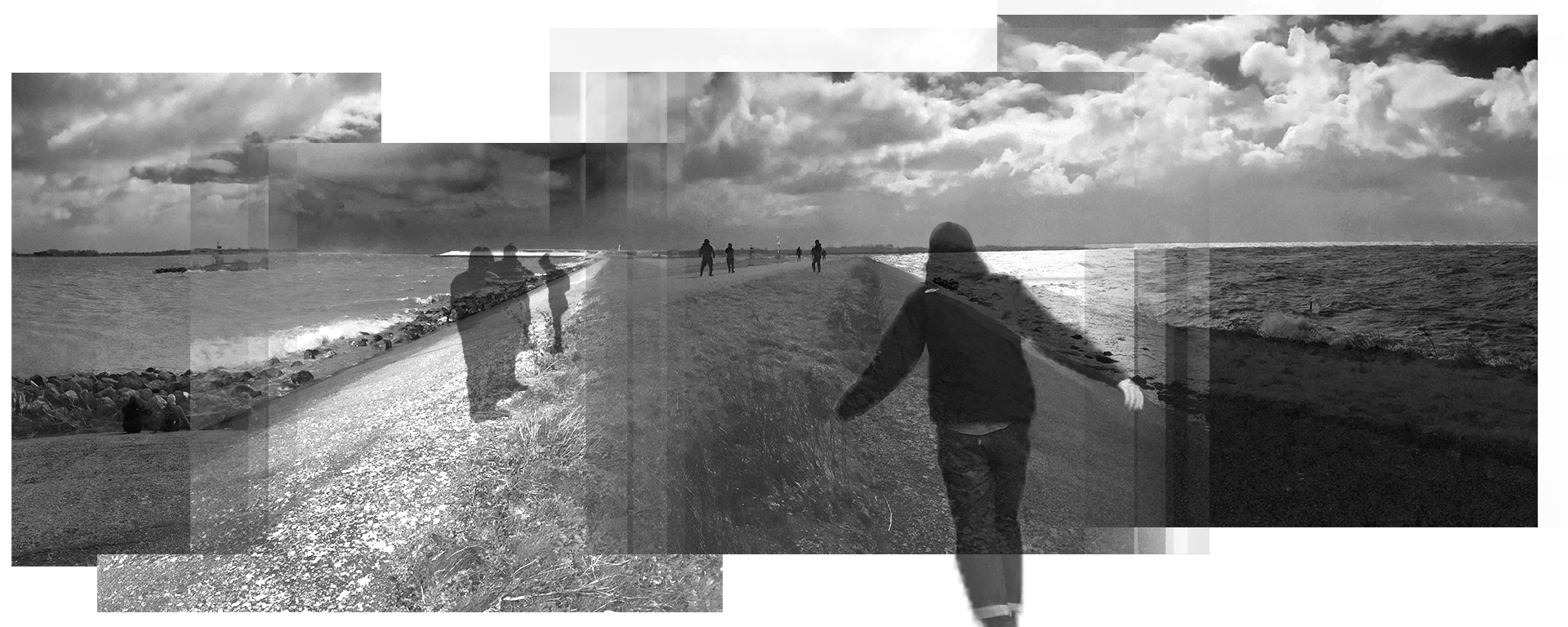
Experiential image collage of the conditions of our site visit for the day.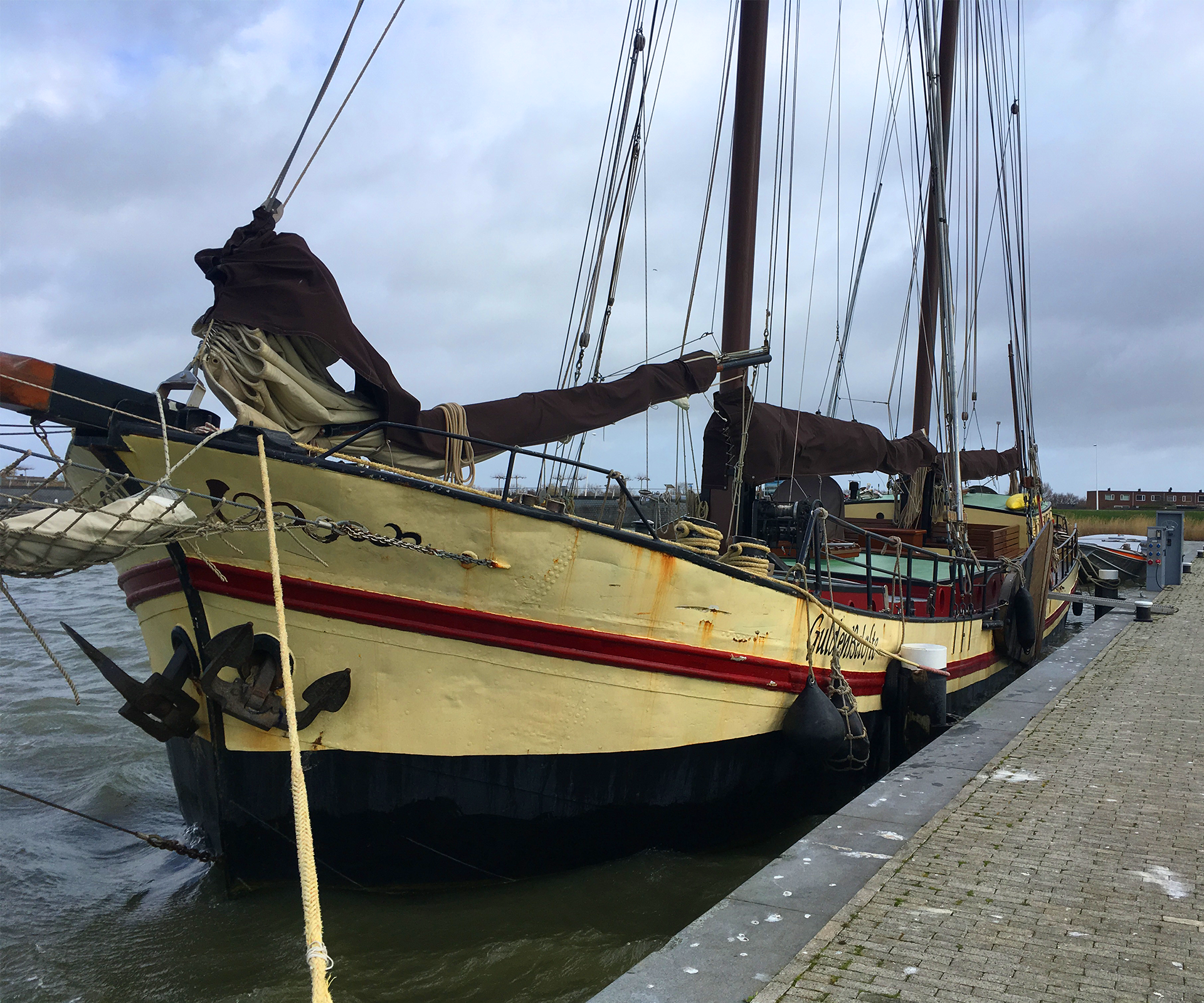
The Golden Belofte – Our home for our week on the Markermeer.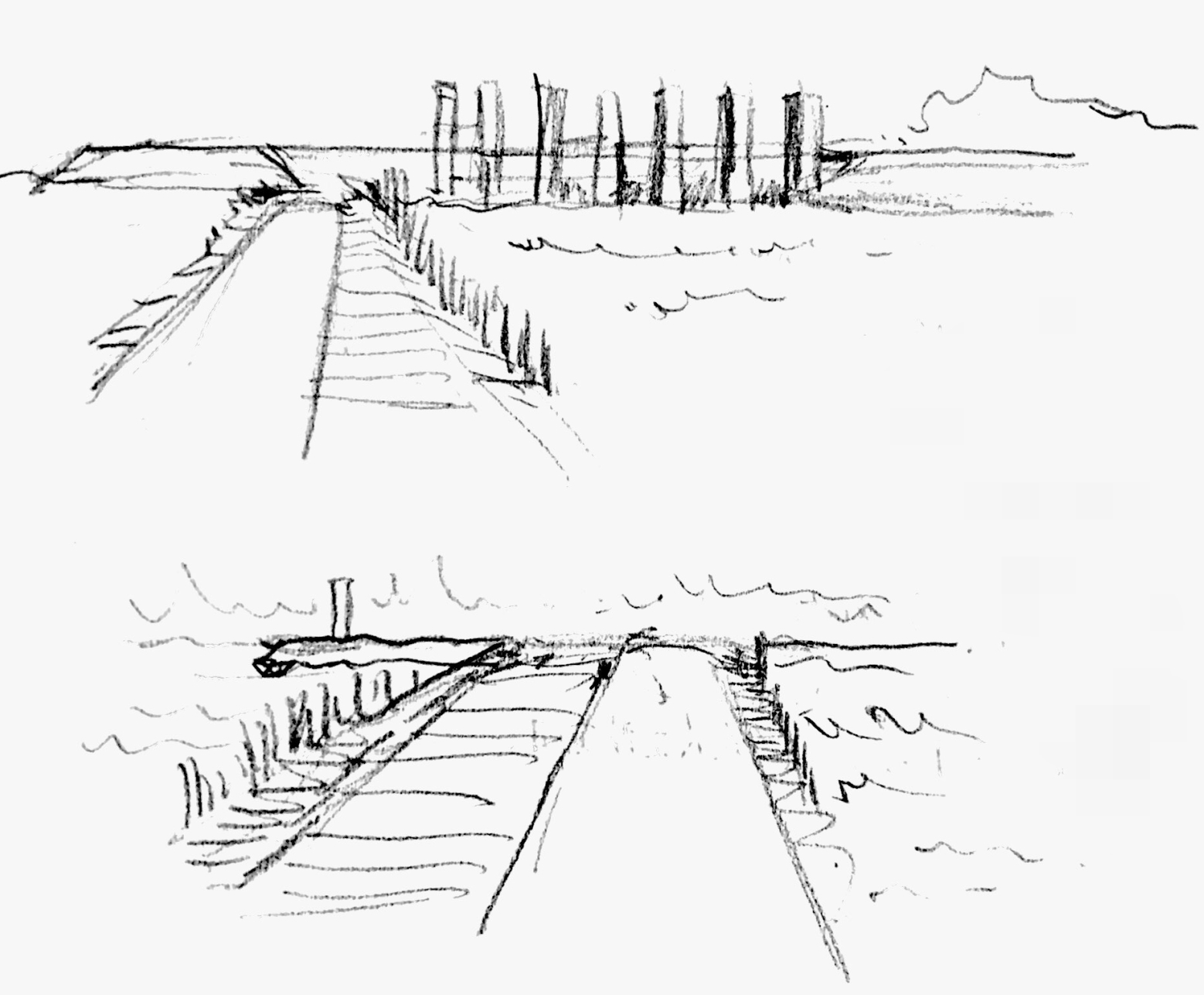
Quick sketch of the scene near the landmark.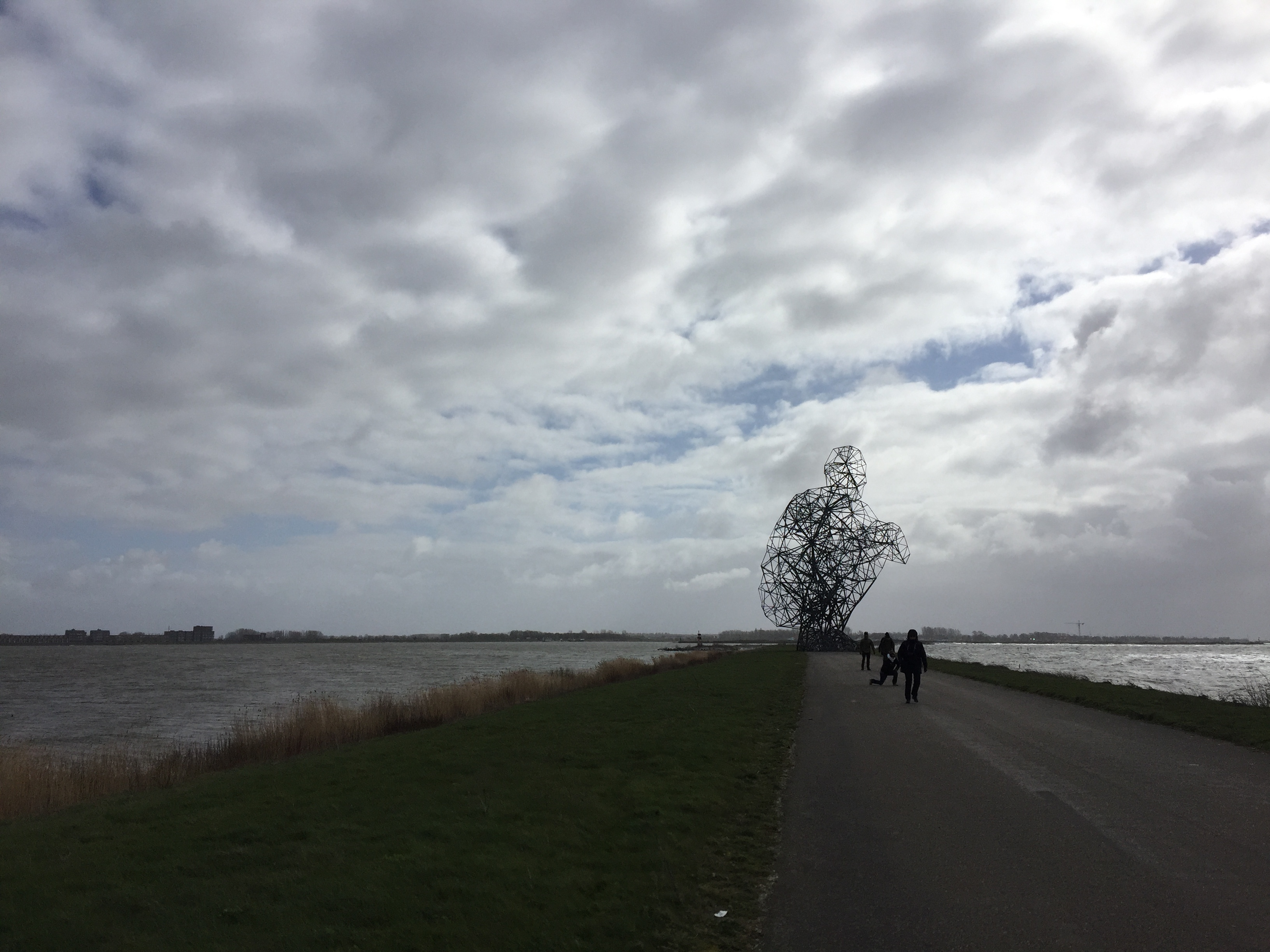
A big quash people statue as a landmark in Lelystad.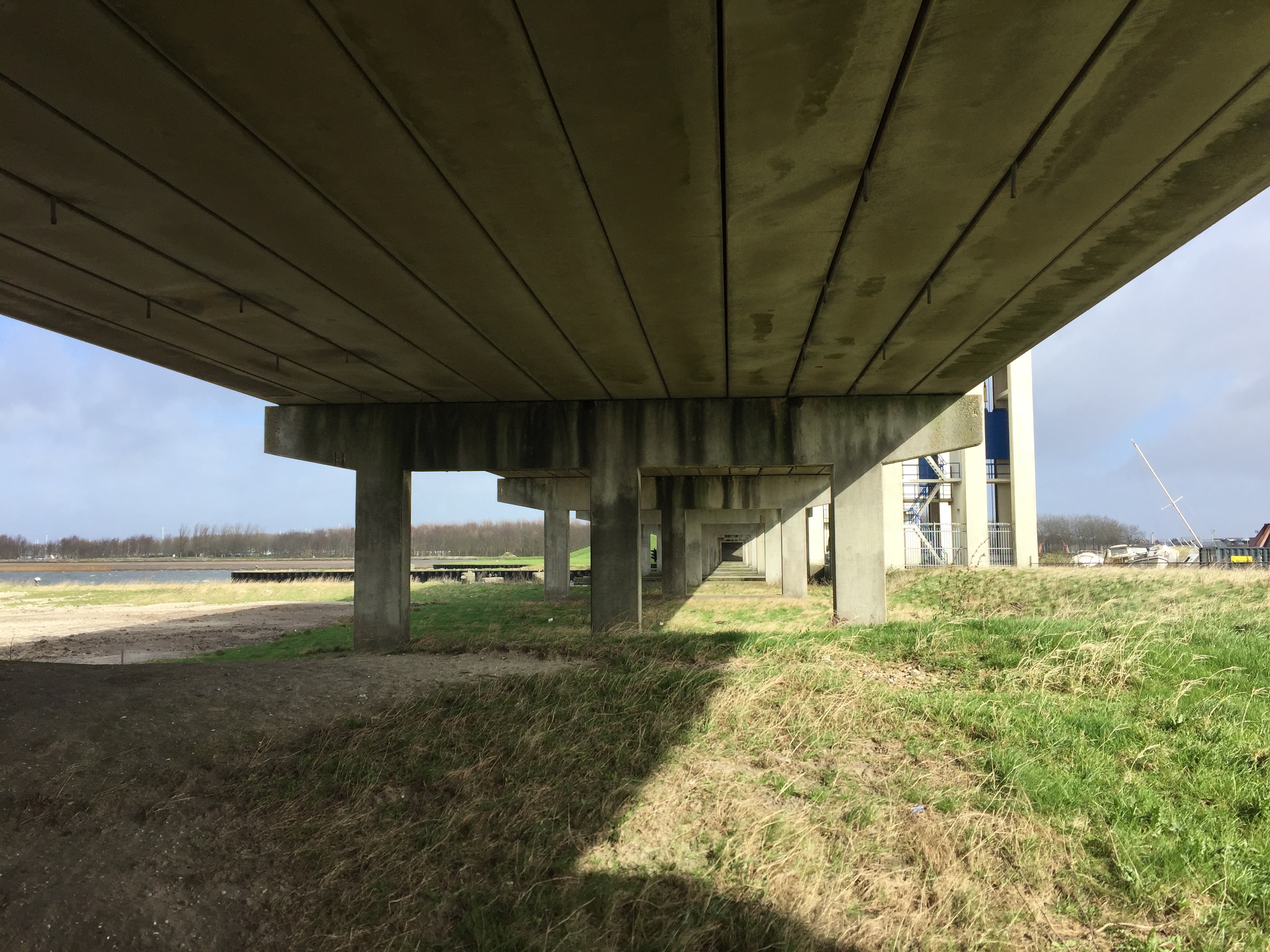
The perspective view under the big bridge with strong contrast of light and shadow.
Part 1: Andrew Beck
Today we became sailors and began our sea-going adventures. After packing our already limited wardrobes into even smaller bags, we departed from Utrecht by train towards our home for the next five days, a 28-meter long boat called the Gulden Belofte. The boat was originally constructed in 1911, and historically sailed around the waterways of the Netherlands and across the north sea transporting stone to aid in the construction of the country’s dikes and canals. At the time of its construction, the boat could transport thousands of tons of stone while the standard transport of the day, the horse and cart, could only transport one ton at a time. Our captain bought the ship in 2006, renovated it, and now we sit, eat, and sleep where the stones were once housed. It seems very exciting and fitting to experience the Markermeer by boat, especially one that may have played a role in the construction of dikes and canals that make the Netherlands what it is today.
After settling into our small but cozy quarters, we biked out of the Batavia harbor towards a monumental sculpture of a squatting figure by Anthony Gormley. The bike was no walk (or ride) in the park. The winds reached over thirty miles per hour and threatened to topple us off our bikes at any moment. We avoided disaster and made it to the sculpture without incident. The crouching person is constructed of dark steel, and has the appearance of an anthropomorphized Eiffel Tower. As we stood level with his ankles, we followed his cue and stared out onto the horizon. The horizon is an interesting and at times paradoxical mix of vast open viewsheds and the hint of distant features such as buildings and telecommunication towers. We have been told that the expansive nature of the Markermeer is one of its greatest assets and pleasures. Unfortunately, these distant buildings and towers cast lingering doubt about the true openness and “wildness” of the place. Over the next couple of days, we will see far more of this horizon and develop designs that hopefully resonate with the unique character of this place, perhaps finding new ways to frame its paradox and its beauty.
Part 2: Jiangchen Zhu
The Marker Wadden project located at Makermeer Lake northeast side. Near the N307 dike road. The goals of the project are to create a bird paradise, to improve water quality, to welcome people and to have innovative ideas.
The most interesting aspect of the project is that the project is based on a man made lake to create a natural environment. Eventually become national park to attract 2 million visitors per year. The plan is ambitious, and it will be the first national park that’s purely artificial and set on purely artificial landscape.
In Netherlands there isn’t national park, only nature reserve or conservation area. So by having this project, the people of Netherlands can experience different landscapes and engage with wildlife, mainly birds.
One of the goals is to create birds paradise, in the spring and summer, the birds will migrate from Scandinavian countries and Africa to the Netherlands. Countless birds will live on these islands that free from predators and free from human. People can only access one of the island by boat.
The agriculture usages of the water causing problems to the water quality. So to improve the water quality is important. That’s one of the goals Marker Wadden project wants to solve.
Marker Wadden project is an ambitious project, It needs to have multiple functions and has to perform. If the project could achieve the first two goals, birds paradise and improve water quality. Then it will be innovative and will have many visitors to see the national park.
 Cities on Water 2019