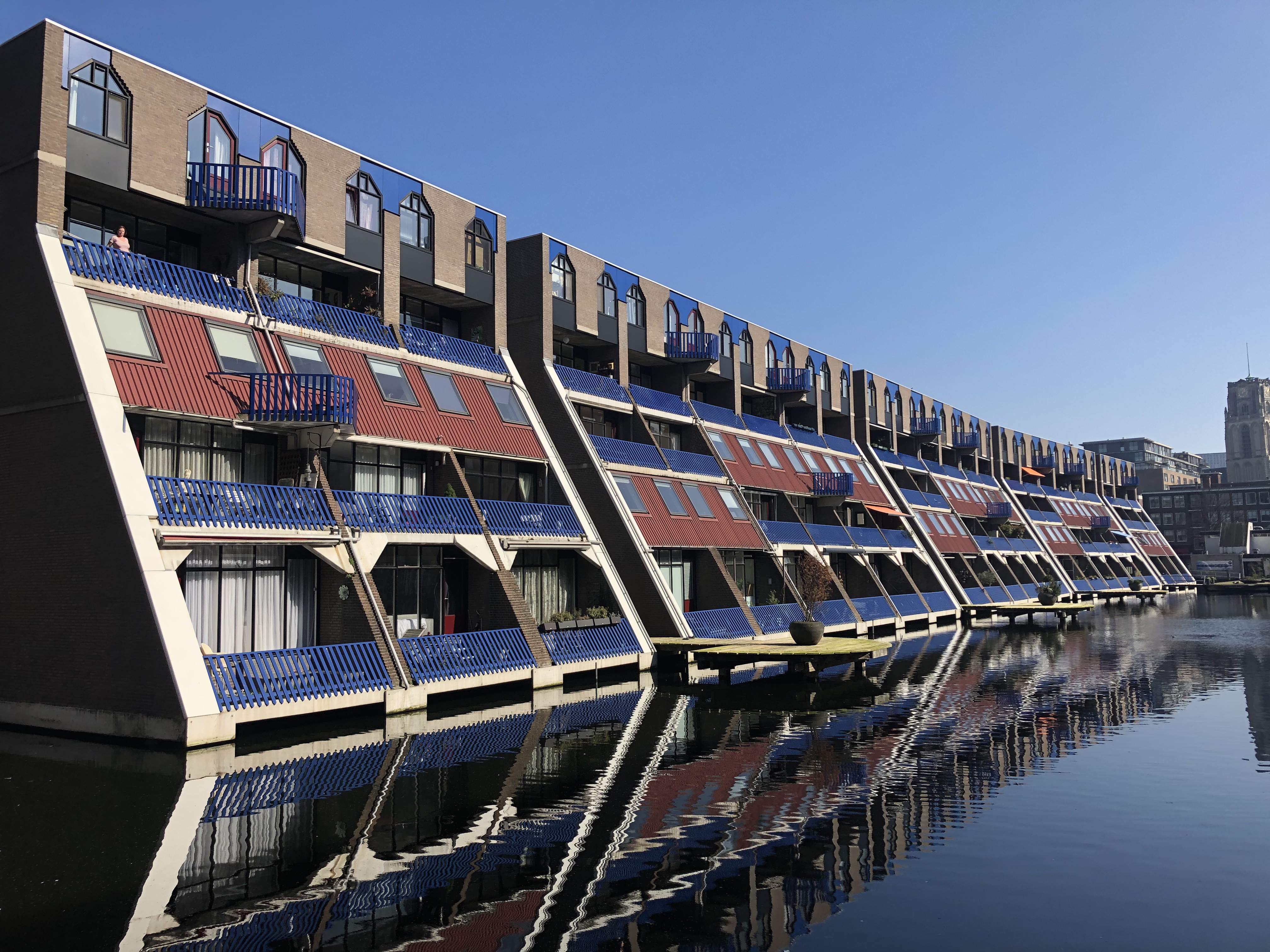
Apartment buildings on the water seen as we walked toward the farmers market.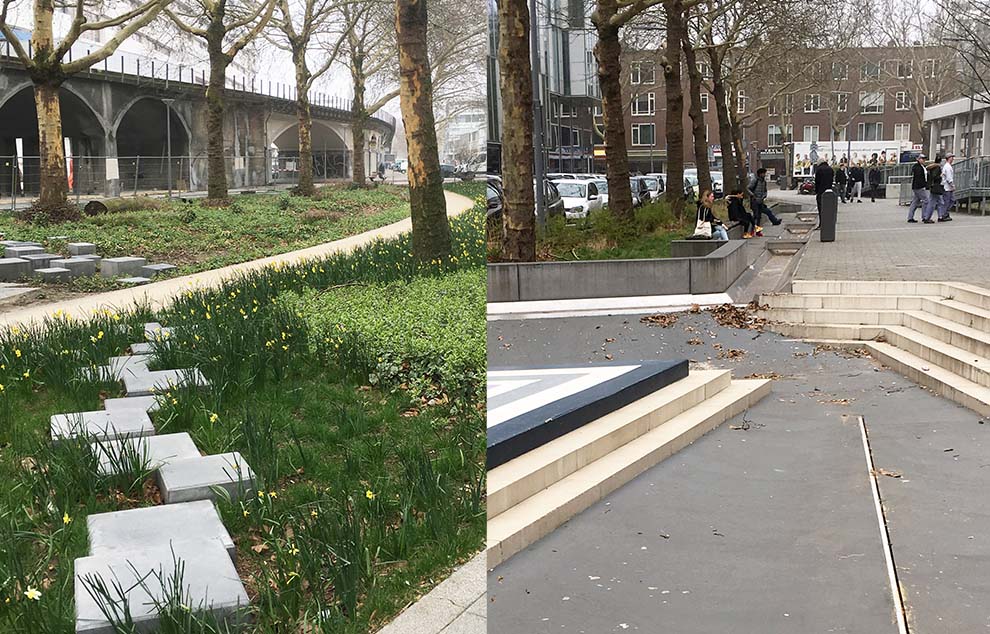
Two examples of rain gardens in Rotterdam.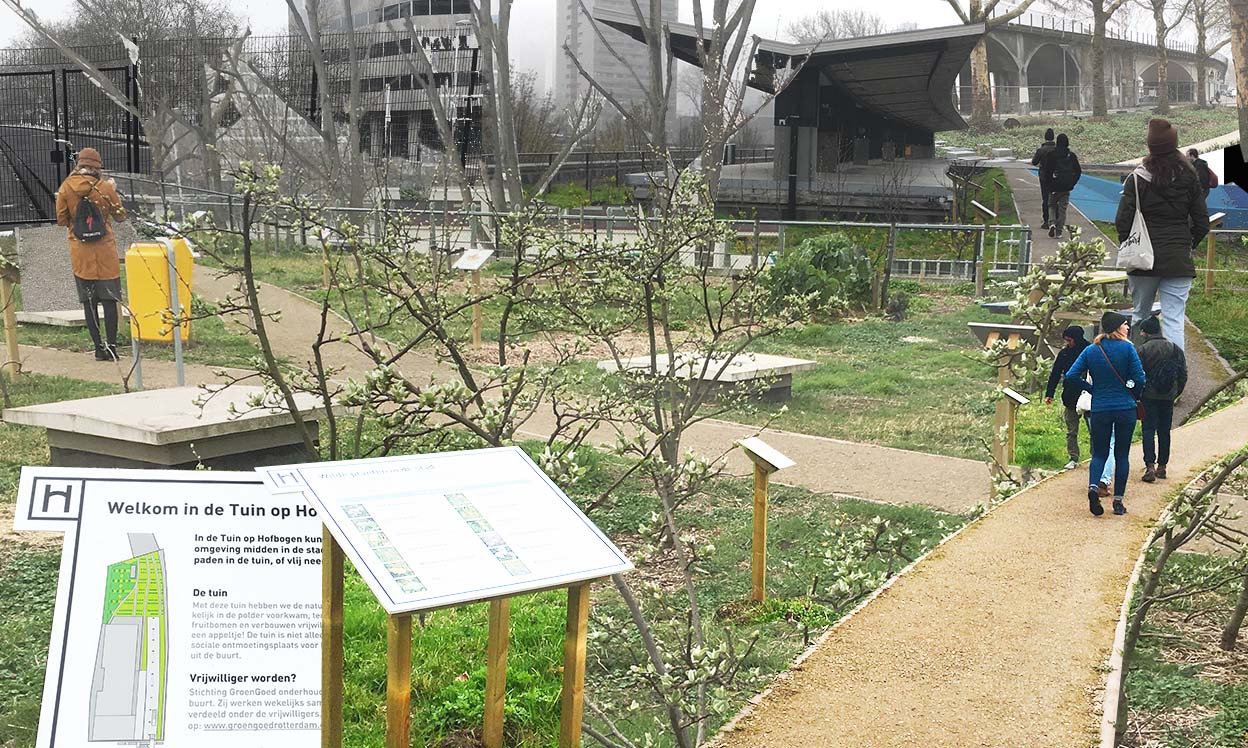
Perhaps the Rotterdam version of the Highline? An obsolete elevated is slowly being redeveloped as shops underneath and greenspace above.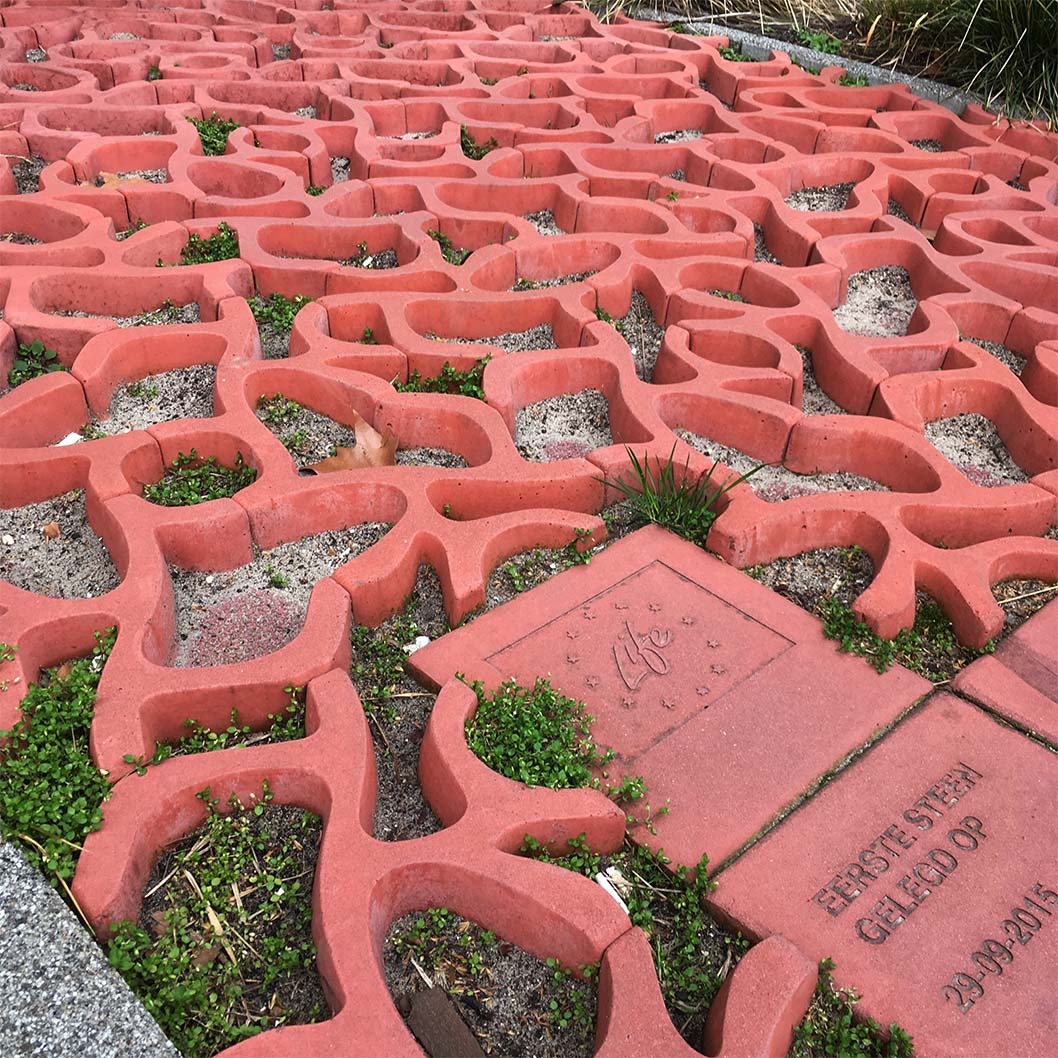
Experimental paving designed to also temporarily store water being tested in Rotterdam. 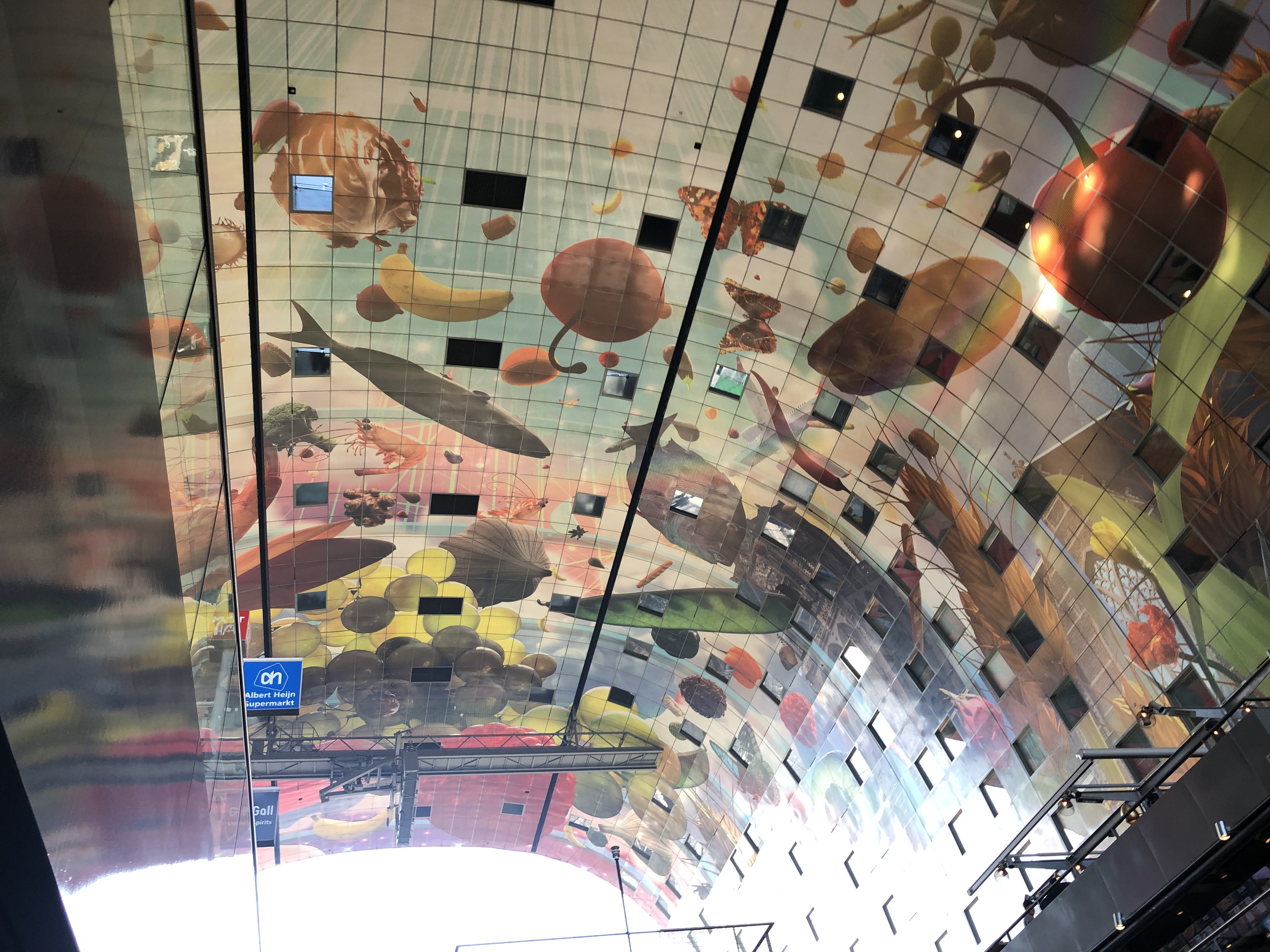
The farmers market that had many different kinds of food stands from all around the world. 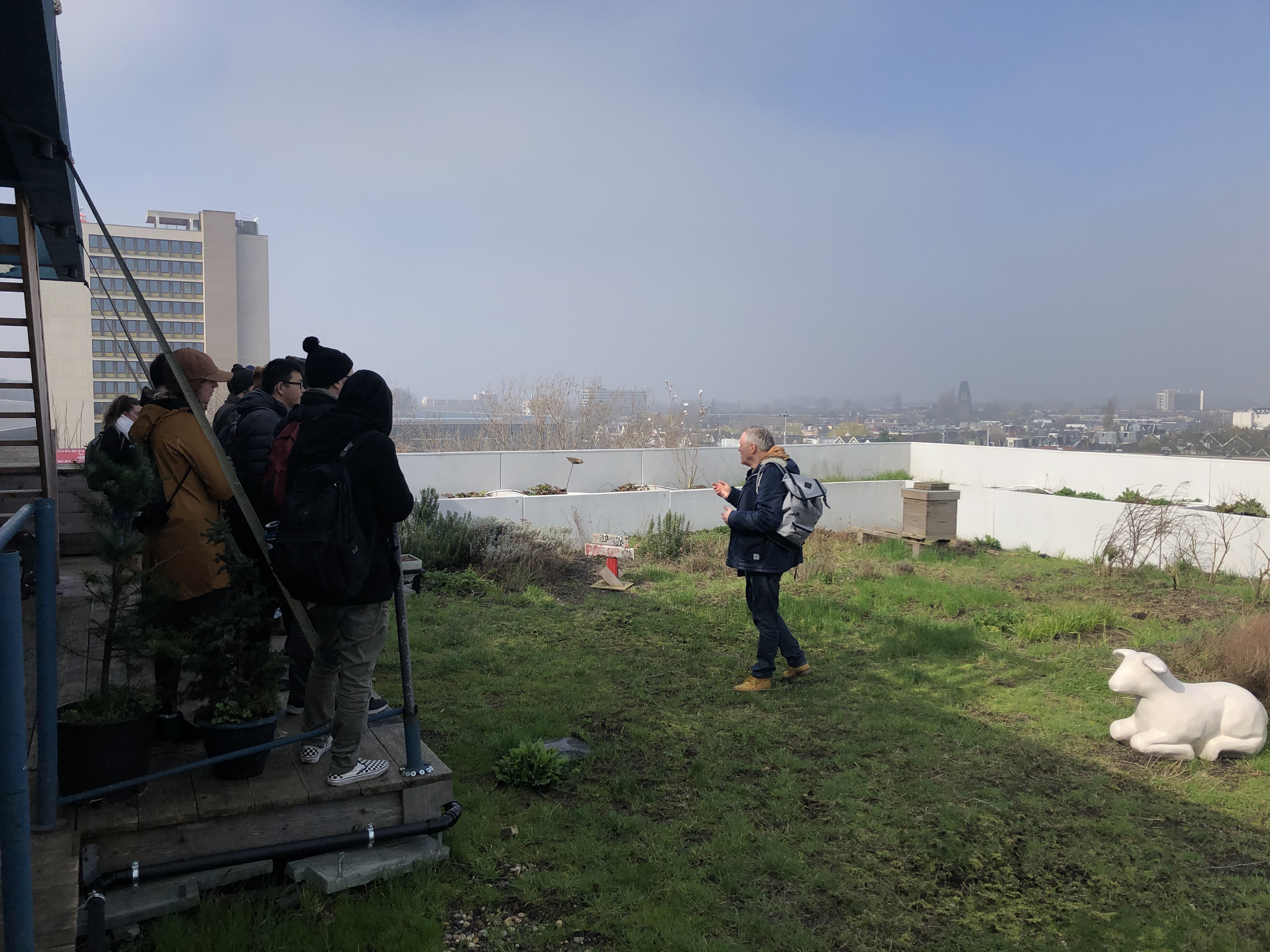
Group listening to tour guide about green rooftop farm in the heart of Rotterdam.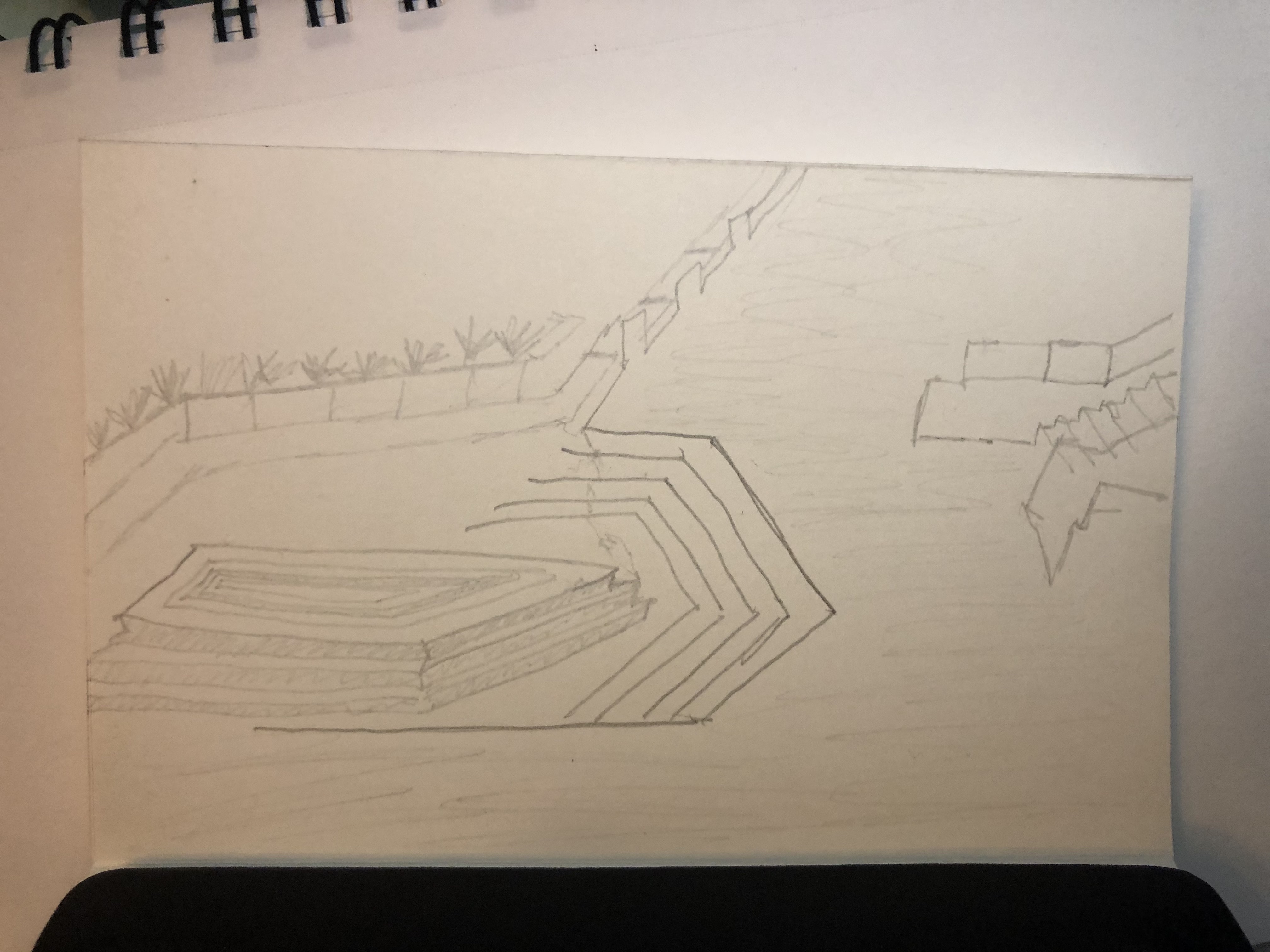
Drawing of the smaller water retention ponds in the water park.
Part 1: Nikolai Fjelstad DeSantiago
The first stop we made in Rotterdam was a courtyard called Bethemplein and it is known to the Dutch as a Water Square design. Watersquare designs were meant to have form and function by working as a multi-purpose landscape. First, it works as a water retention basin and secondly it works as a community gathering space/recreational area. Water that is shed off the surrounding rooftops is then funneled into stainless steel runnels on the ground and pooled into the large catchment areas. These catchment areas were functional in the sense that they worked well as water retention basins and a hang out spots and a basketball court but they also had the intention to include elements for extreme sports such as skateboarding, in-line skating and bmx.
Looking from a critical standpoint and from an extreme sports enthusiast, I find that the efforts to include these elements in their designs are valuable but could have been thought of a little more carefully as there is no flow, rhythm or connection to the elements. Another critique on the ‘’skateable’’ elements would be that there could have been more elements added to the courtyard such as a few quarter pipes, flat rails, and possibly moveable objects. The idea to create a spot that is meant for skateboarding, basketball and hanging out in between classes with a functional water control system is what designers should be thinking about doing more. It was awesome to have visited a place I have referenced and used as precedence in many of my previous projects and it got me thinking about new ways on how to include it into more of my future work.
Part 2: Sydney Shea
After our stop to investigate Rotterdam’s stormwater infrastructure, we walked to the old train station and elevated rail lines. Between the arches of its structure, new life is beginning to emerge in the form of shops and restaurants. Above the shops the rail line is coming back to life as a public green space reminiscent of New York’s Highline. A portion of the site is planted with fruit trees and used for community gatherings, a testing ground for future design and programming.
The next stop on our agenda was the Luchtsingel (air canal) pedestrian bridge, the world’s first crowdfunded public infrastructure project. The bridge is 400m long and raised one story above the ground, connecting three previously disjointed areas of the city. Our guide then led us through a building home to many creative studios, up six flights of stairs, and out to the rooftop. The space is occupied by the Netherland’s first rooftop farm and urban garden, one of the largest in Europe. A community of volunteers nurture a garden of vegetables, herbs, bees, and worms, supplying a small restaurant that sits in the middle of the roof and restaurants throughout Rotterdam. Volunteers were hard at work during our visit, preparing the soil for the new season and beginning to plant.
Our last stop of the afternoon was Rotterdam’s market hall. Under an arch of apartments, the large indoor market provided many opportunities for exploration of Dutch traditions and others from around the world. We enjoyed wandering through the halls tasting sweets, teas, spices, and speciality foods from around the world to end our day in Rotterdam.
 Cities on Water 2019