Part I: Mattie Wong
Today, we take the train, ferry, and then bike around the island of Texel to experience the type of landscape that the Netherlands would probably have had it not been for Dutch engineering. We sway along with the ferry clutching our Chocomels tight to our chest to warm our fingers as we pass the narrow water passage that takes us out to the ferry terminal. Our bikes are ready, and we start to weave our way single-file through fields of sheep curious about our encroachment, but undeterred. Sod hedgerows divide up the landscape instead of regular fences or rock walls we would have expected.
The cycle track skirts fields on the left and right, an in between space created just for pedestrians and two-wheeled wonders. We head towards the north-east of the island and here we start to see two things we have not seen much of in the Netherlands: topography, and natural forest. We go a little further and park our bikes where the topography again shifts to scrub brush. This path leads us out to a beach on the North Sea and gradually changes from scrub brush to wetlands and dunes. The tide is out and the mudflats stretch out before us, keeping us far from the body of water that The Netherlands have kept at bay for centuries. Standing here among the dunes, it is amazing the audacity and determination of a people to STAY, and to work and then counterwork with nature to carve out a space for themselves.
We left this glimpse of the North Sea and passed back through the gradient of dune, wetland, scrub brush, and wind-carved forest back to our bikes to continue on.
Part II: Will Linscott
After our first walk through the dunes of Texels (pronounced Tessul), we continued our bike ride through the island. As beautiful as the dunes were, it was somewhat disappointing to hear and see the ocean but not be able to reach it. We rode north and east to a section of the island with roads that ran very near to the beach. Though I am typically against development near shorelines, there was only a small road, a modest parking lot on the land side of the last dunes, and on the sea side, only a quaint café lay between the seemingly sheer cliffs of the dunes and the North Sea.
Taking off my shoes and feeling the cold, soft sand between my toes was a strange feeling, being from Florida. Nearing the water, as the sand transitioned from its soft and fluffy texture to a saltwater saturated but hard packed surface, my toes began to lose sensation. I could only stand about ten seconds in the water up to my knees before my feet started running back to dry land, almost unconsciously.
Jetting out into the sea, every few hundred meters along the beach, were black forms about two feet high, 30 feet across, and 300 feet long. Judging by appearance only, the forms seemed to be composed of tar and rocks, with beautiful indentations made by the rocks creating colorful tide pools filled with barnacles and other barely visible traces of life. To the touch, the forms felt much more like stone than a smooth tar texture, but I still have no idea what they were made of or how they got there.
It was a gray and windy day at the beach, almost exactly the setting you would expect to see the North Sea, but the enormously wide and long beach was activated by runners, walkers, kite flyers, and bikers, all working their way along the western coast of the island. After many excursions through urban neighborhoods and archeological sites, the open coastline was as refreshing as the sea breeze and mist blowing across its vast reaches.
Images: 1-4, Alexis Kautzman, 5-7 Dakota Carlson
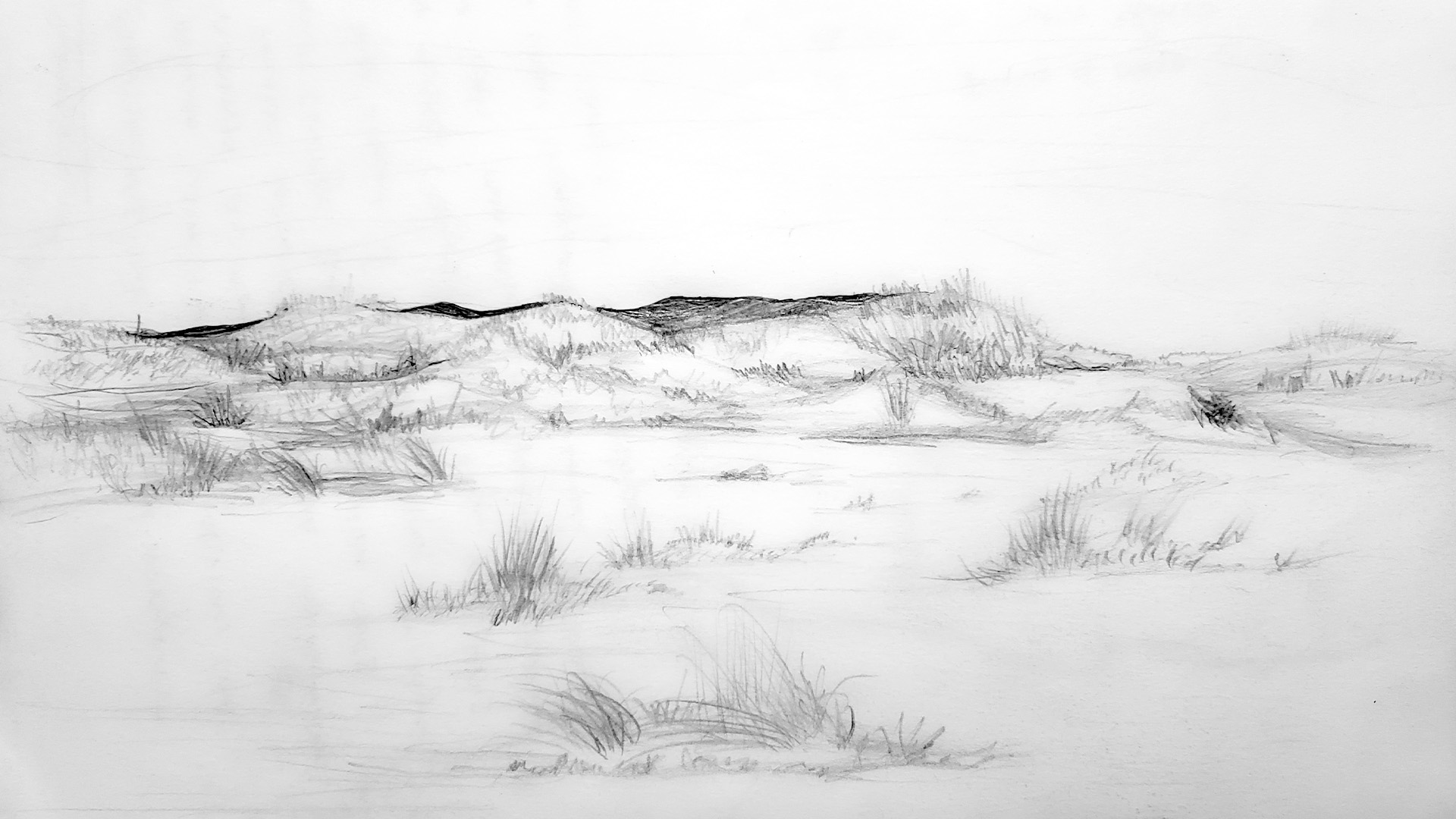
Sketch of the sand dunes along Den Helder that looks at the horizon line and the role of vegetative texture in reinforcing the perception of distance. The contrast between the vertical moments of grass and the horizontal nature of the sand dune bases aids in the scaler perception of the horizon.
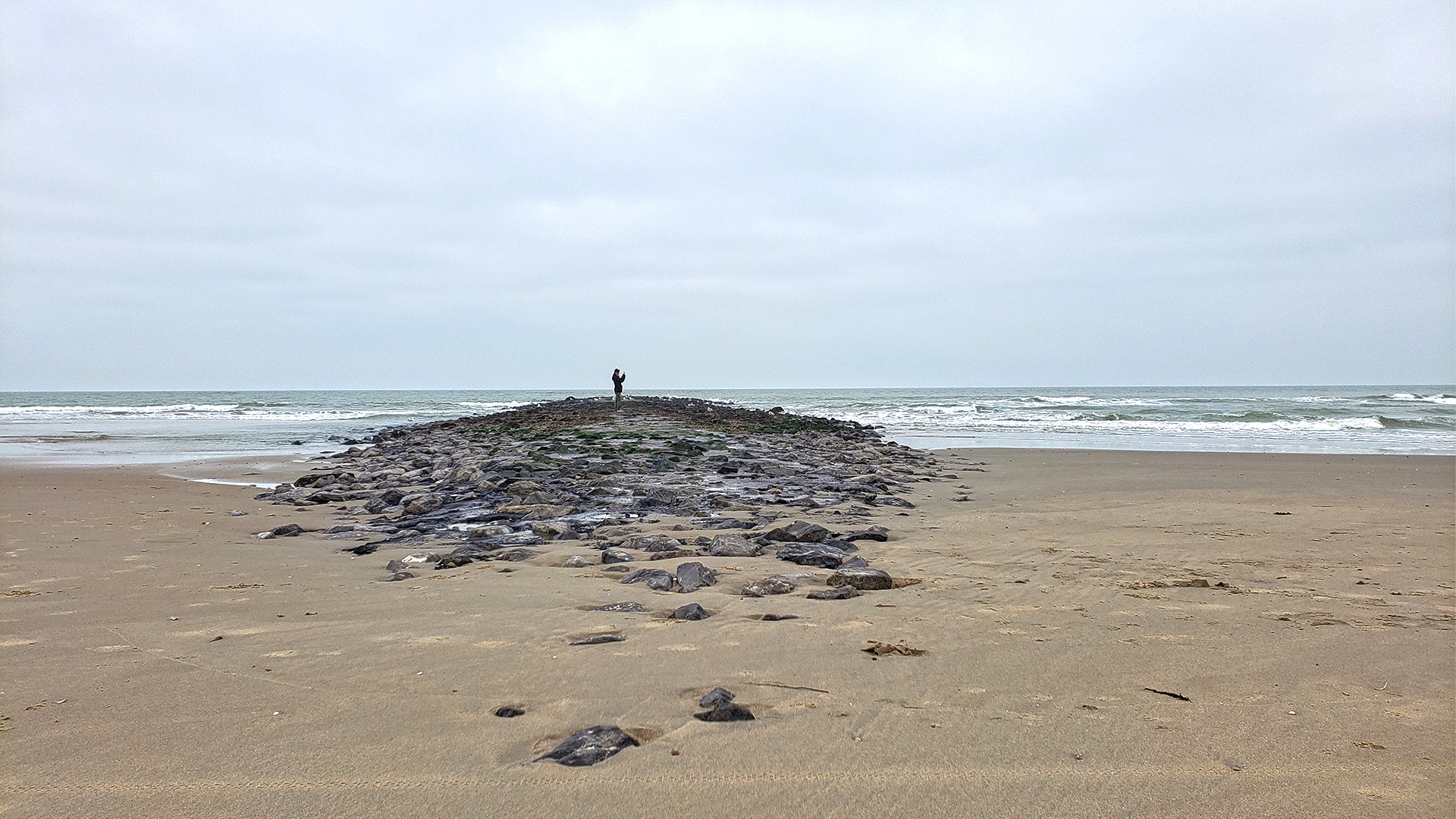
Beach along the island with what appears to be a former pier dismantled and filled with stone. Nikolia can be seen in the center as a reference to the scale of the mound of black stone in the center of the flat beach.
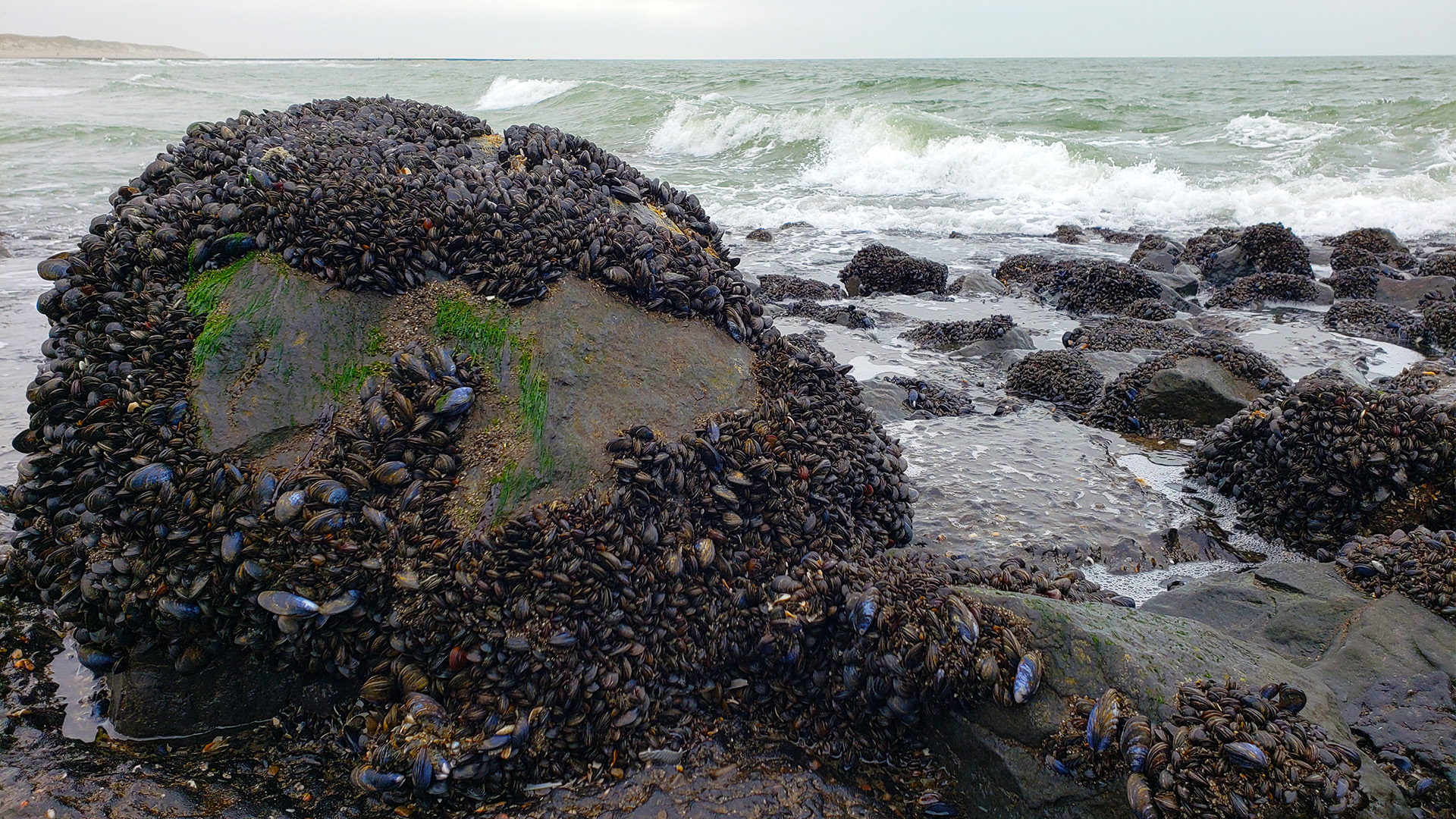
Here we can see the amount of mussels that have made the black stones their habitat and the layer of texture added.
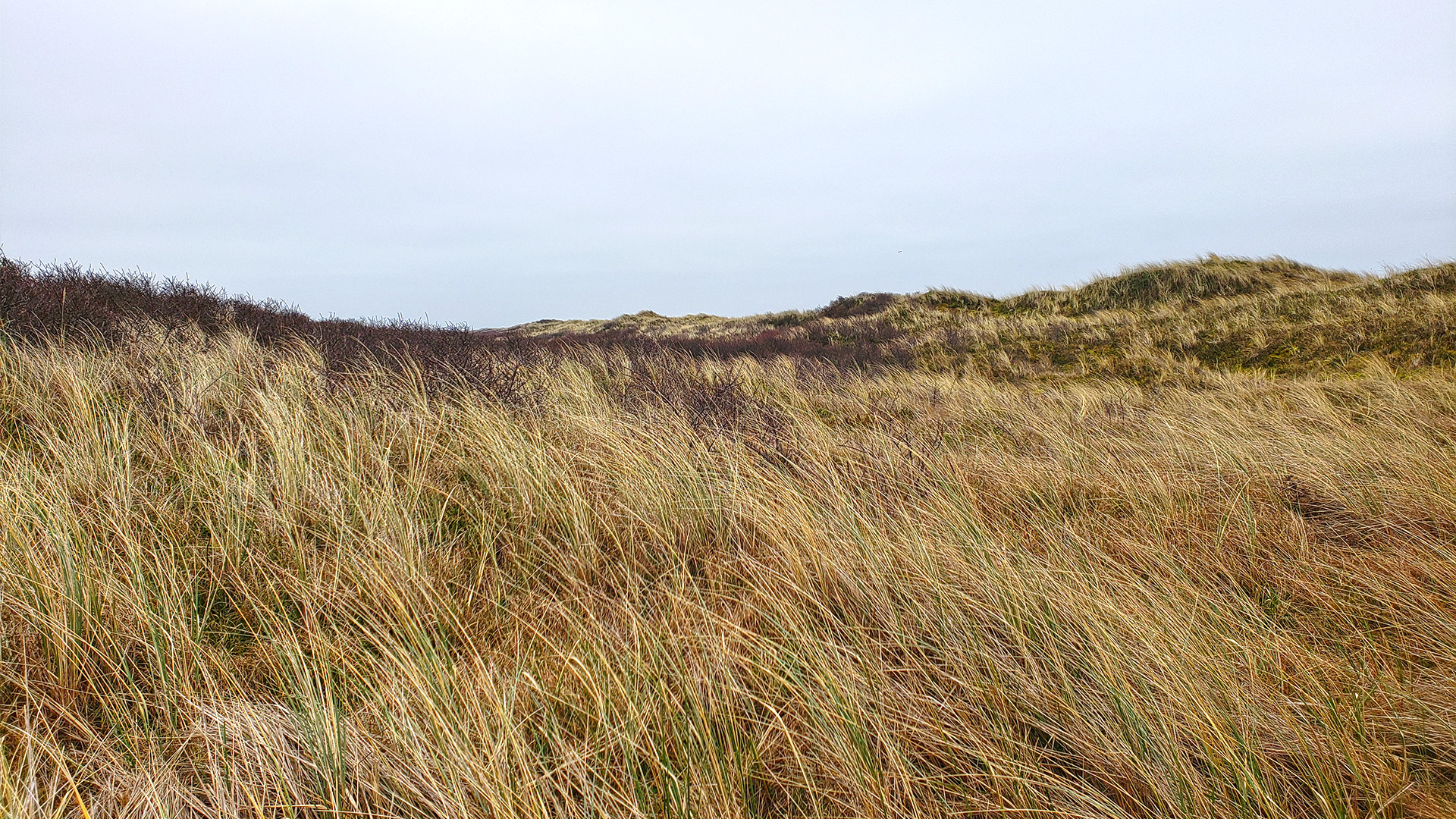
The transition between the inner island prairie, sand dunes, and sand marks the progression of the journey to the edge of the sea. In this image we see the end of the grass prairie and the beginning of the sand dunes.
 Cities on Water 2019