Part I: Dakota Carlson
The typical zombie shuffle that many of us feel on our way to work or school was not possible this morning. This was due to the several thresholds of traffic that every intersection posed forcing us all to be on the alert. The bicycling in Utrecht is borderline chaos but we are assured that this is normal. Today we made our way to the Utrecht Centraal a very modern sleek train station where we all successfully used our electronic boarding passes. Today we traveled to Amsterdam to visit the relatively new islands that were made and the suburban experiment gone wrong that was placed on top. The islands are formed through controlled dredging deposits that overtime create landforms large enough to sustain buildings and infrastructure. This idea of land formation on this scale is quite amazing to me but to the Dutch this is second nature to do such massive movement of water and land. The urban design that was placed on it was up for speculation. The mixed income housing that is offered there is nice because they do a good job of not making the aesthetic of a low income house any different than a market house. The width of the streets and gridded blocks instantly reminded us of a suburb in the United States. The Dutch have very well designed spaces from what I have experienced so this suburb seems more like an experiment than a well thought out design. The central boulevards in some of the blocks had these small parks with subtle exercise features and a zipline that a few of us could not resist. The new suburb island housing areas seemed to turn their backs to the hundreds of years of successful street engagement design that we experience in Utrecht. The size of streets has a small margin of too small and claustrophobic to being too open. Also the lack of local cafes or restaurants that have people through the streets and gives the community a gathering space. I suppose that since there is an abundance of more dense and people oriented street throughout Amsterdam it would be nice for many to have this as an option for starting a family or a change of pace.
Part II: Will Linscott
As we moved from our social housing tour of the suburban island that is IJburg, we went into the West 8 project in Borneo Sporenburg, also dealing with social housing and, obviously, waterfront. The canals in Amsterdam seem to come from every direction, though on a Monday morning served more as enormous linear parking lots, rather than transportation thoroughfares. The design nestled the housing between canals, streets, and several large modern architectural projects, weaving many different threads of the urban fabric into a relatively continuous feeling space. Access to the water is always kept public, so the housing and patios are set back significantly, making houseboats the only residents with immediate waterfront access.
One of the larger canals is spanned by two similar, but also very different bridges, also designed by West 8. These bridges seem to have become poster children of the multinational firm, as their strange shapes attract locals and tourists, inviting them to stroll across the lower bridge and climb to the unassuming heights of the steep, arching bridge. The latter is so steep that the majority of the walkway are steps, rather than a smoother, accessible arched ramp. Nevertheless, people seem to love the feeling that these bridges bring to the neighborhood, and from a distance the forms of the bridges justify the affection.
The houses themselves were quaint, some with a car port on the ground floor, and others with a more typical glass and brick façade. Personally, I found the carports facing the canal to be a bit off putting, as most of them were cast iron cages against an otherwise cheerful street with relatively narrow roadways. At the front doors, each unit had its own little patio space for a small garden, potted plants, Since Madrid, we have been accustomed to seeing greenery on apartment patios, but this usually only occurred at least one story up. Here, the sidewalks and front patios meld together via combined individual expressions, giving the entire community a very cohesive feel.
As a side note, there was a shooting on a Tram in Utrecht while we walked the streets of Amsterdam. This came as a shock, but fortunately we were nowhere near the attack. Being from the U.S., these types of incidents have become all too familiar, and quite frankly my ability to almost shrug it off took me aback and made me think about the state of intercultural relations and its almost Orwellian effect on my sense of security. I am glad that we are safe, but I also hope that this does not lead to the same blind assumptions that often occur in the U.S. after such attacks. It will be interesting to see how it all plays out.
Images: 1-3, Nikoali Fjelsted Santiago. 4-7, Alexis Kautzman
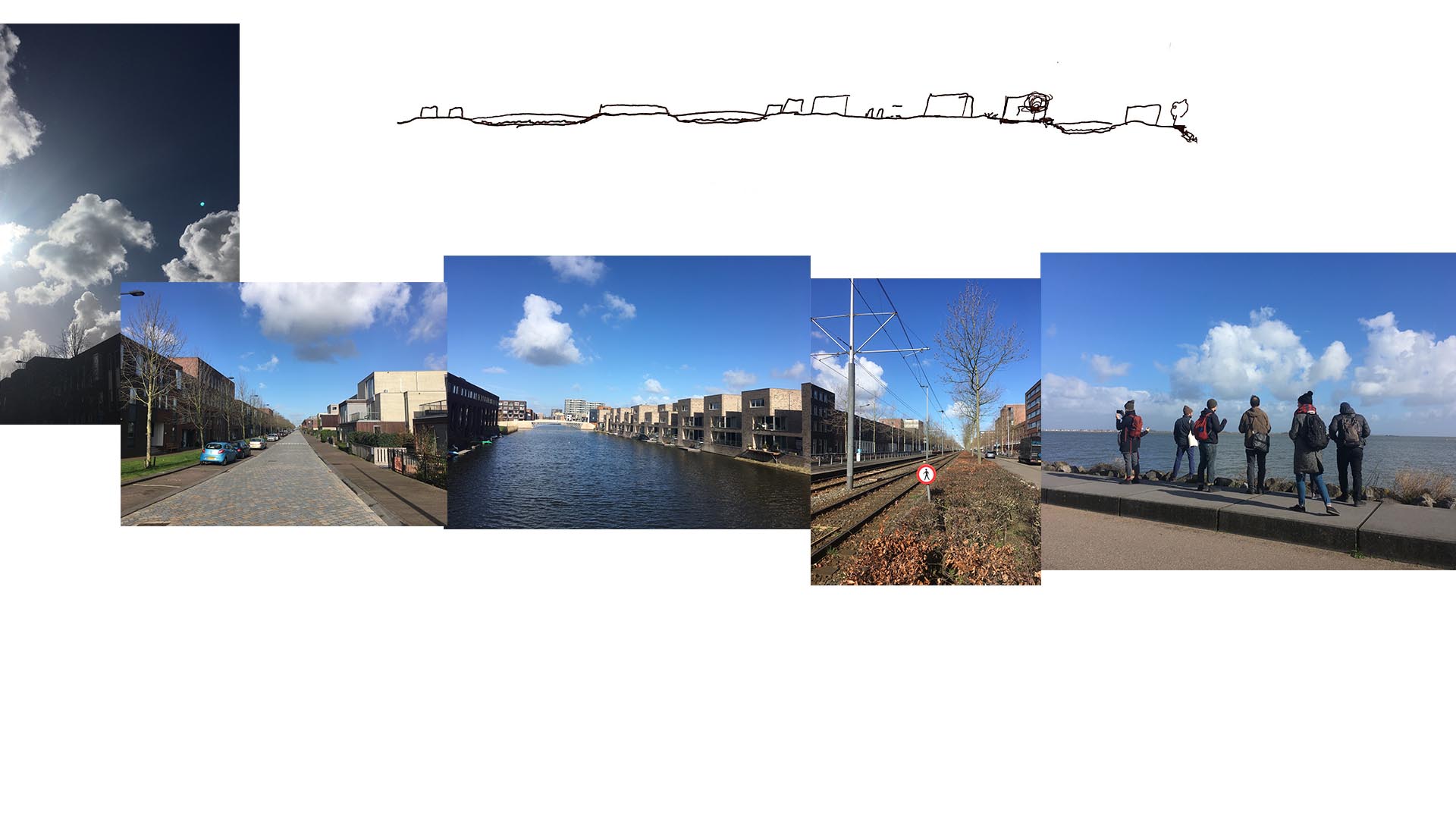
Sketch of Section across Haveneiland-West near Amsterdam plus a image rendering showing our movement through the town. This place sits on an island just a few feet before sea level.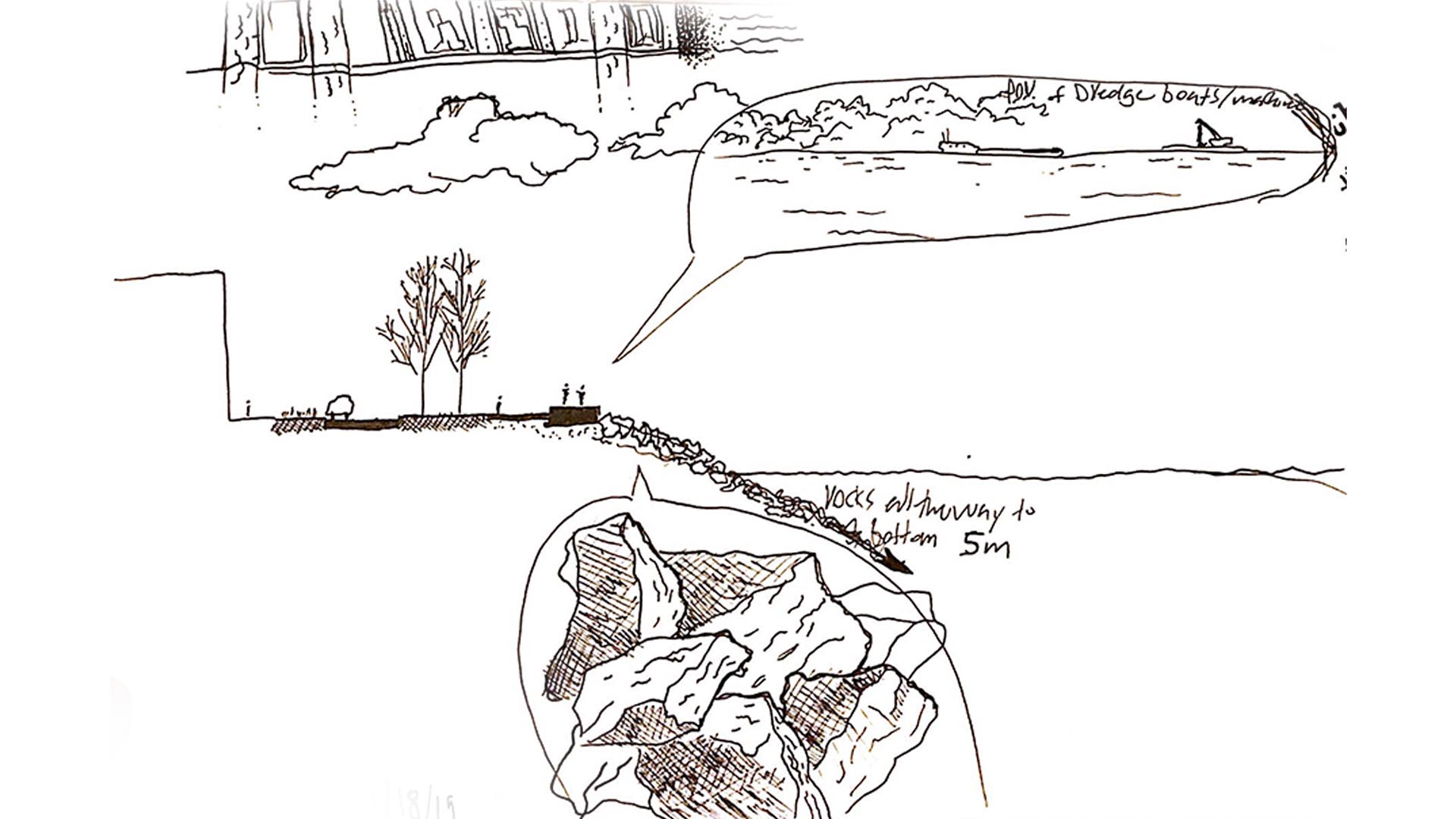
Sketch of the edge condition in Haveneiland-west, showing the rocky shore and a quick perspective.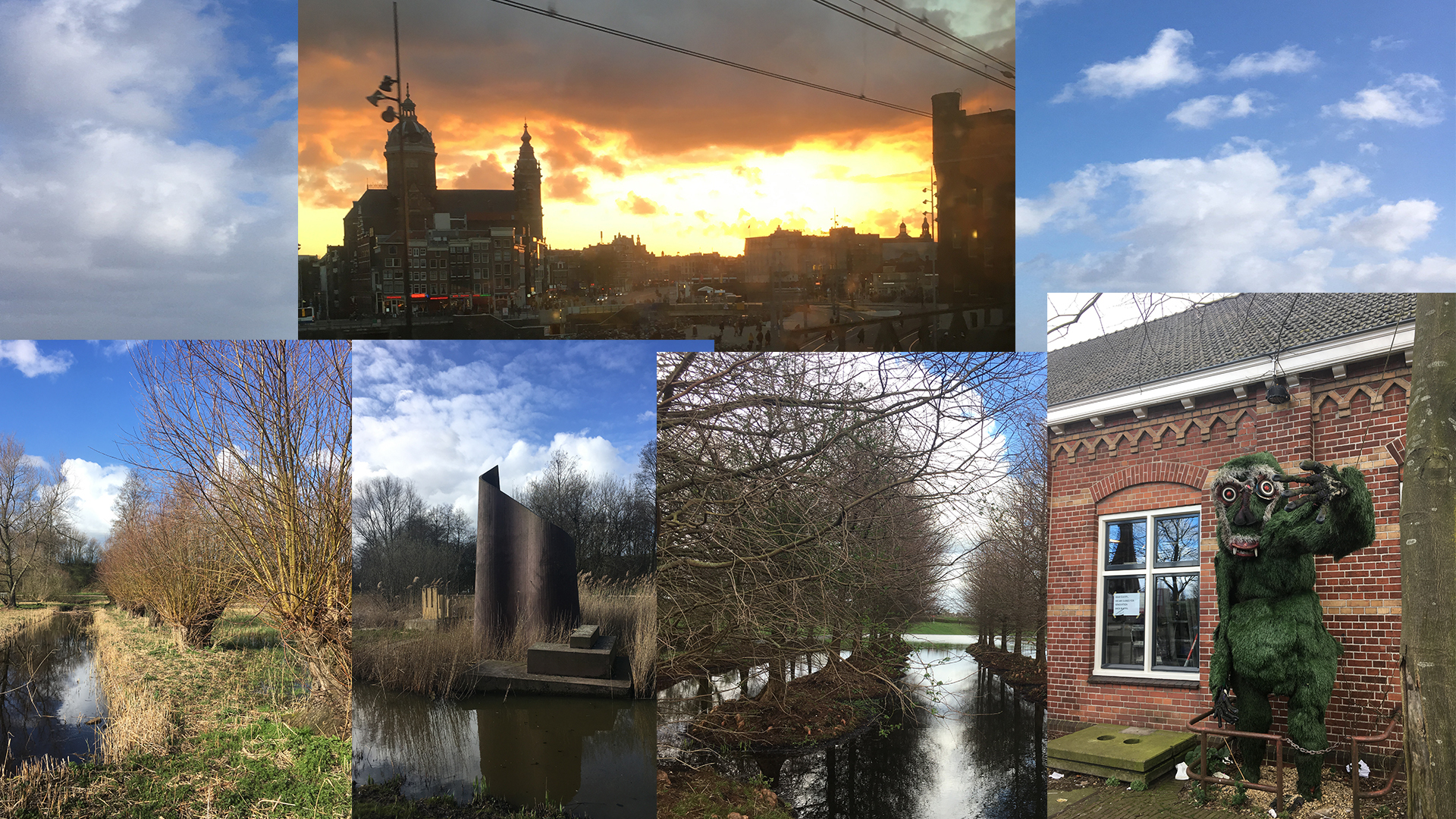
This image shows the feeling of a project completed by West 8, the Westerpark in Amsterdam.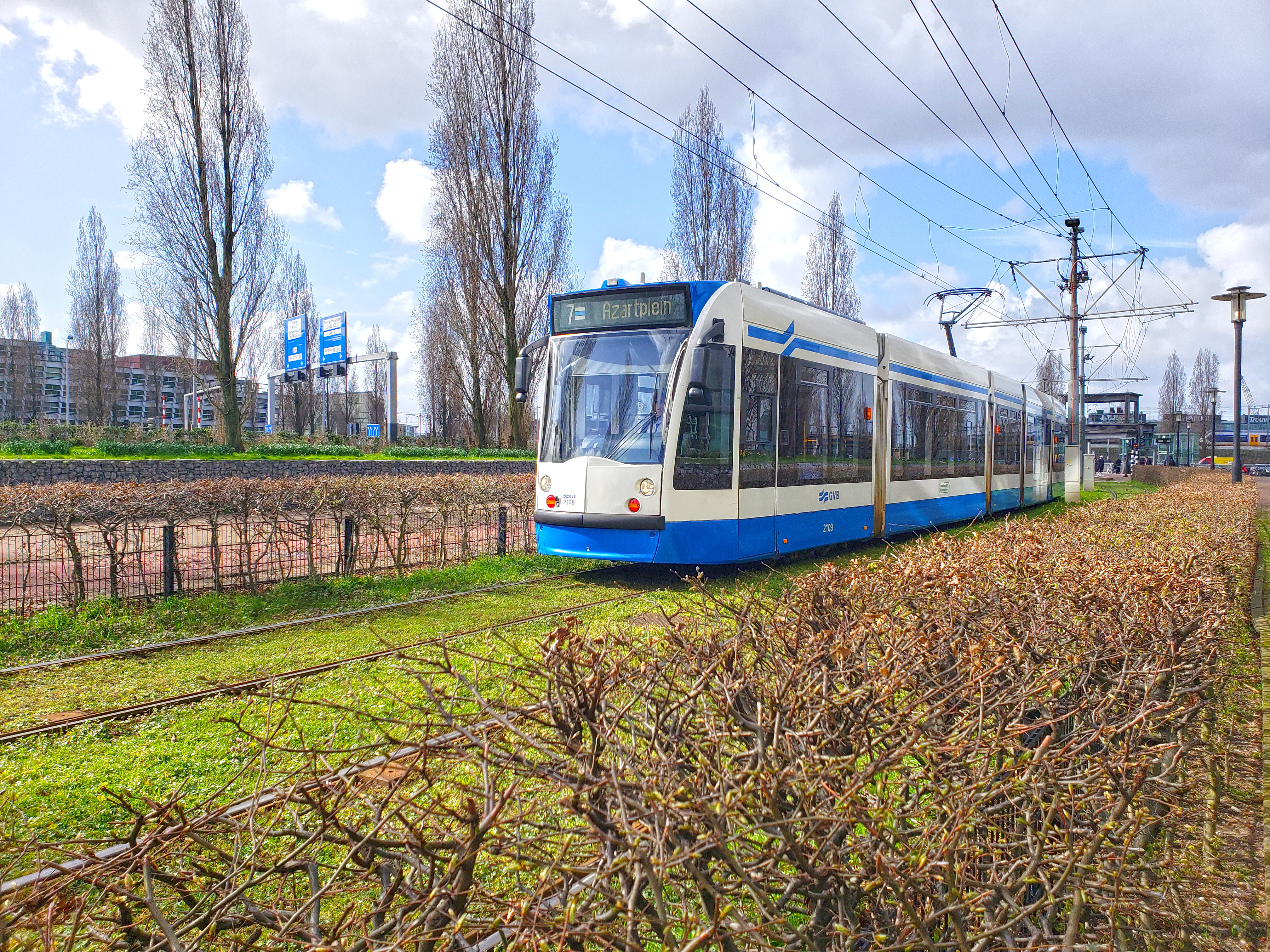
One of the trams we used as we explored different housing types in Amsterdam. The tracks have wonderful green space surrounding them.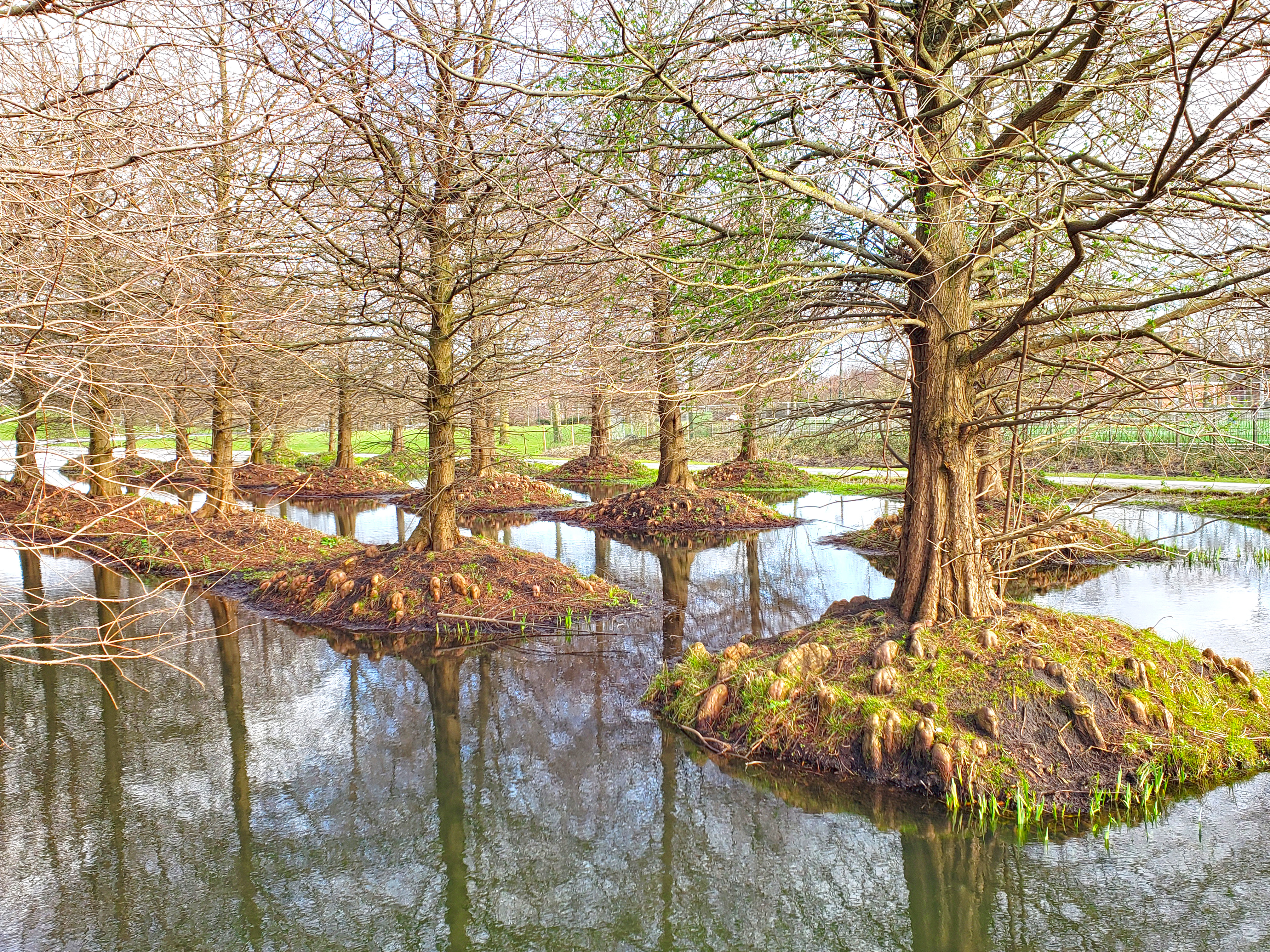
Cyprus garden at one of the parks we visited in Amsterdam. This section is part of a spillway that empties into a holding pond and sits at the top of the slope. In this image we can see that the water currently flooding the grove.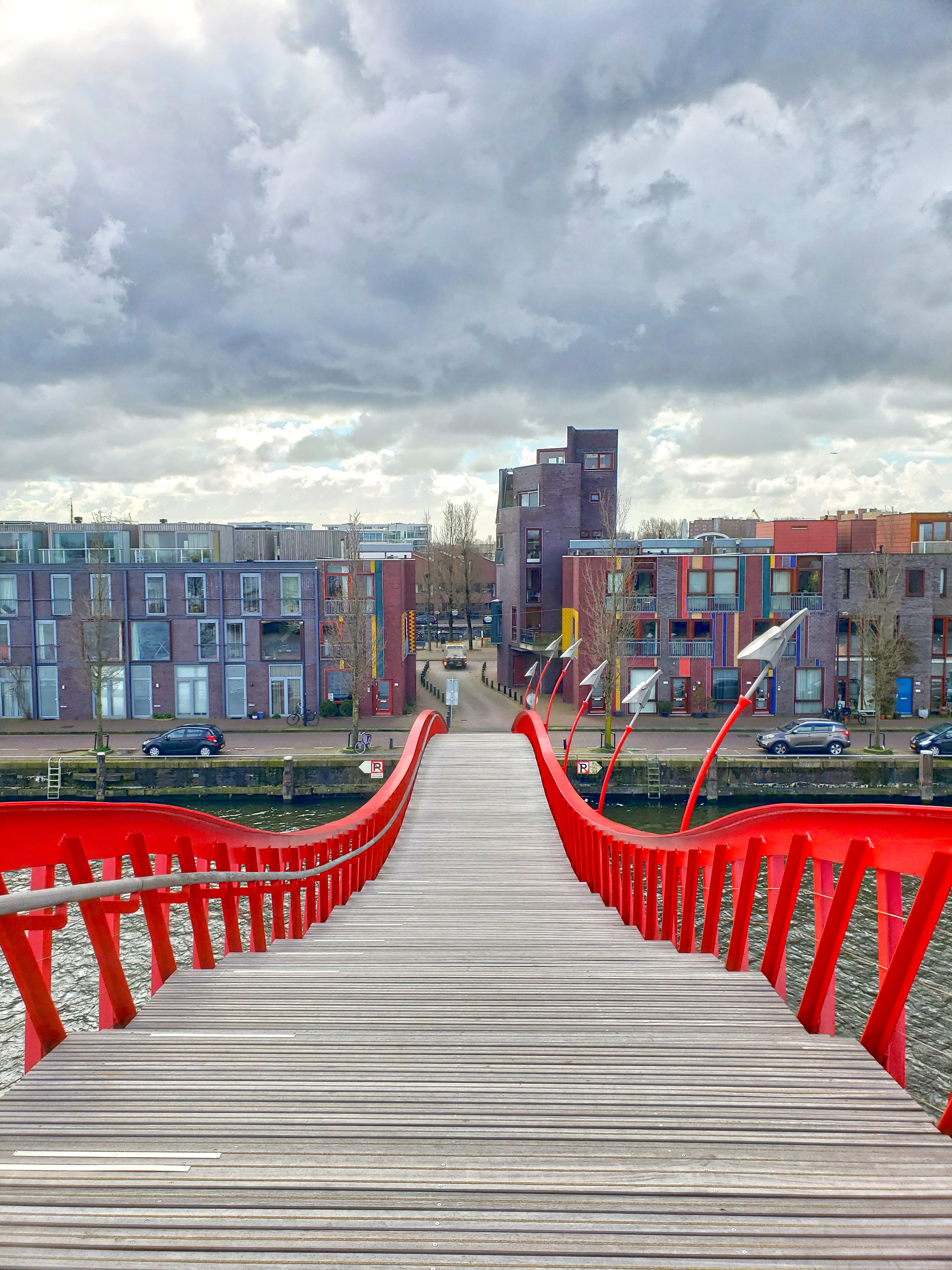
One of the red bridges installed by OMA and West 8 in their design project of a neighborhood in Amsterdam. These bridges are well known for suicides and many of the surfaces have graffiti sending messages of hope.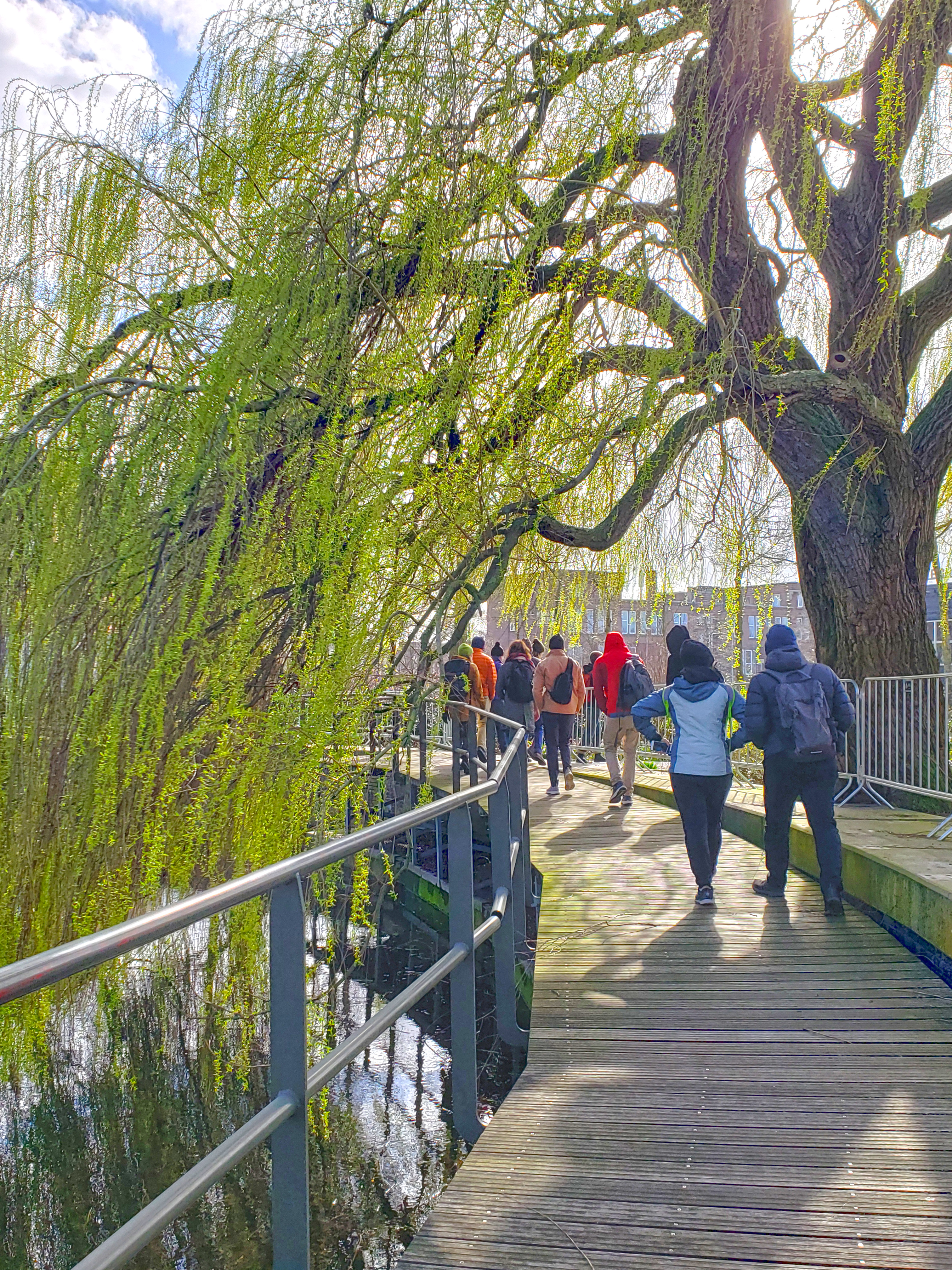
A water cistern that is used to irrigate the park grounds. It has turned into a small pocket of habitat for local wildlife where people can also walk along the water’s edge.
 Cities on Water 2019