Part I: Will Linscott
Our final day in Andalucia, and the last session of our visual culture class, was spent on an excursion to the Medinat al Zahar, a city built on the mountainside in the 10th Century, about 20 minutes east of Cordoba by bus. Before reaching the city ruins themselves, we visited the archeological site museum at the bottom of the hillside. The museum was built by Nieto Sobejano Arquitetos in 2009, and it rises and falls silently into the site. The building itself is barely visible as more than a white wall when approaching from the parking lot. Once inside and below grade, visitors take a curated one-way path through the museum’s main level, which gives the history of the site.
Constructed from 936-940, the city was established by Abd-ar-Rahman III, the Moorish Caliph of Cordoba. By the end of the 10th Century, the fortified city had been named the Moorish capital, though the city itself would only survive a few more decades, until the early 11th Century when Berber sacks left Medinat al Zahar in a state of disrepair from which it would never recover.
The lower level of the museum is filled with artifacts from the ancient city, such as ceramics, bronze statues, and pieces of archways and buildings. Video renderings also give visitors a sense of what the city might have looked like at its peak. The final room of the museum is an outlook toward the mountainside on which the city once flourished. The hillside is now dominated by a monastery constructed in the 16th century, while Medinat al Zahar is barely visible. Only 12% of the site has been excavated to date, but as we soon found out, its construction was truly a feat of architecture and manual labor.
Part II: Sydney Shea
After a short bus ride uphill, we reached an overlook above the Medinat al Zahar. Over the next couple of hours we wandered between, under, and around the excavated ruins in awe of the intricate and extensive construction of both private living and public spaces. Along our various paths we encountered streets, stables, servant quarters, private officials’ quarters, and ceremonial gates all in various states of disrepair and reconstruction.
We entered the city through the north gate, a vestibule located about halfway between the ends of the city wall. The road leading up to this gate was known by the name Camino de los Nogales (Walnut tree way) and served as the most efficient route to receive building supplies and other goods for the palace from Cordoba.
Down a number of staircases from the north gate there was a large ramped street leading toward the Grand Portico. The arches and noble street played an important role in the political life of the city, serving as an area for visiting dignitaries to enter through and be greeted by the city guards and palace officials of Medinat al Zahar.
On the opposite end of the site separated from the public realm, numerous private residences can be found, one of which belonged to the Prime Minister. Walking through what remains of a bedroom, private courtyard detailed with violet limestone, and bathing room with a large marble basin, it is easy to imagine grand ceilings and decor rising from the remains of walls, doorways, and architectural details.
A view of the gardens was the final stop on many of our paths, an overlook fit for resting, drawing, and taking in the pastoral beauty of the surrounding land down the hillside. The current layout of the upper and lower gardens was designed in the 1960s and includes a full circuit of exterior paths, a site for a pond that would be used for irrigation, and the now bare footprint of a large pavilion.
Images 1-4: Will Metcalf
Images 5-7: Anya Moucha
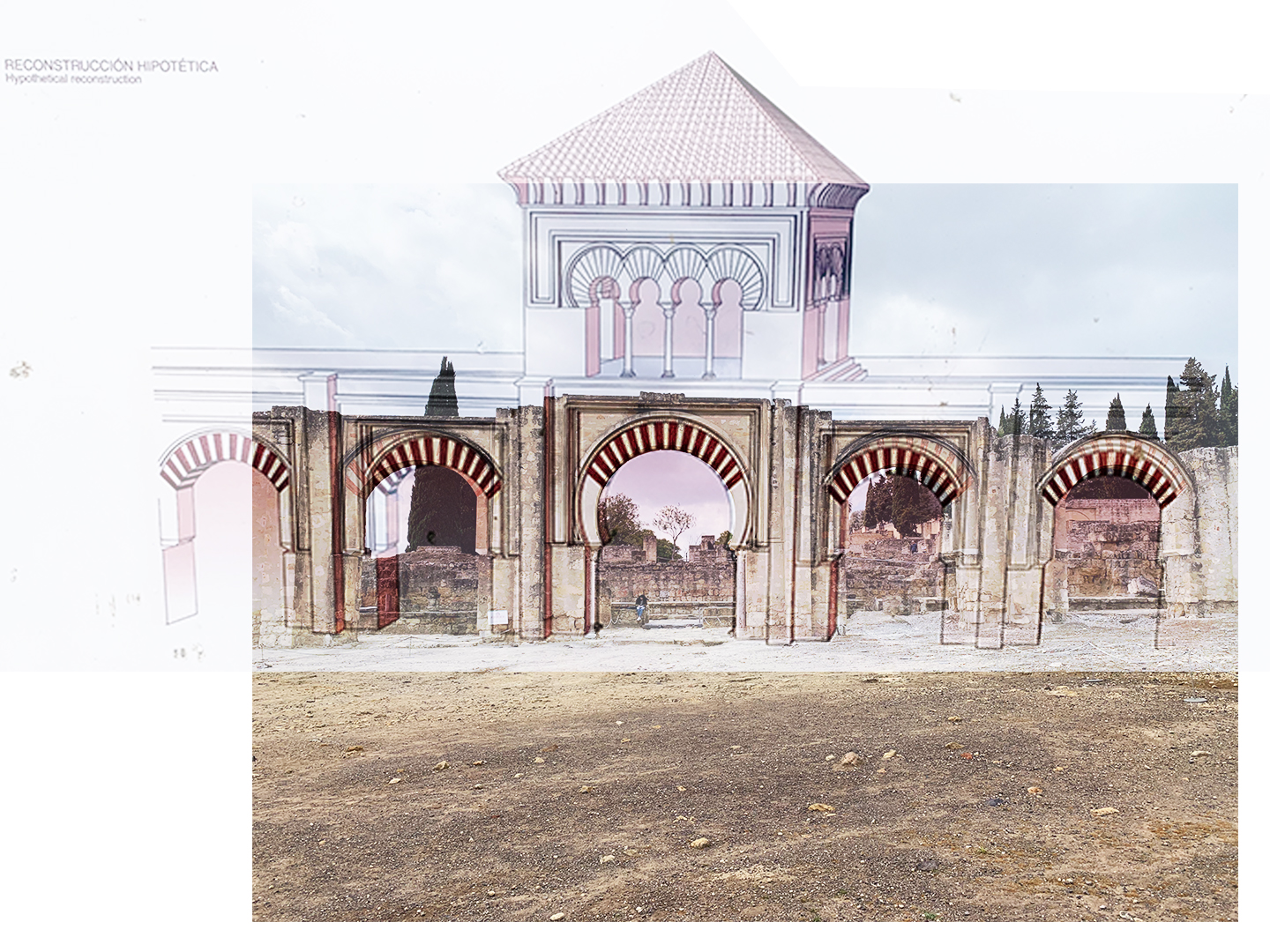
A conceptual rendering of the great portico (on-site) and parade grounds laid over an image of the existing ruins. This was once the symbolic and ceremonial entrance to the Alcazar.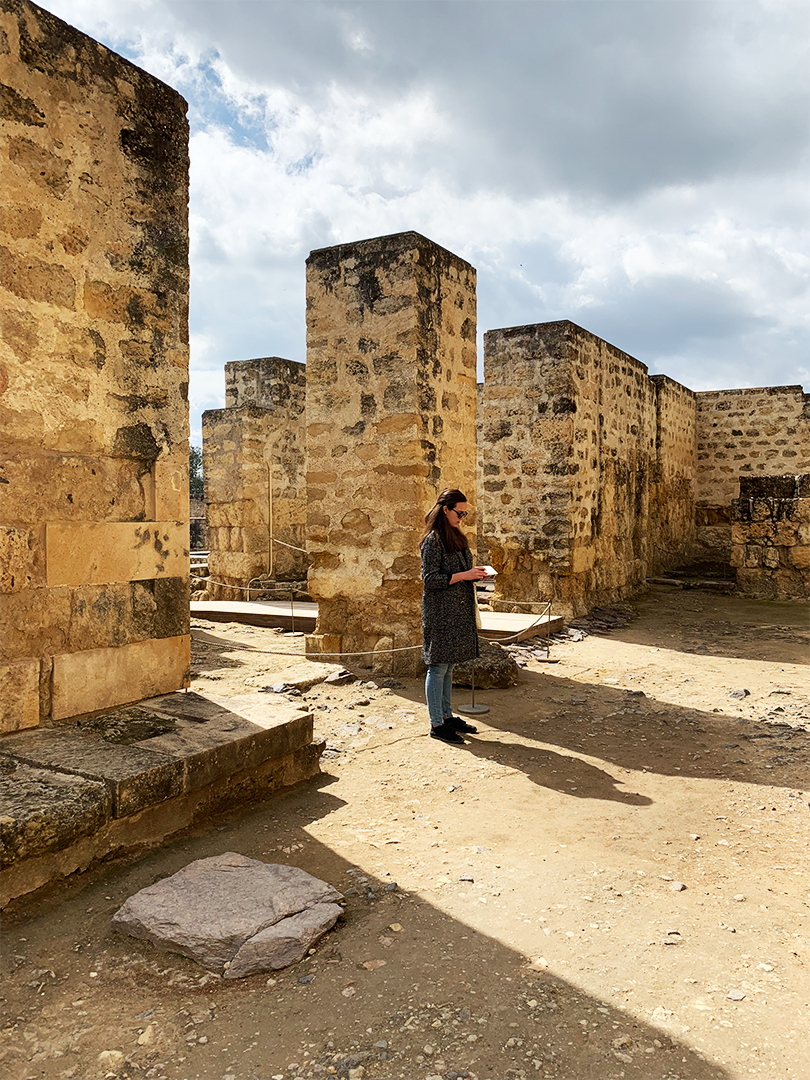
Anya drawing in the ruins of the guards’ quarters.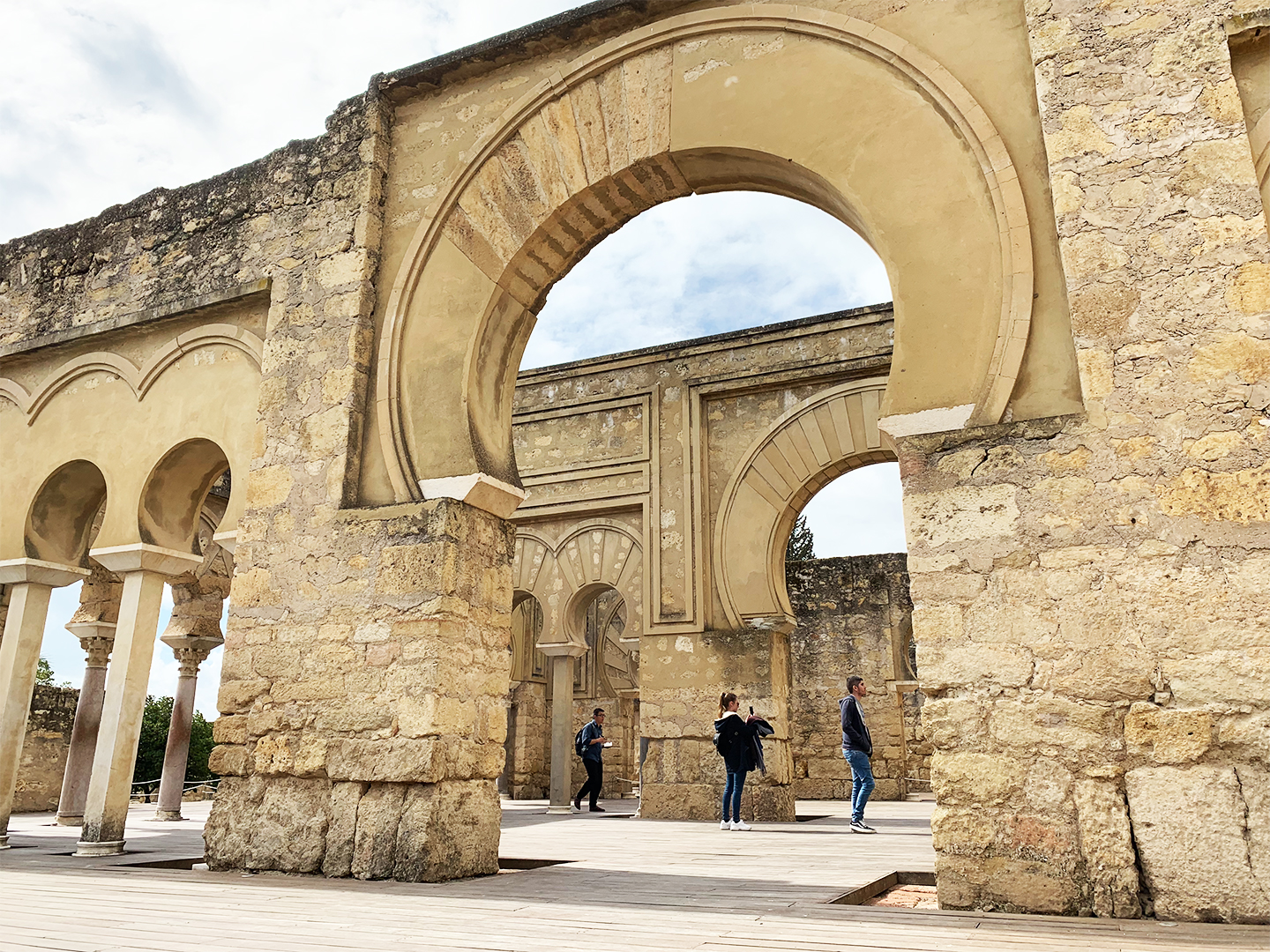
The eastern side of the upper basilica building, where main administrative offices for the Moorish empire existed.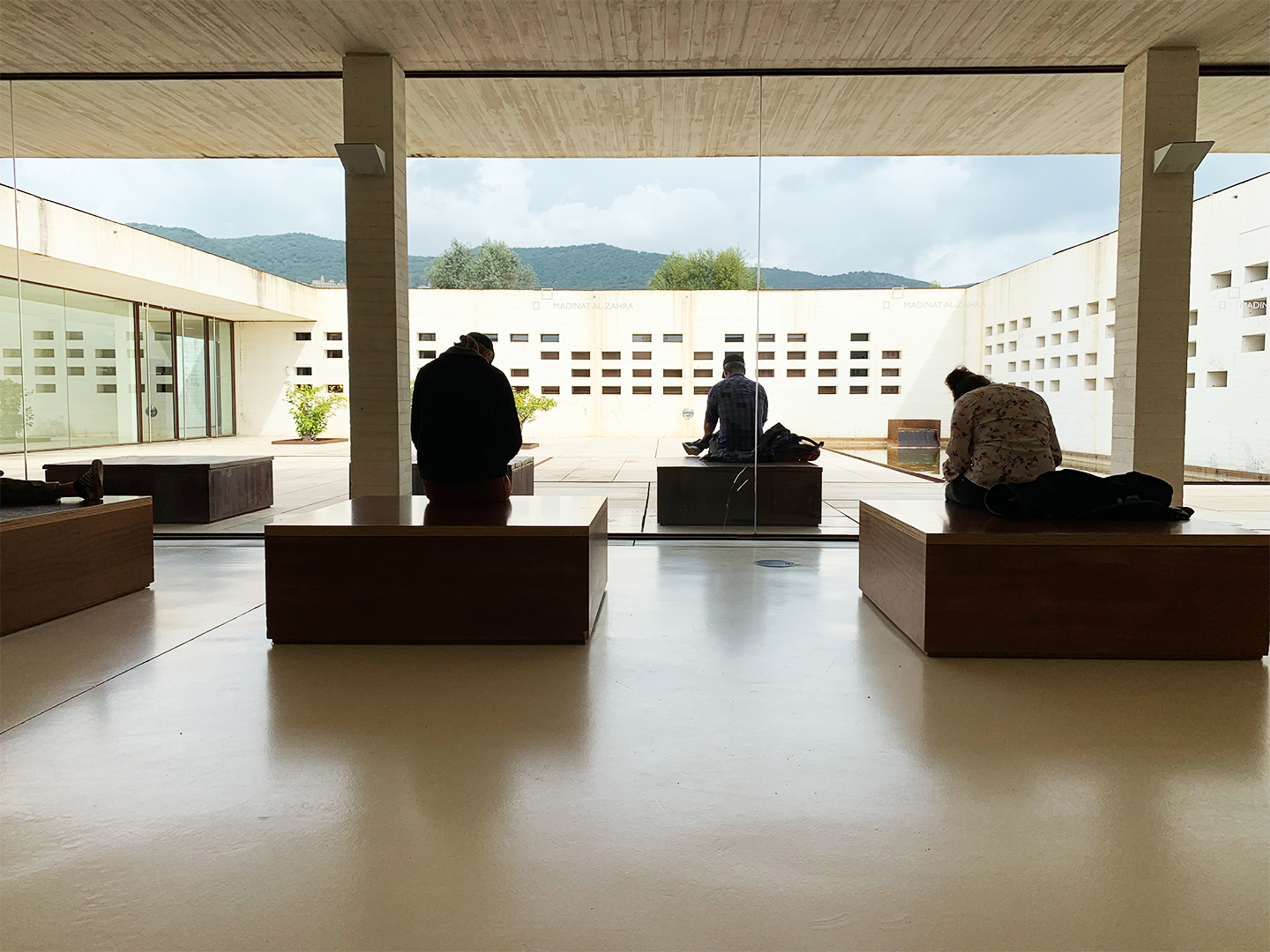
Taking a drawing break after walking through the museum. The courtyard here is a minimalistic take on a traditional space.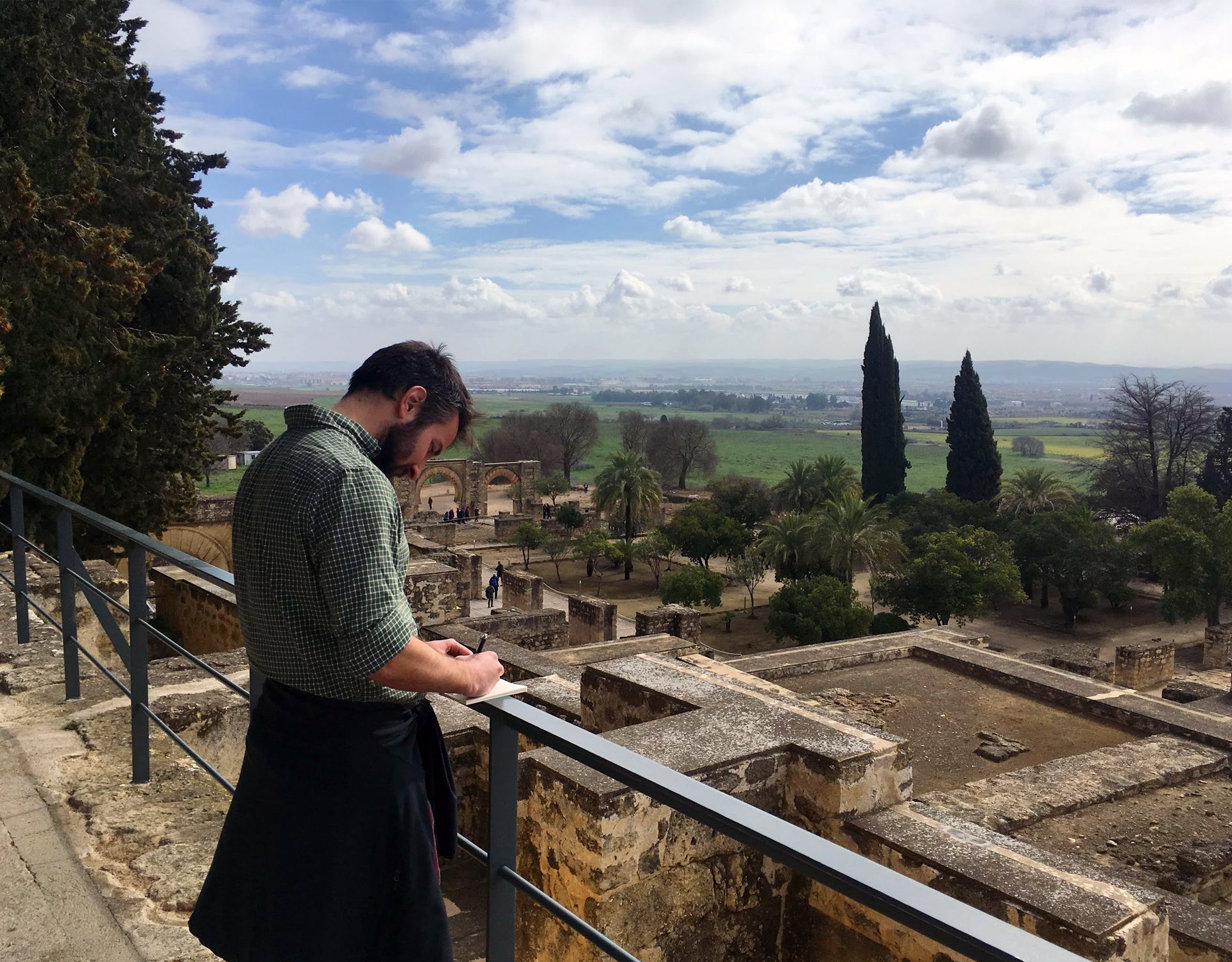
Andrew drawing from the first terrace, overlooking the ruins of the residential portion of the Medinat al Zahra.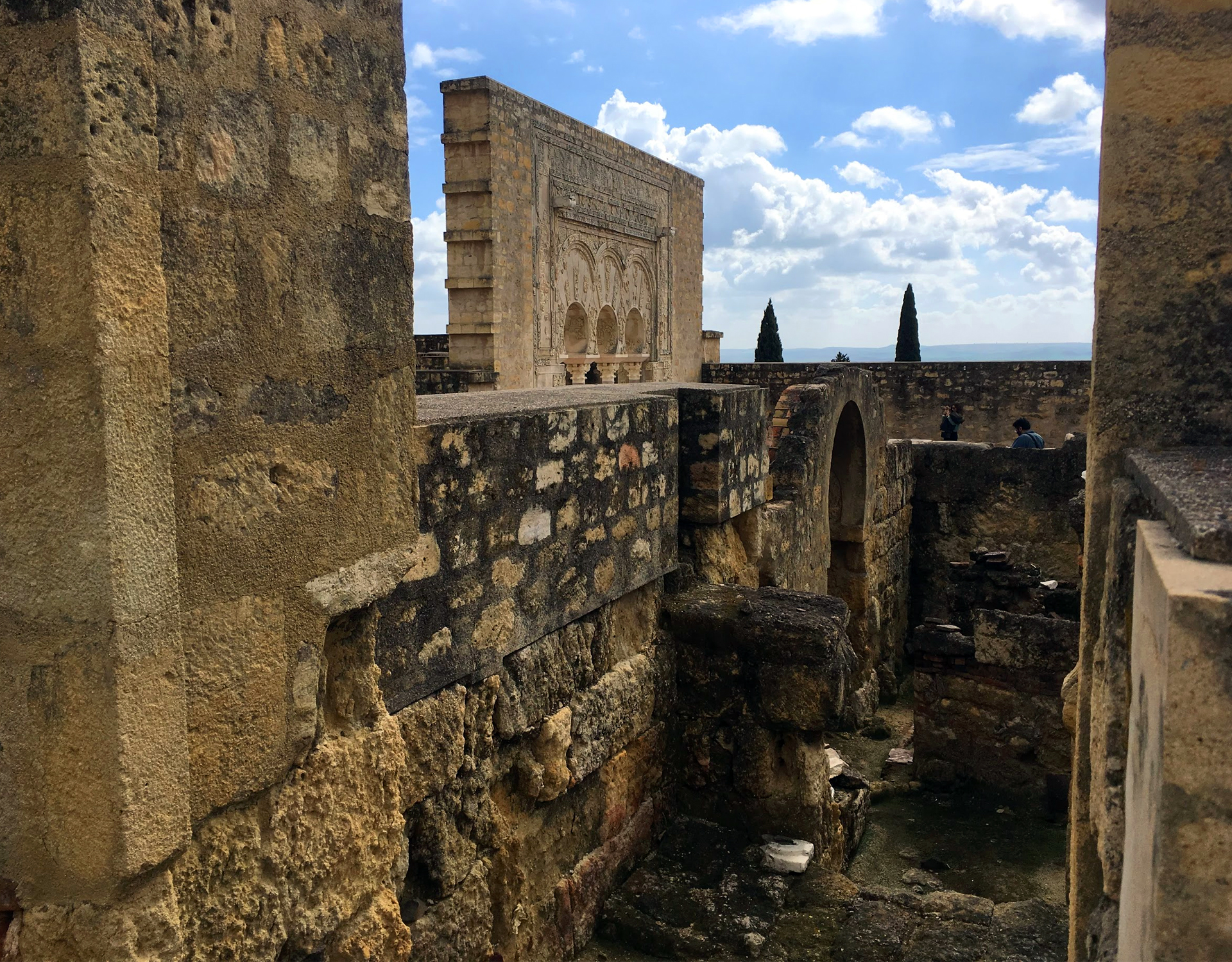
Layering of the ruins, showing a Moorish gate of the old city.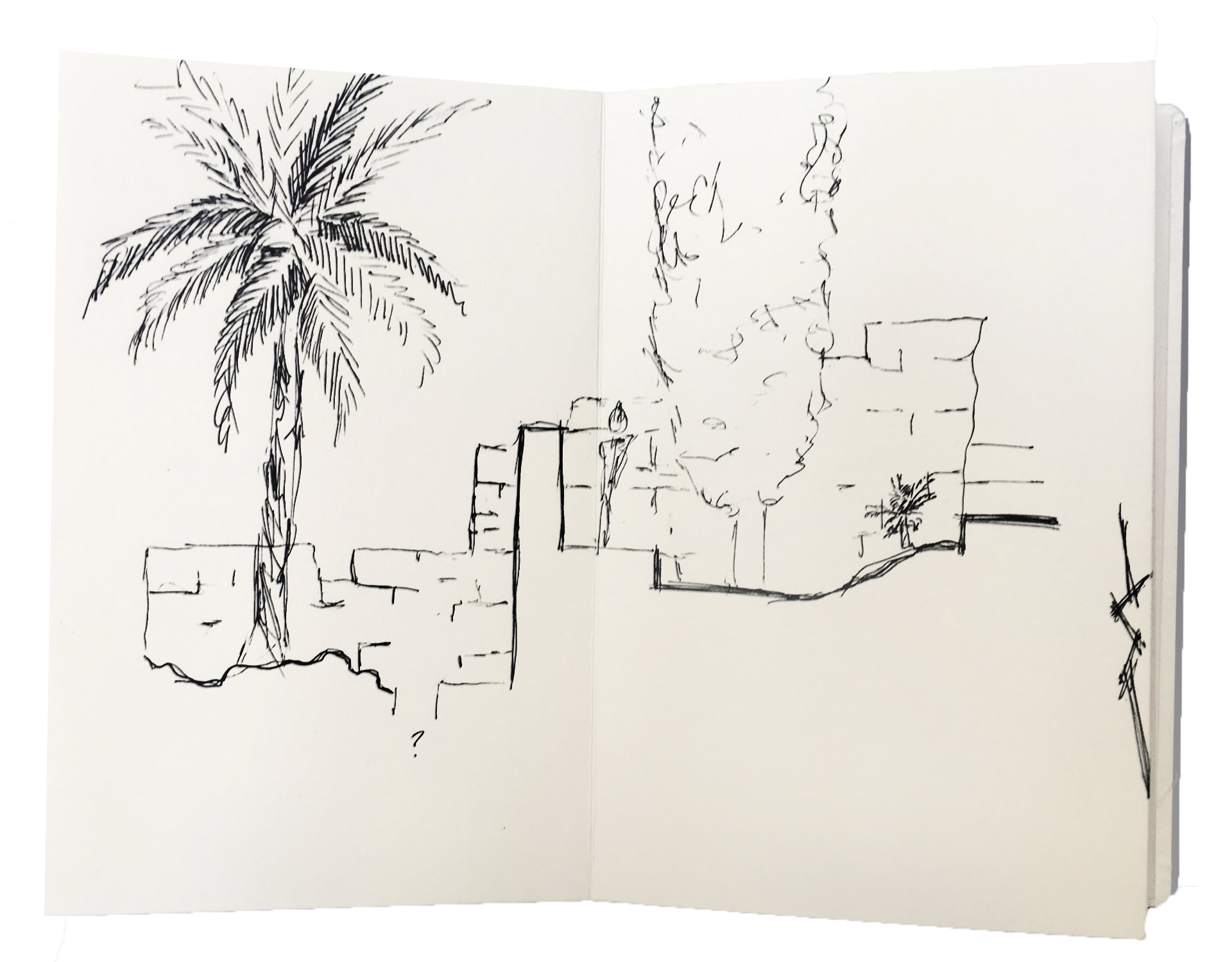
Rough section drawing through a portion of the site.
 Cities on Water 2019