Part I: Matthew Kunnari
Today was sunny and clear. Blue skies awakened the endless hatch patterns of olive trees spread across hilltops as we ventured to Córdoba. Córdoba is smaller when compared to Seville and Granada. The urban/industrial sprawl surrounding the city is less. The housing blocks are much shorter. The materials are less varied: stone, tile roofs, red brick. It was noted that Córdoba has some of the highest annual year round temperatures in Europe and as a result the city is built accordingly. Narrow streets, and white surfaces help with providing shade and reflecting heat. Low curbs and the lack of trees are evidence of low precipitation levels.
Upon our arrival, the coach bus had to drop us off on the edge of the old town due to the narrow streets. Luckily our hotel was very close. We are staying directly across from the massive Mezquita-Catedral de Córdoba.
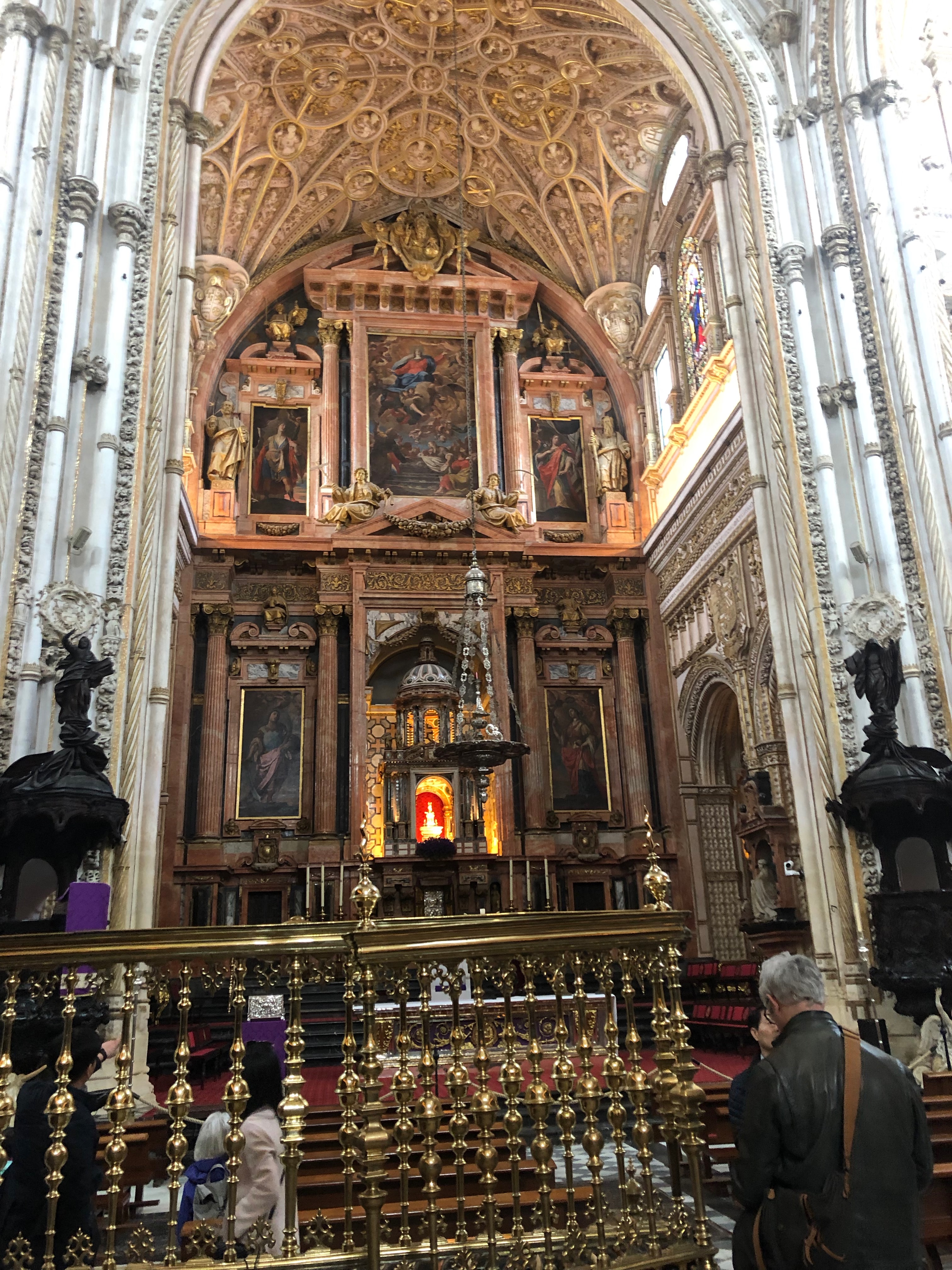
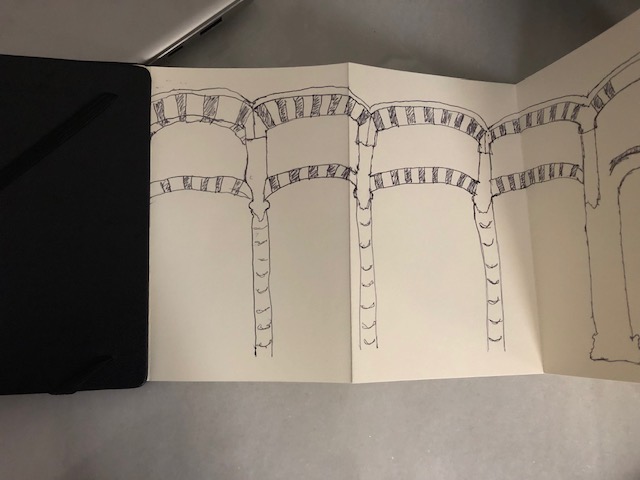
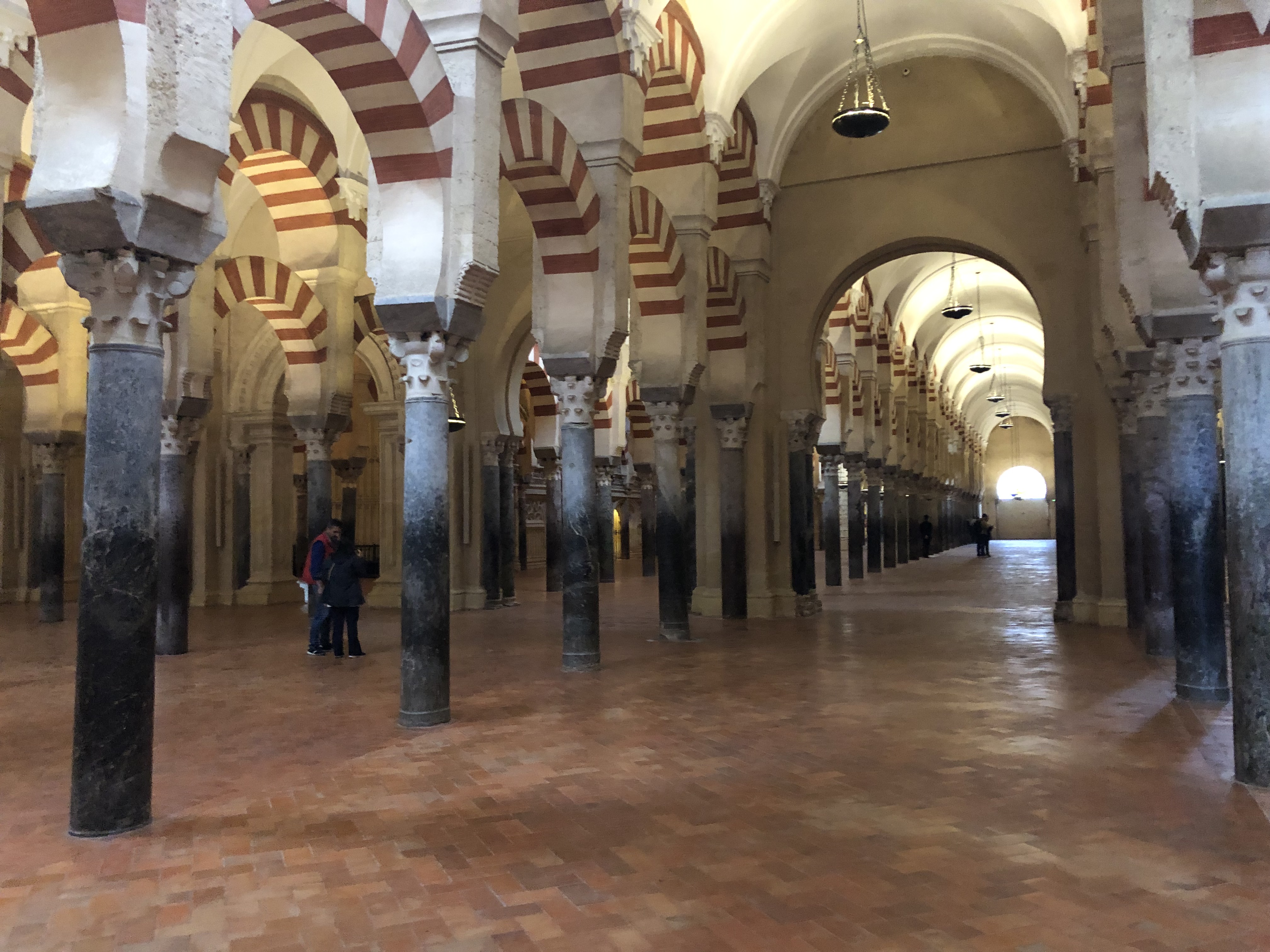
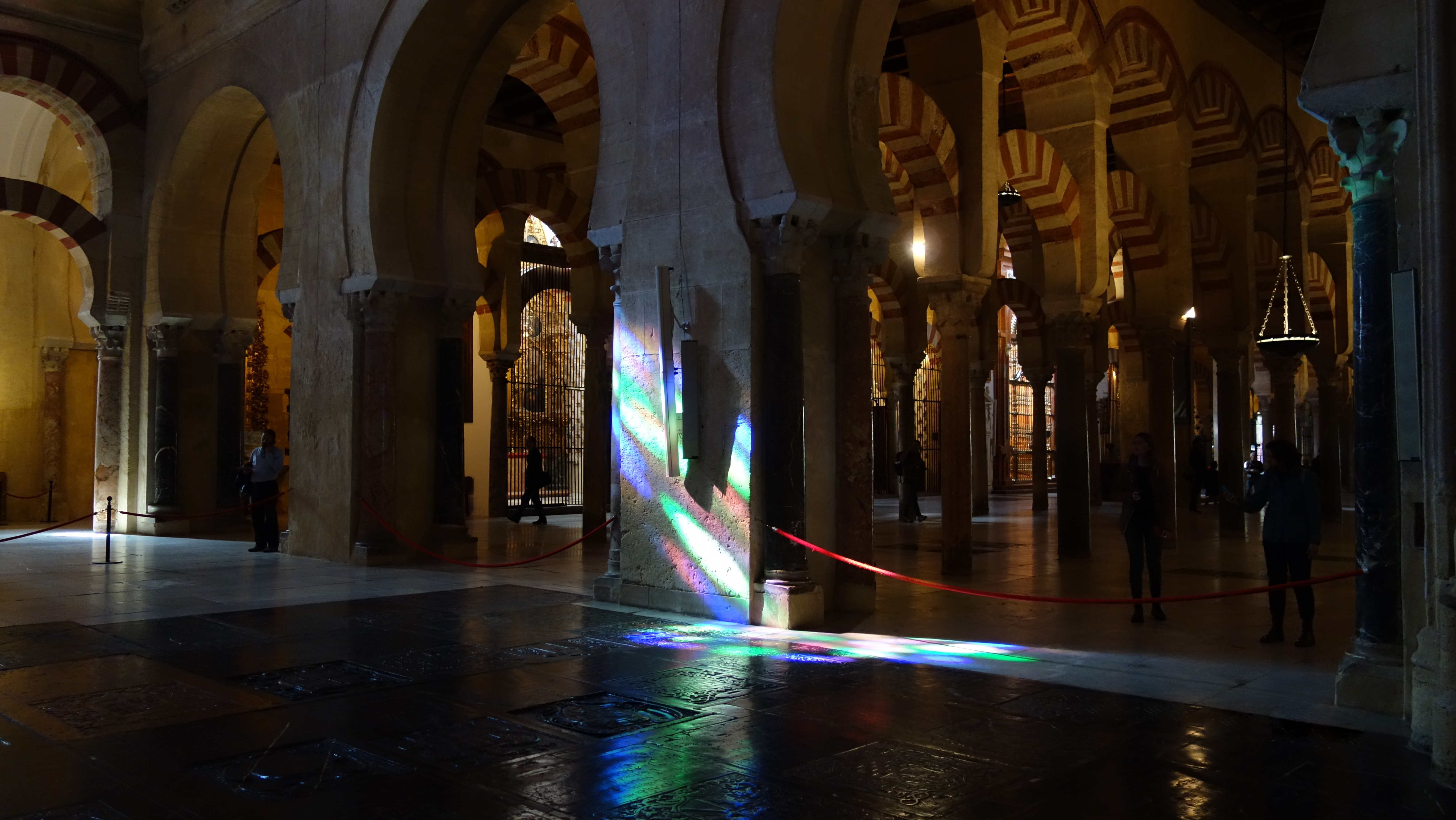
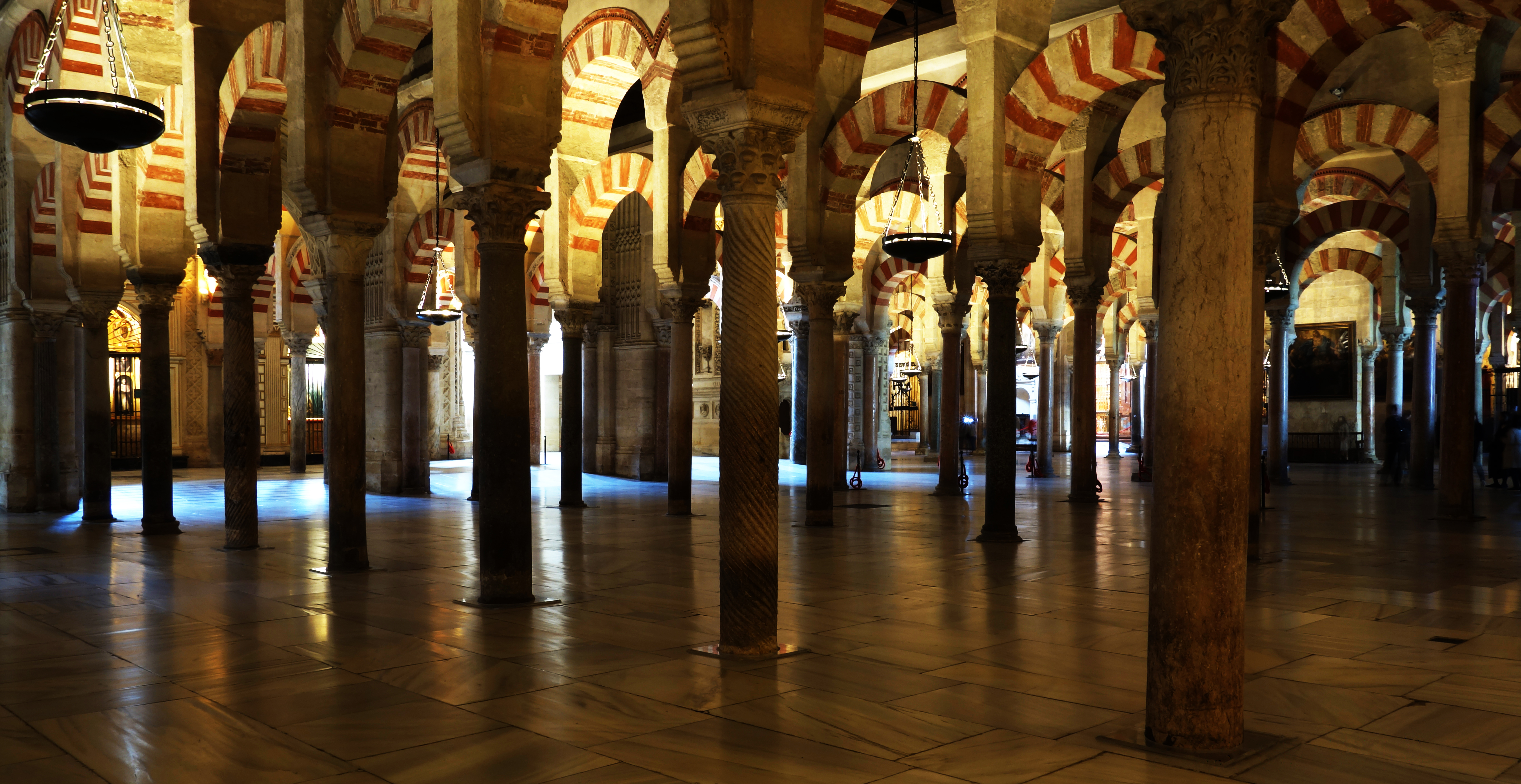
The Mesquite-Catedral is a structure that has been expanded upon over the centuries and now is used as a church. Small chapels and memorials ring the building. Then there is an infinity of columns and two-story arches. In the center is an elaborate barrel ceiling church. The contrast between spaces is stark, but somehow they make a cohesive entity. The interior of the building is chilly and rather dark. Even in areas were light shines through skylights or clerestory windows, warmth is fleeting.
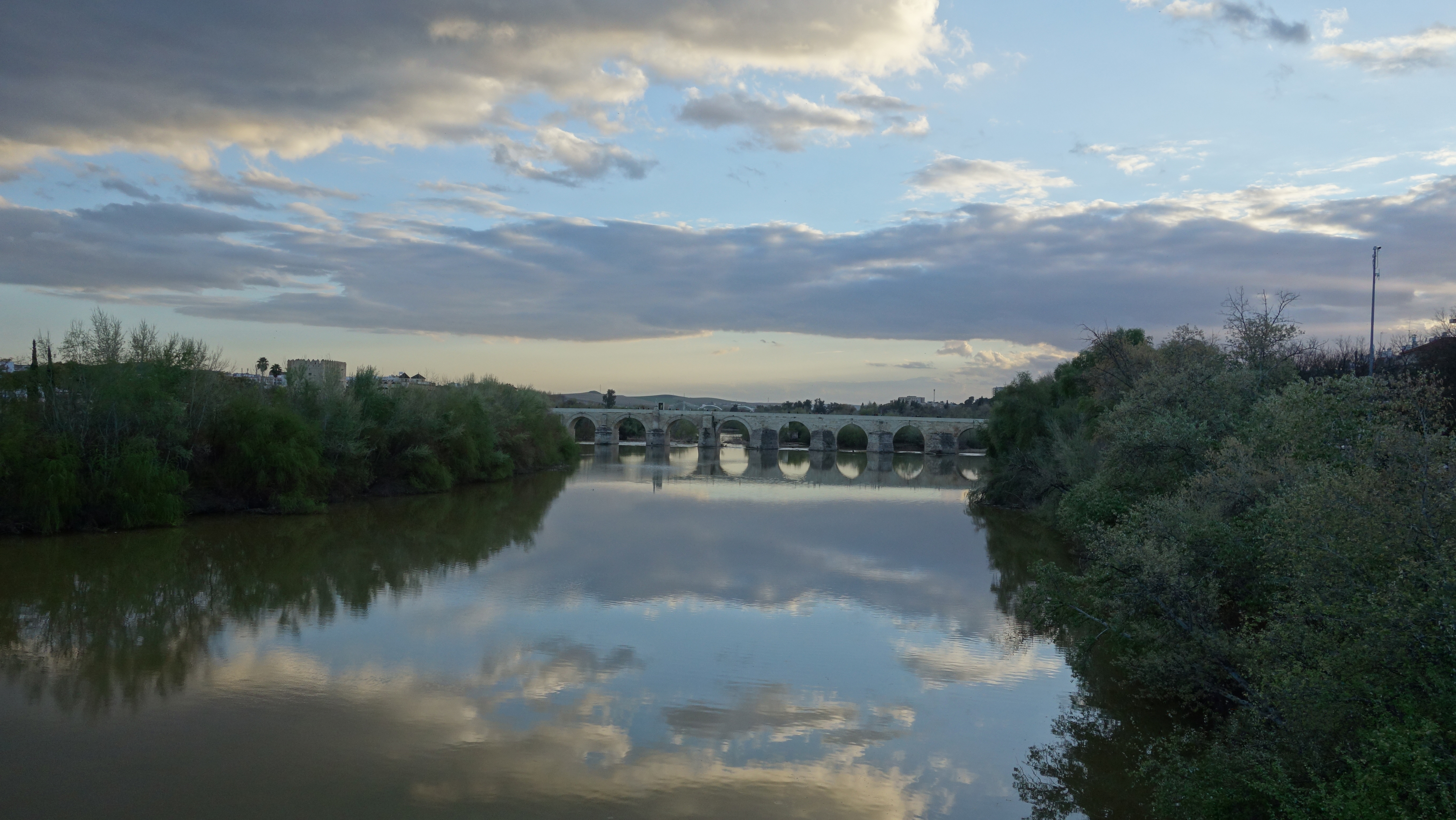
After visiting the church we walked to the Guadalquivir River and crossed a pedestrian only bridge, similar in ways to the Stone Arch Bridge back in Minneapolis, but much older. Musicians were dispersed across the span and all but the accordion player didn’t intrude on the sound threshold of the other performers. On the return crossing of the river we crossed on a typical multi-use bridge, centered primarily on car traffic. The sun began to set. And evening plans for dinner were being made.
Part 2: Nikolai Fjelsted de Santiago
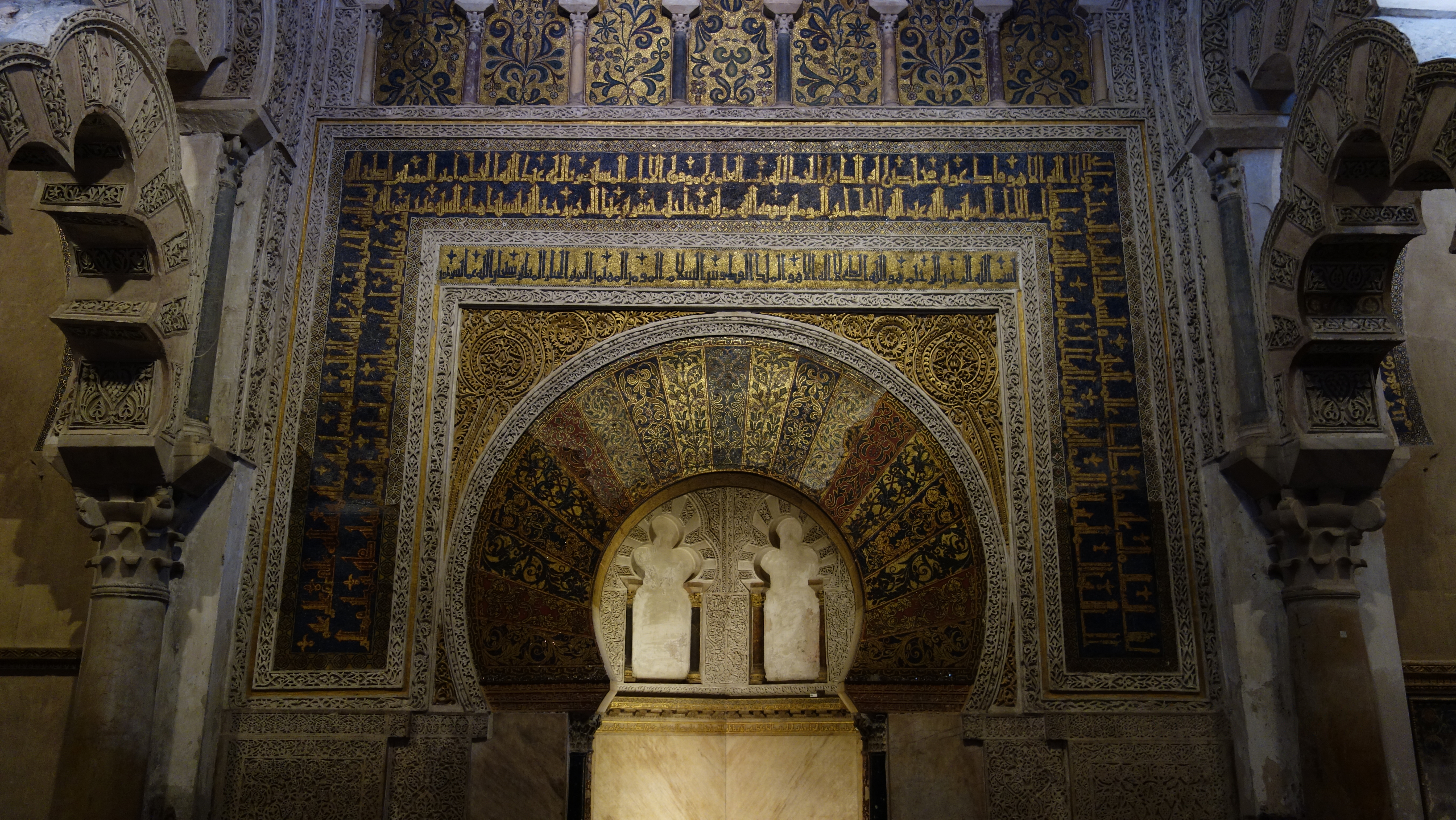
Right across the street from our hotel ironically named, Eurostar’s Conquistadors, sits the Mezquita cathedral of Cordoba. This building was constructed in the mid 8th century by North African people known as Moorish. Historically this place has quite a dramatic past as it was first constructed as a church then converted into a mosque then again repurposed as a cathedral. The style of architecture is called moorish architecture which can be seen in the horseshoe shaped arches that continue throughout the interior.
The once known mosque was then taken over by Christians and expanded upon in many different ways. Laterally, horizontally and vertically. This expansion can be traced by the footprint of the cathedral and walls that surround it. The first expansion that was made was to the courtyard which grew to twice the size. Later expansions were made to the prayer hall. Before the courtyard was inclosed by walls, the surrounding structure used to be an arcaded column portico which was more inviting to the neighborhood. Expansions to the courtyard were made first laterally then again by adding the bay which surrounds the whole exterior of the walls. Many of the entrances and portals to the courtyard were permanently closed and bricked up. On the North and South side of the complex, the portals were turned into decorative frames and were open all the time, creating a porous environment back then. At one point in time, there were thousands of artisans that helped create these decorative frames.
It is common in the Orthodox Islamic culture to represent the divine through geometric patterns rather than depictions of living things such as trees, animals or people. This was due to the religion having a prohibition on anthropomorphic figures represented in their art. It wasn’t until the Roman Catholics where depictions of human figures started to appear in the art inside of the Mezquita. As for the Orange trees Courtyard, a sense of uniformity and abstraction can be read in this space. The combination between Cypress trees, Orange Trees, and Palms, suits the space quite well as it is always lush with greenery. Ground patterns is made up of small stones set in geometric patterns which then create a grid for the orange trees. As for the Cypress and Palms, they are off the grid and seem arbitrary compared to the rest of the courtyard. It was interesting to see the fountains were littered with aquatic vegetation that gave them slightly more purpose.
Images: Evan Furr and Jiangchen Zhu
 Cities on Water 2019