Images by: Sydney Shea and Mattie Wong
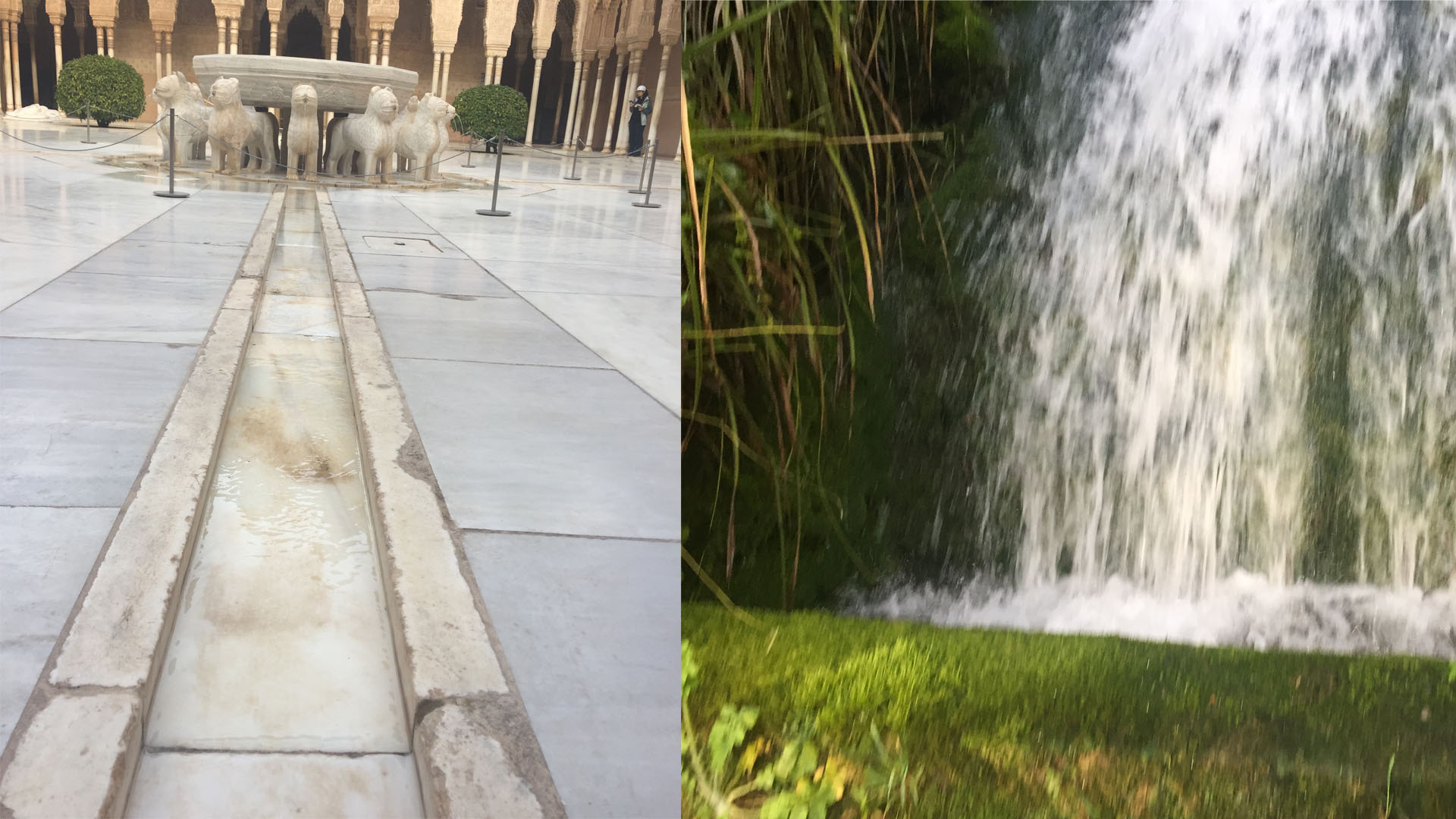
Water was highly designed into the Alhambra, running throughout the site and down the hill.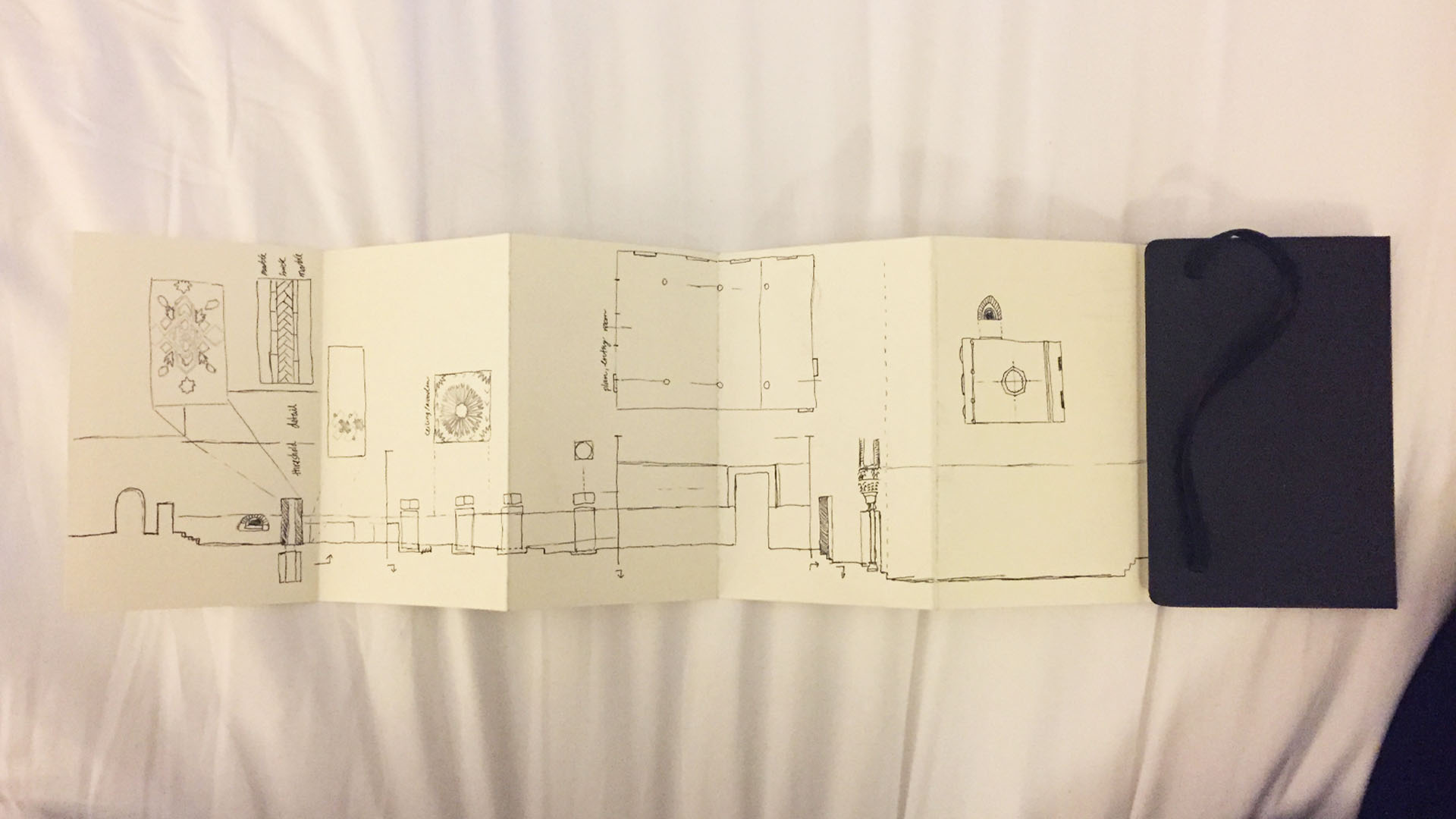
Portion of a long section going through the Nasrid Palaces.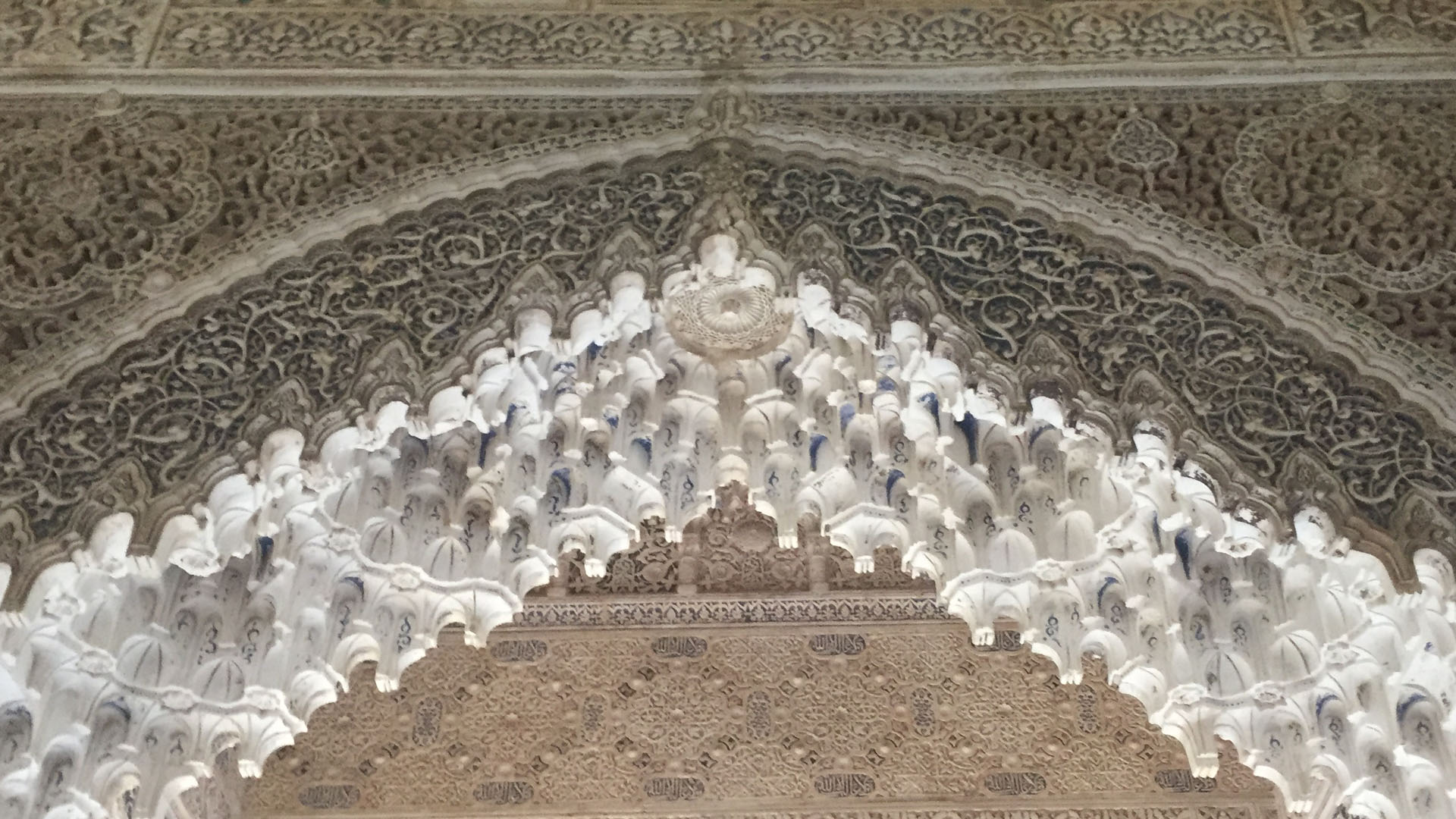
Intricate stone work inside the Nasrid Palaces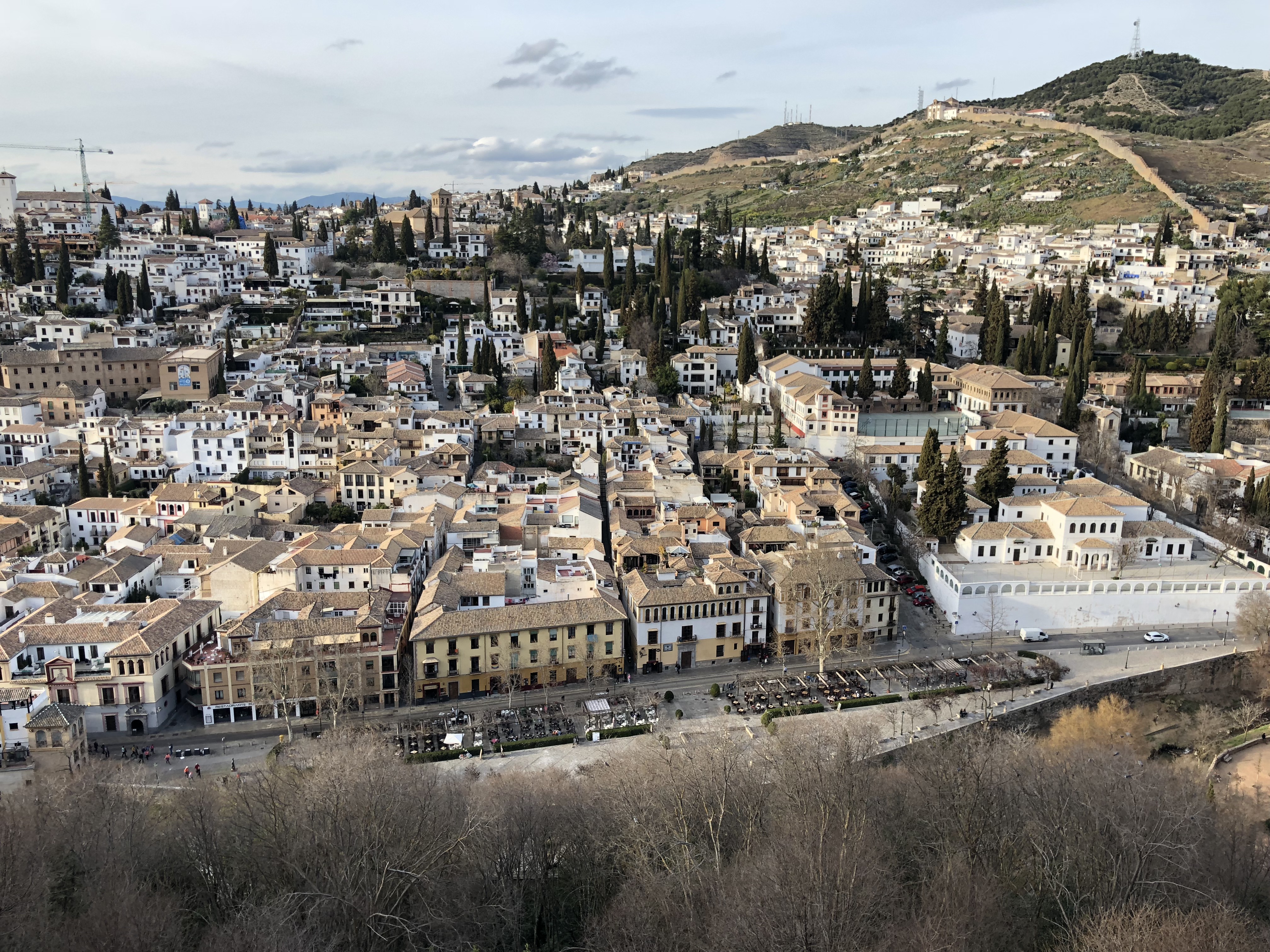
Overlooking the Moorish quarter of Grenada from within the Nasrid Palaces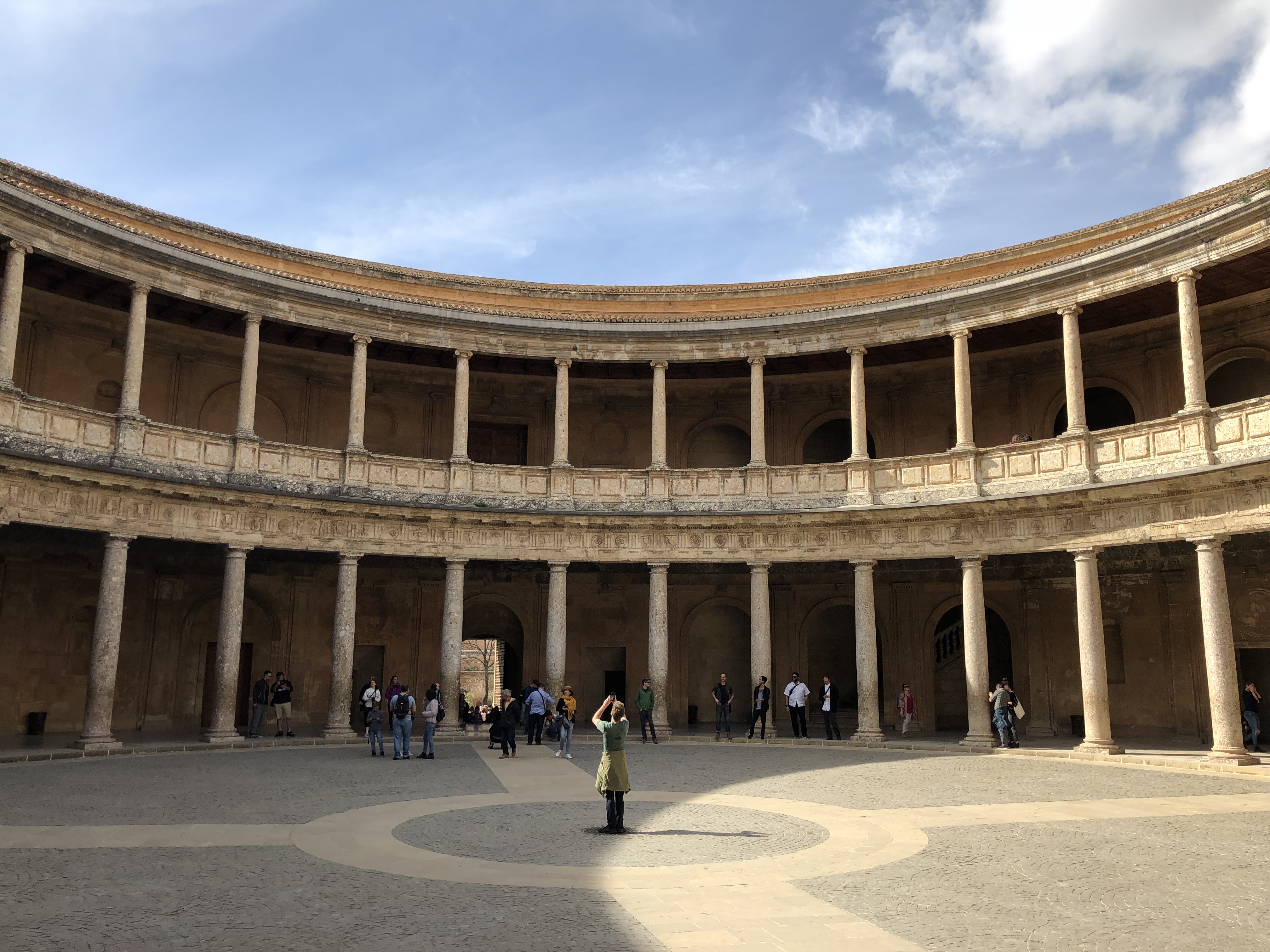
Inside the Palace of Carlos V, a Renaissance building within the Alhambra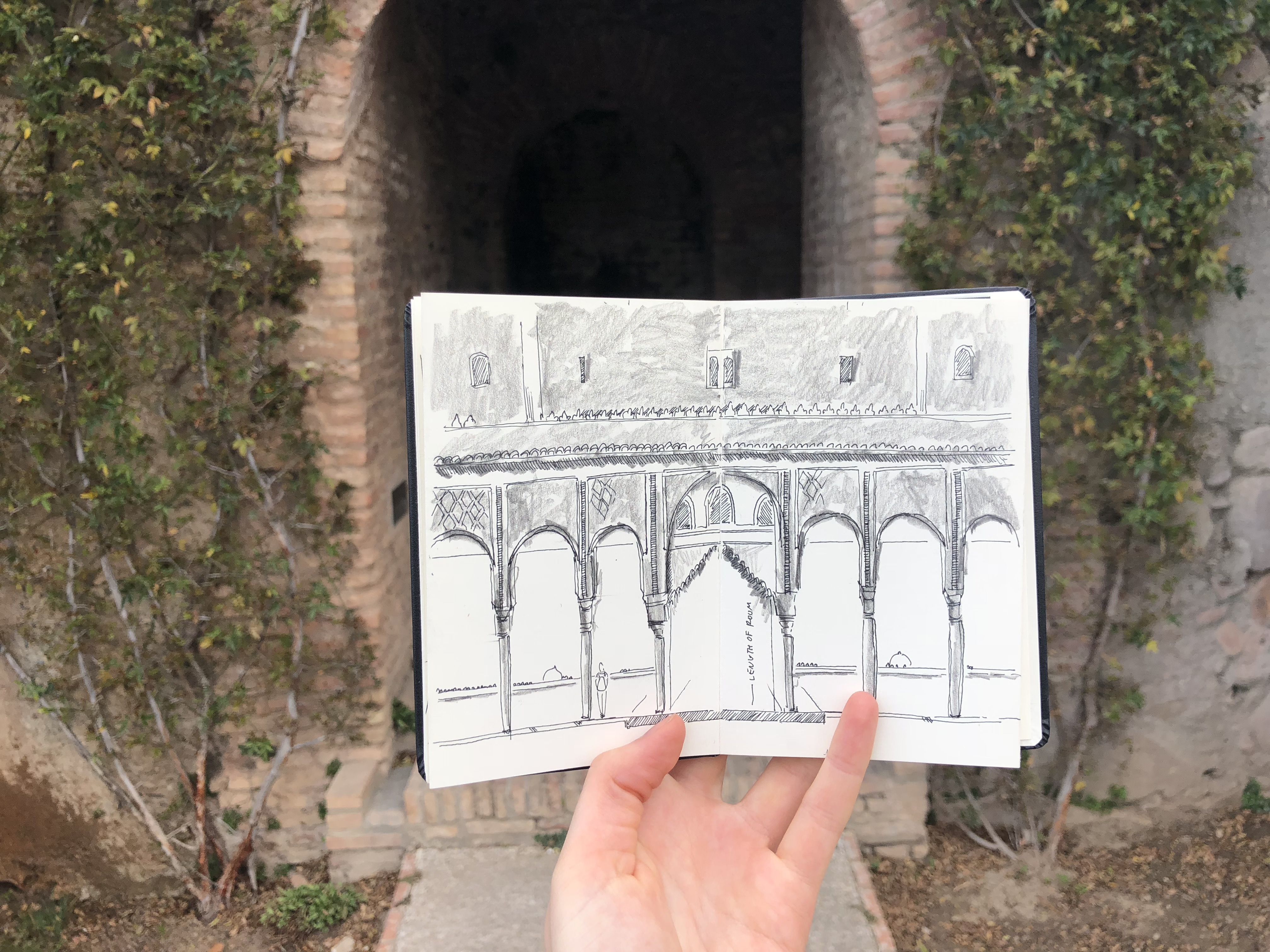
A sketch from the Court of the Myrtles within the Alhambra
Part 1: Will Metcalf
The Alhambra in Grenada, Andalusia, has captured our group’s imagination since beginning the program. The Court of the Lions, the main courtyard of one of the recent additions to the Alhambra complex built in the 1300s, appeared in our history textbooks as one of the most world’s most compelling examples of the Islamic quadripartite garden—an architectural manifestation of Paradise. Each of the four channels is fed by a fountain representing the four rivers of Paradise. The sound of water, poetic inscriptions on the fountain, and scents flowing through the enclosure are all aspirations toward a protective, serene paradise on earth.
But this is only one piece of the Alhambra’s rich history. Originally built on Roman ruins in 889, the complex remained small until the beginning of renovations in the mid 13th century by members of the Nasrid dynasty. Towers, palaces, gardens and baths were added over time. The Muslim art and architectural style of the renovated complex, with rich arabesques and inscriptions, has largely survived since the Reconquista in 1492. It was then that the site was altered by Ferdinand and Isabella, becoming the site of the Royal Court. As a predominant example of the Nasrid style, the palaces of the sultans influenced the development of the Mudejar style, which we have seen throughout Spain.
Today, the site is a UNESCO World Heritage site, following extensive conservation efforts (some causing damage to the site) in the past 200 years. Because of its juxtaposition of Islamic elements with Renaissance and blended architectural styles, the Alhambra set of structures and gardens has inspired stories, paintings, and visits from all over the world.
Part 2: Anya Moucha
Our group boarded the bus in Seville this morning and took the three-hour bus ride through the countryside of Andalusia until we reached the town of Granada on the foothills of the Sierra Nevada mountains.
After a quick break for lunch, we headed up to the Alhambra complex for a tour of the Nasrid Palace. Our task was to sketch an ‘unfolded’ section drawing of our path through the historic palace, with notations and marks to help understand complex floor plans and turns. After walking into the first room, we quickly realized how difficult this was going to be. The Nasrid Palace is composed of a series of ornate rooms. Patterns can be found everywhere, from complex paving designs, to tile mosaics, and intricate stone work. Arches, columns, and courtyards make the drawings even more layered.
The process was slow, and forced us to look with intention at each space we occupied. After watching hordes of other tourists stream past us, many of us felt that sketching the palace allowed us to experience and appreciate the site in a way that we might otherwise not have. However, even though this process was enjoyable, there were times when I found it best to put my sketchbook away and just sit in the room, watching the light filter through the beautiful Moorish patterns and screens.
Two hours quickly passed. With so much still left to see, the security guards had to force everyone in our group to leave at closing time. Luckily, we were able to spend some time admiring the famous Court of the Lions, considered one of the best examples of Moorish architecture. We ended the day with a stroll through some of the gardens of Alhambra and were able to catch great views of the Alhambra complex as the sun was setting.
 Cities on Water 2019