Part 1: Jiangchen Zhu
Part 2: Evan Furr
Sevilla is the fourth biggest city in Spain, and its symbol, NO8DO, meaning “Has not abandoned me” shows the closer relationship of the city to Alfonso X. As southern Spain’s culture and art center, Sevilla has well preserved Islamic and Gothic architecture. Within the city center, the buildings rarely exceed five stories, which made the Catedral de Santa María de la Sede de Sevilla exceptionally outstanding. It’s the largest Gothic cathedral in the world and third largest cathedral in the world. The tower of the cathedral, La Giralda, built in 12th century reaches 104 meters. There are 34 ramps inside of the tower, so we could walk to the top of the tower and look to all four sides. To think that people could build 100 meter structures 800 years ago, its a type of brilliance. The courtyard of the cathedral is planted with 66 orange trees and a water fountain in the middle, together providing a pleasant environment. Each tree has a drainage/ irrigation tunnel to it, the irrigation system itself is placed in geometry that is visually appealing. The orange tree reflect Islamic culture influence, in 10th century Moors introduce oranges to Spain, and now the ‘Bitter Orange’, or ‘Sevilla Orange’ are well known in Sevilla and have become an identity. I am lucky enough to try one that Will Linscott got, we both agree it’s a bitter orange. There are 14,000 orange trees in Sevilla.
On Monday afternoon we visited the Real Alcazar of Sevilla which is still in use and is where the royal family stays when they visit Seville. The palace was grand and extensive. There were rooms upon rooms that were ornately decorated. The walls are painted and carved in intricate methods that are indicative of moorish design and architectural style. No detail was to small everything from the tiled floors to the ceilings, needless to say it was a sensory overload. Room after room, it was quite easy to loose yourself in the detail and trip over uneven thresholds as you walked between rooms. The age of the palace was noticeable from the plaster in palaces needing some repair and the floors being worn in from use. This weathered effect showed the true age of the Alcazar and its everlasting beauty.
Moving through the rooms it became apparent that I wasn’t going to have sufficient time to draw the rooms to the detail I thought needed. A feeling of elusiveness enveloped my drawing that I wasn’t going to do them justice. I created a uniform yet random method of representing the mosaic to be able to move on through the palace. I weaved my way through the sight seeing masses of people and out into the courtyard. The fresh air and the slight humidity was a warm welcome as I made my way between the small courtyards. Each space has a very distinctive style that was distinguishable by the different courtyard spaces, the varying types of water features and the hedge of orange trees that lined the spaces.
In addition to these courtyards there were massive gardens, much of which I didn’t have enough time to visit before the security guards started moving us along. We all had a great day experiencing the vast and intricate carvings on the walls and the various garden spaces that were unique to the Real Alcazar.
Images: Will Linscott and Matthew Kunnari
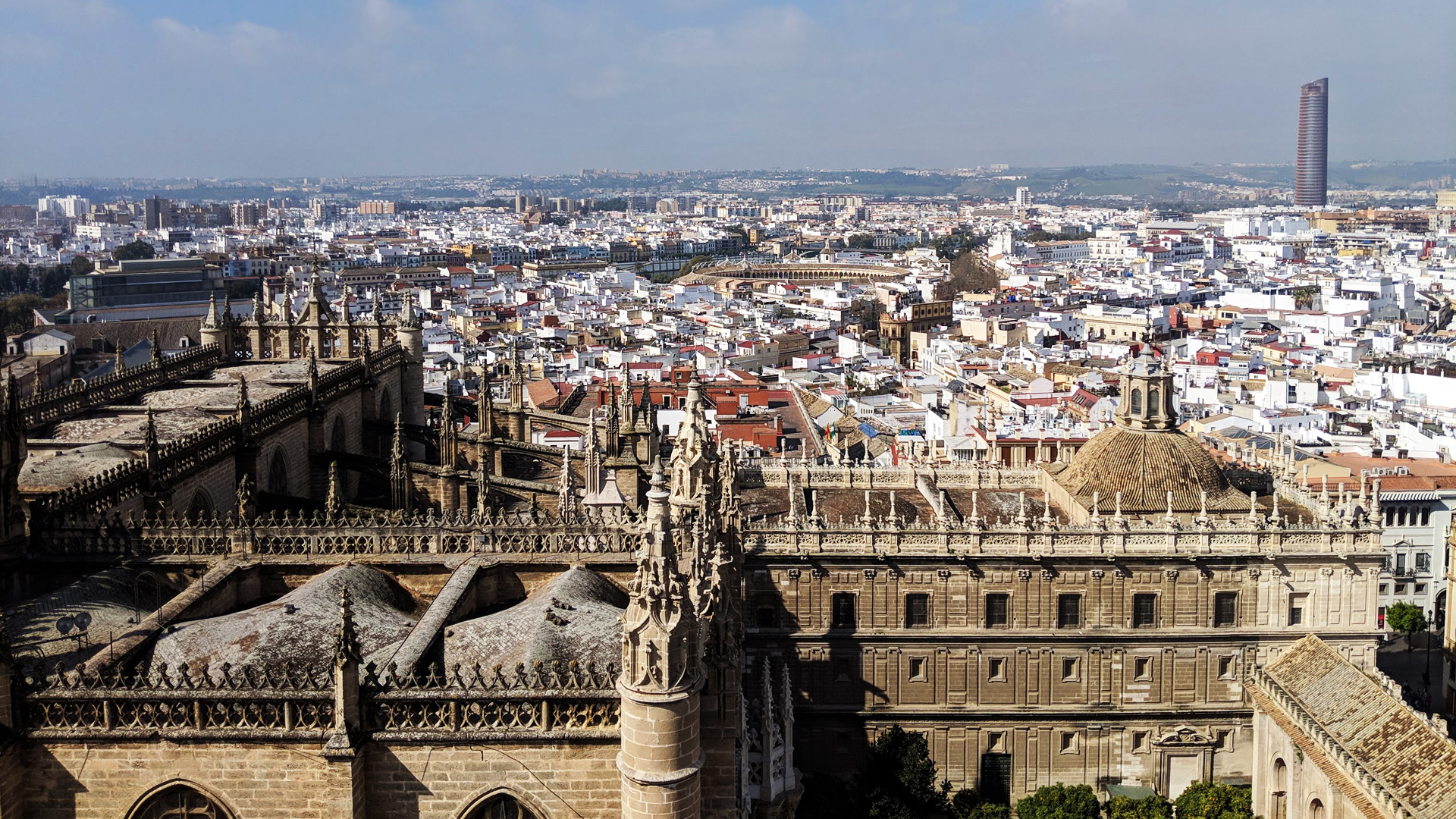
A view from the top of Giralda, the bell tower at Seville’s Cathedral. In the distance you can see the Plaza Del Toro tucked between the whitewashed houses and apartments of the city. With Summer temperatures nearing 50 degrees Celsius, the white paint has been used for centuries for its solar reflectivity.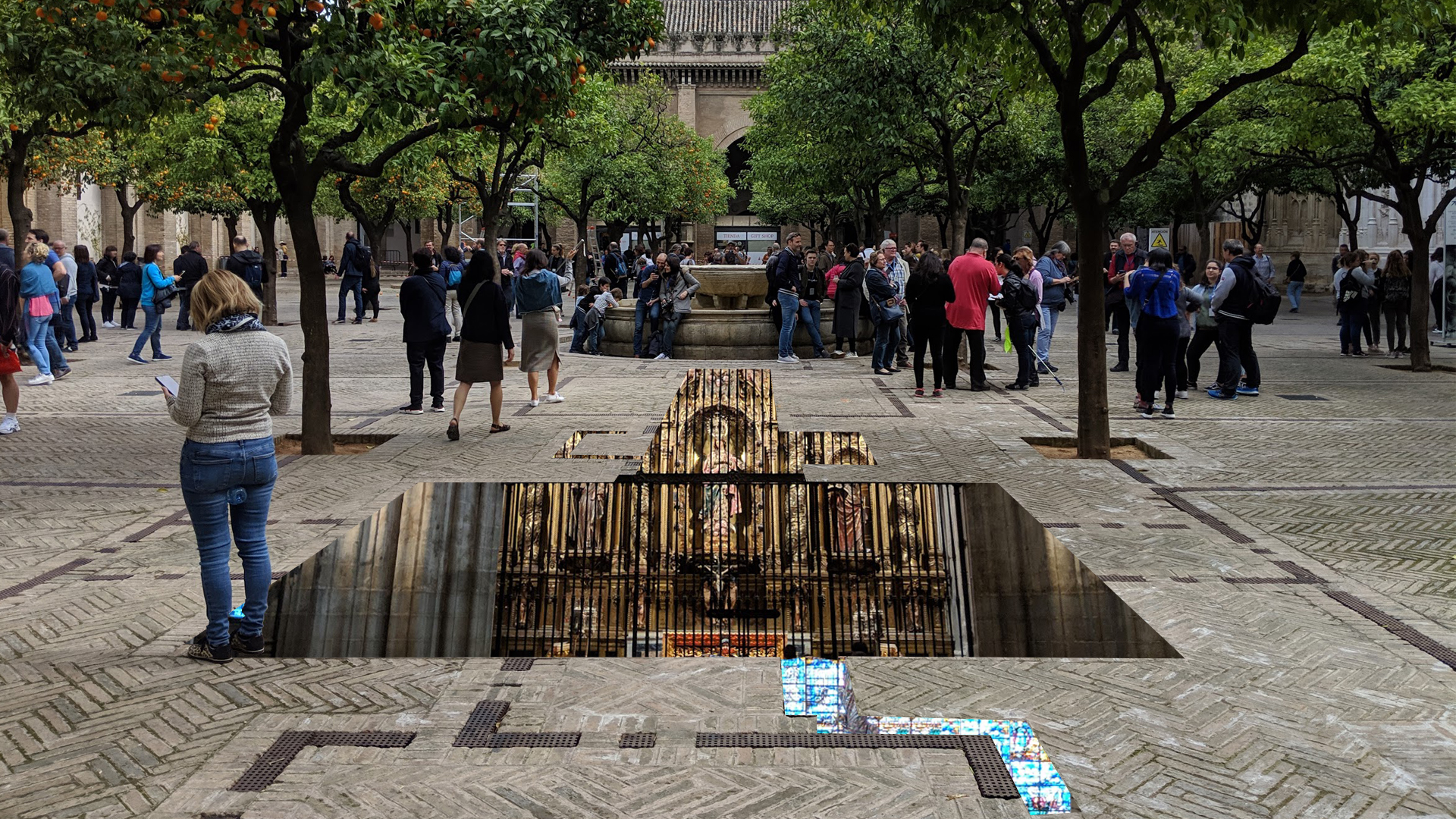
A view from the Courtyard of Seville’s cathedral, which was once the city’s central mosque. The Islamic architecture dominates the space with its rectilinear forms, all revolving around moving water and the orientation toward Mecca. Inside the cathedral is something completely different: treasures of gold and crypts of royalty, even the tomb of Christopher Columbus, are solidified in unbelievable grandeur.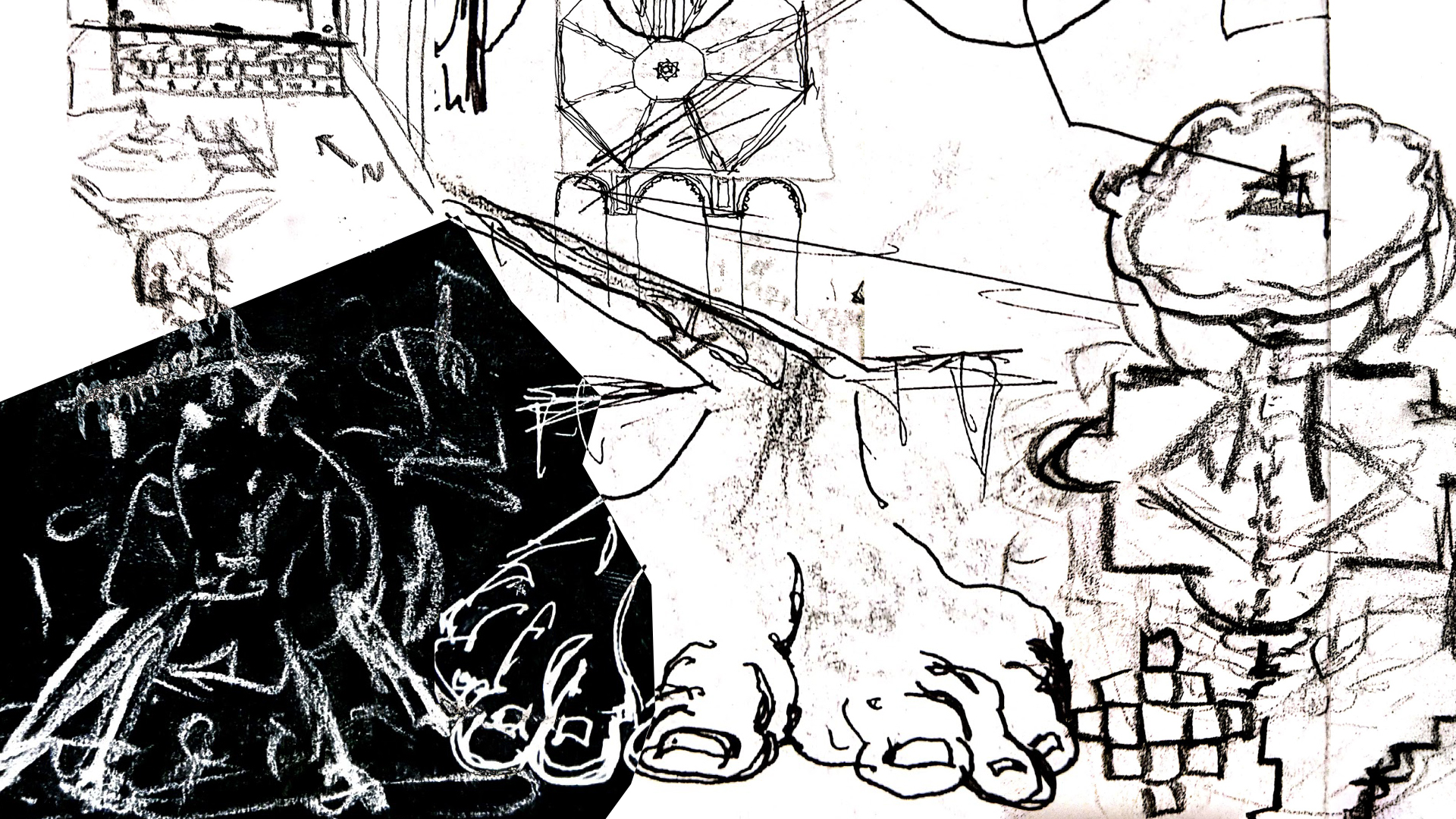
Sketches from our walk through Seville and the Real Alcazar, including directionality, eye catching artwork, and a horse that nearly ran me over in the street.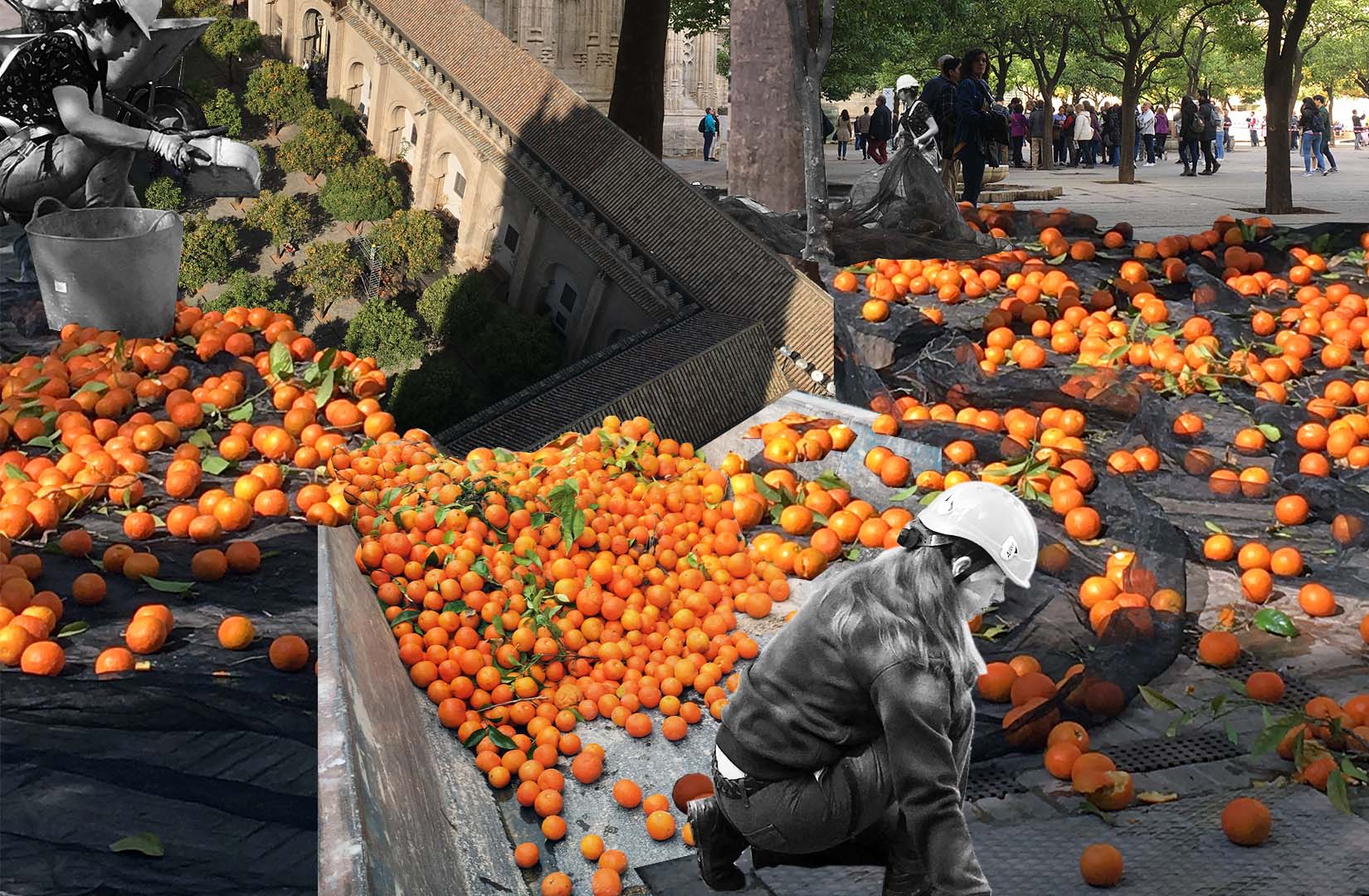
Workers collect and dispose of oranges in the courtyard of the Catedral de Sevilla.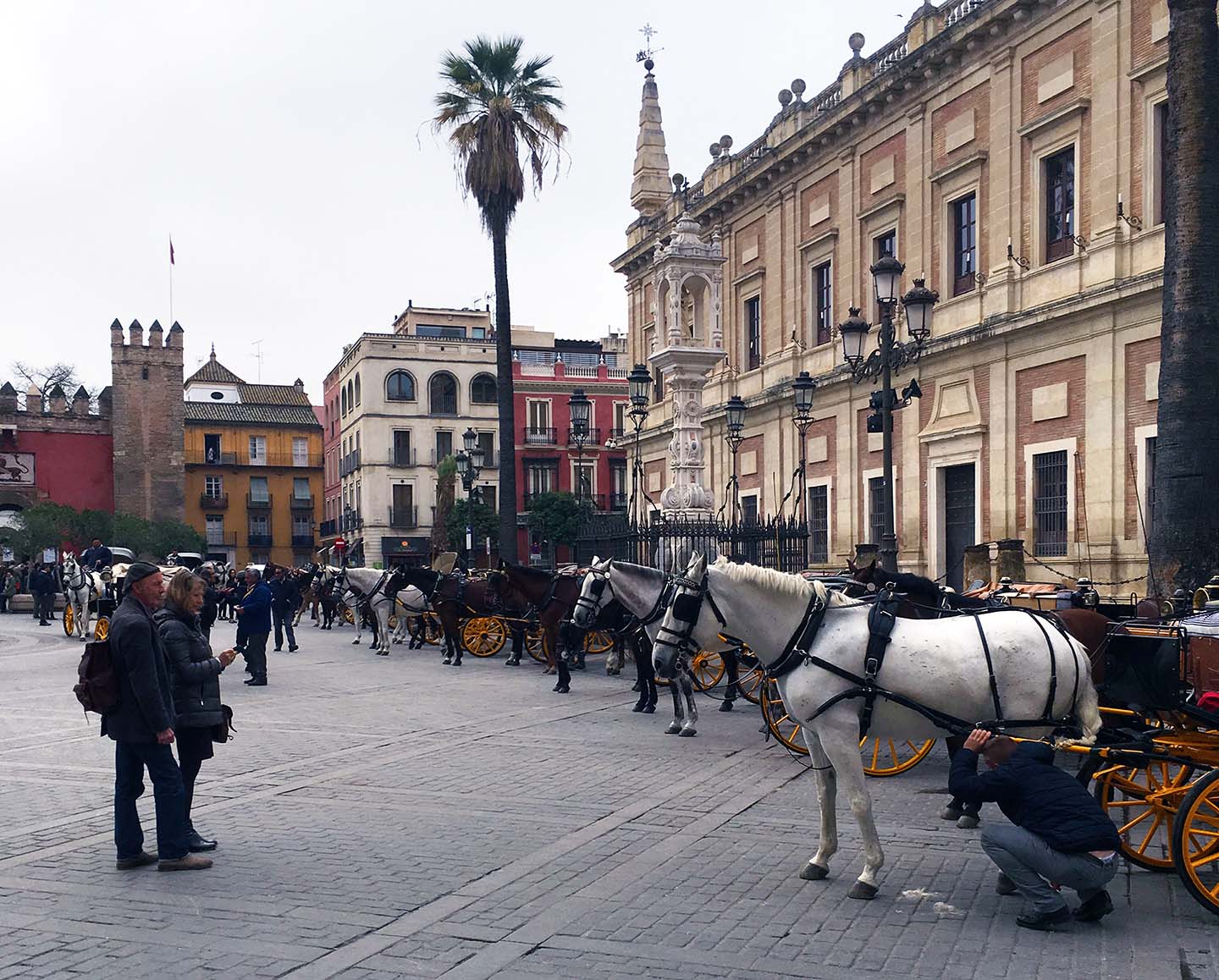
Numerous yellow wheeled horse drawn carriages traipse the streets of Seville.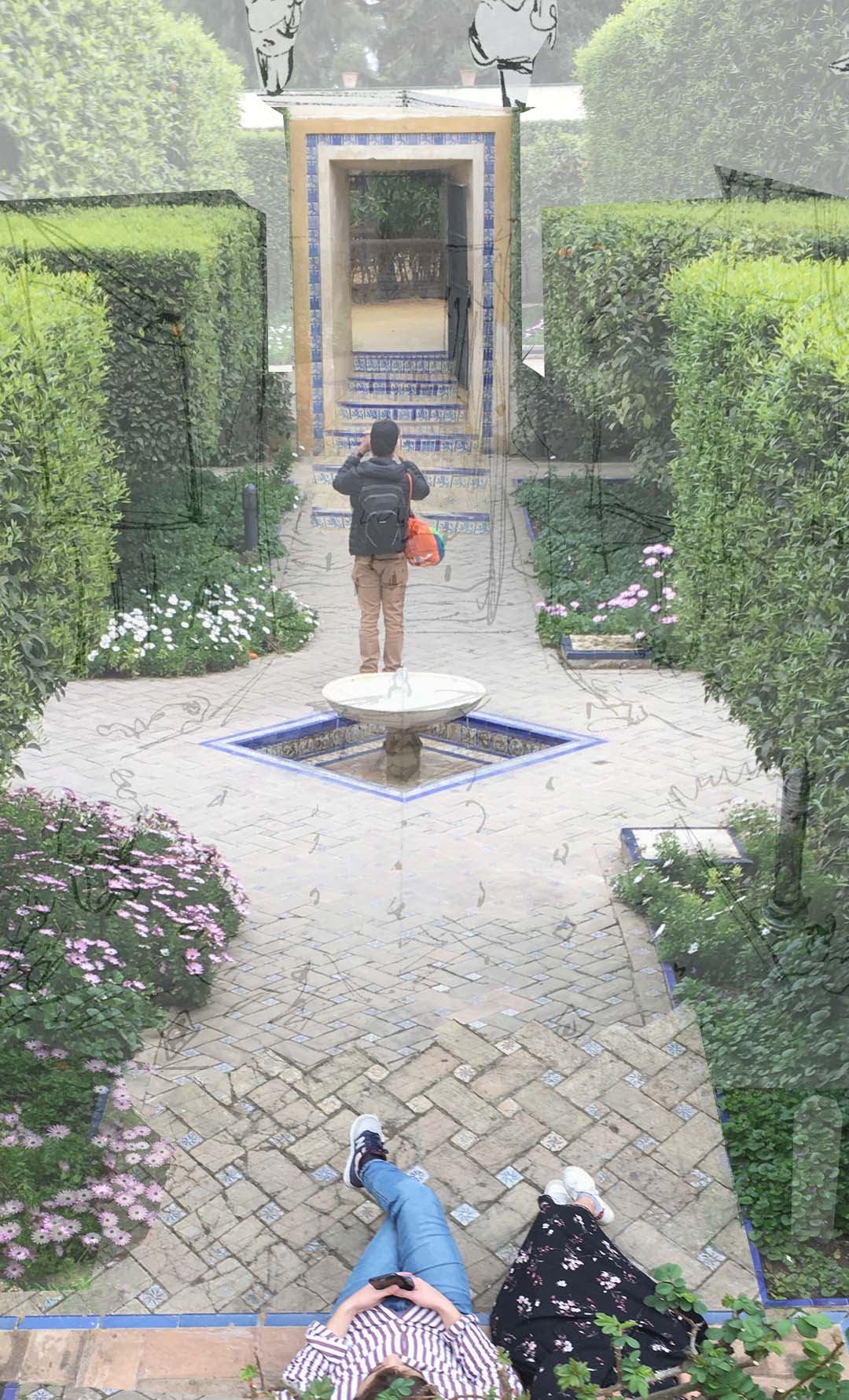
Overlays on a sketch of one of the numerous courtyards in the Real Alcazar Sevilla. Through the steps begin the royal gardens.
 Cities on Water 2019