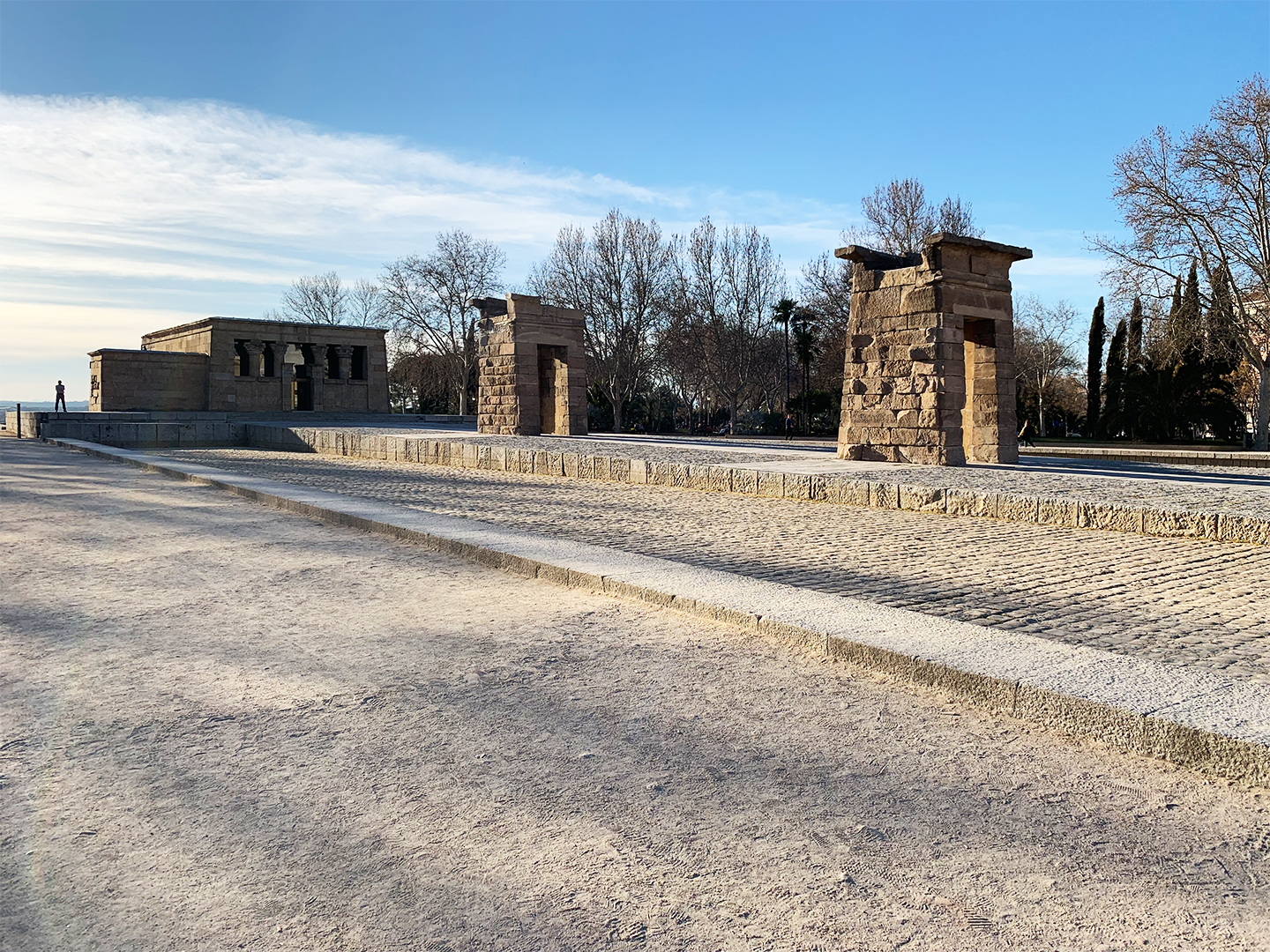
The Temple of Debod overlooking Casa de Campo and the Palacio Real. These are 3,000-year-old Egyptian ruins were gifted to Spain following the Spaniards’ assistance in saving the Abu Simbel temples during the construction of the Aswan High Dam in Egypt. They would have otherwise been flooded.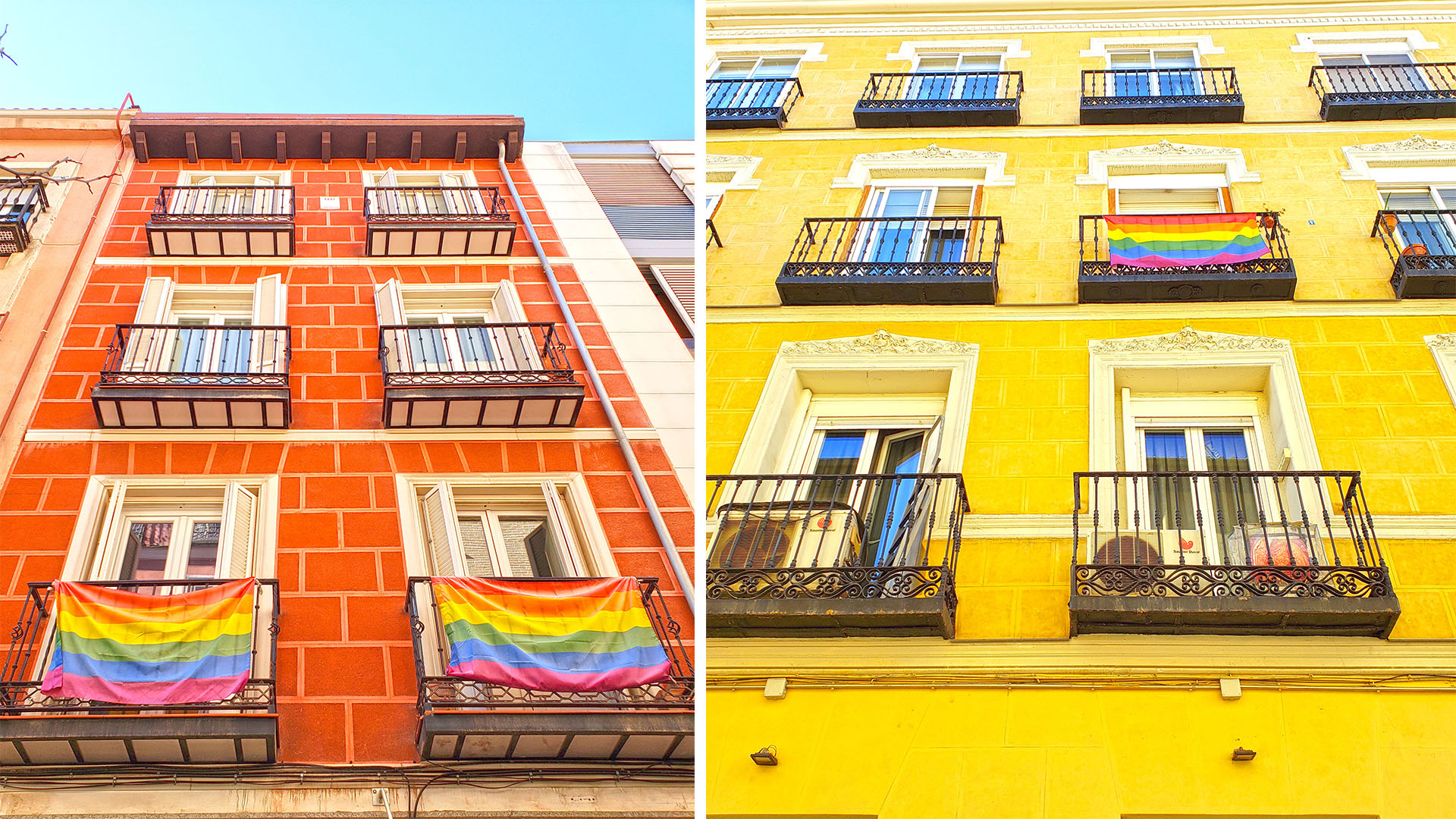
Chueca neighborhood is known as the heart of gay pride in Madrid as seen here with residents displaying their pride flags throughout the streets. It was host to the international gay pride parade roughly two years ago.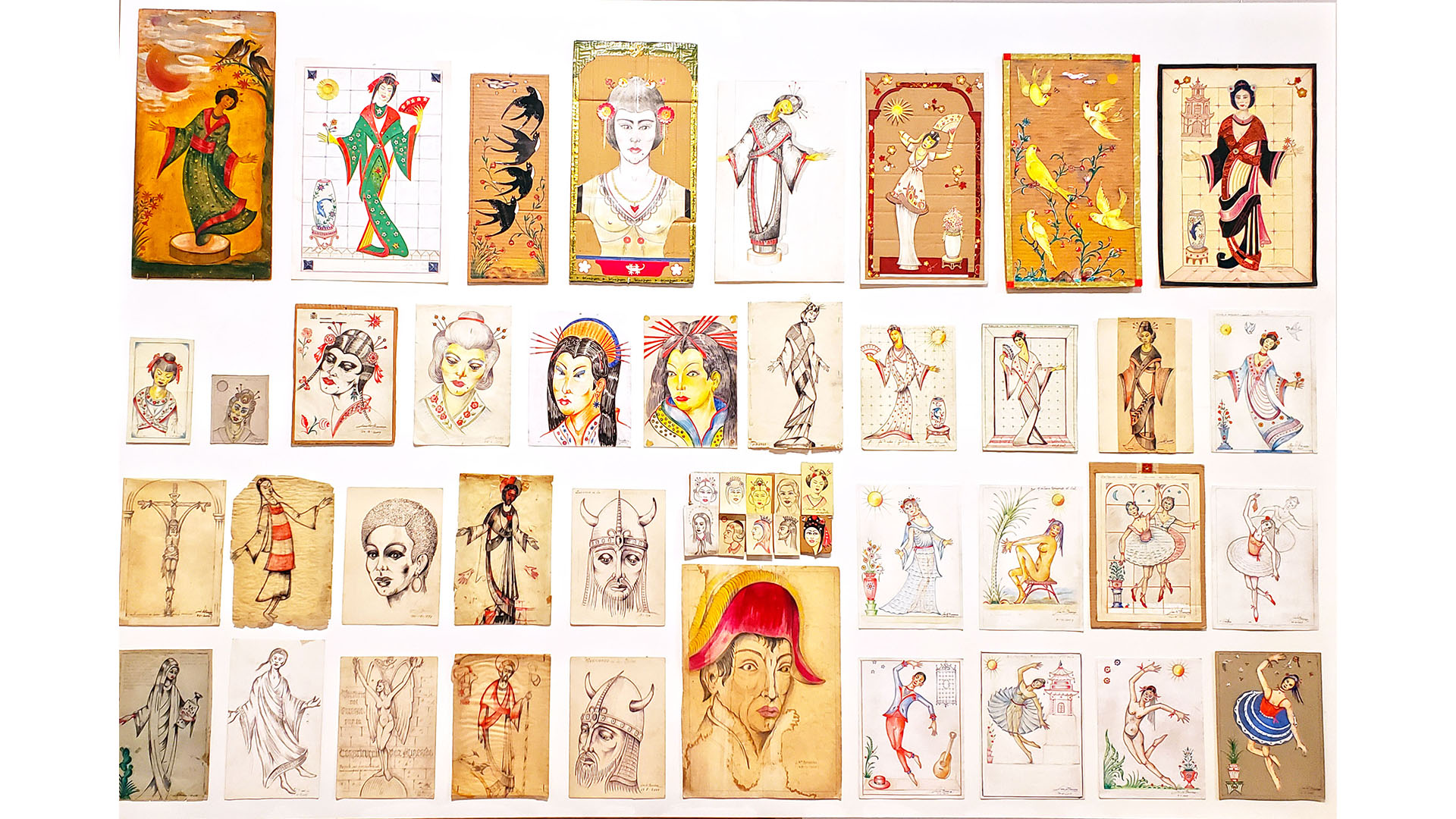
An art installation inside the Palacio de Cibeles once a former post office is now Madrid’s City Hall. The building was originally designed by Antonio Palacios, a famous Madrid architect who designed several of the buildings along the Gran Via.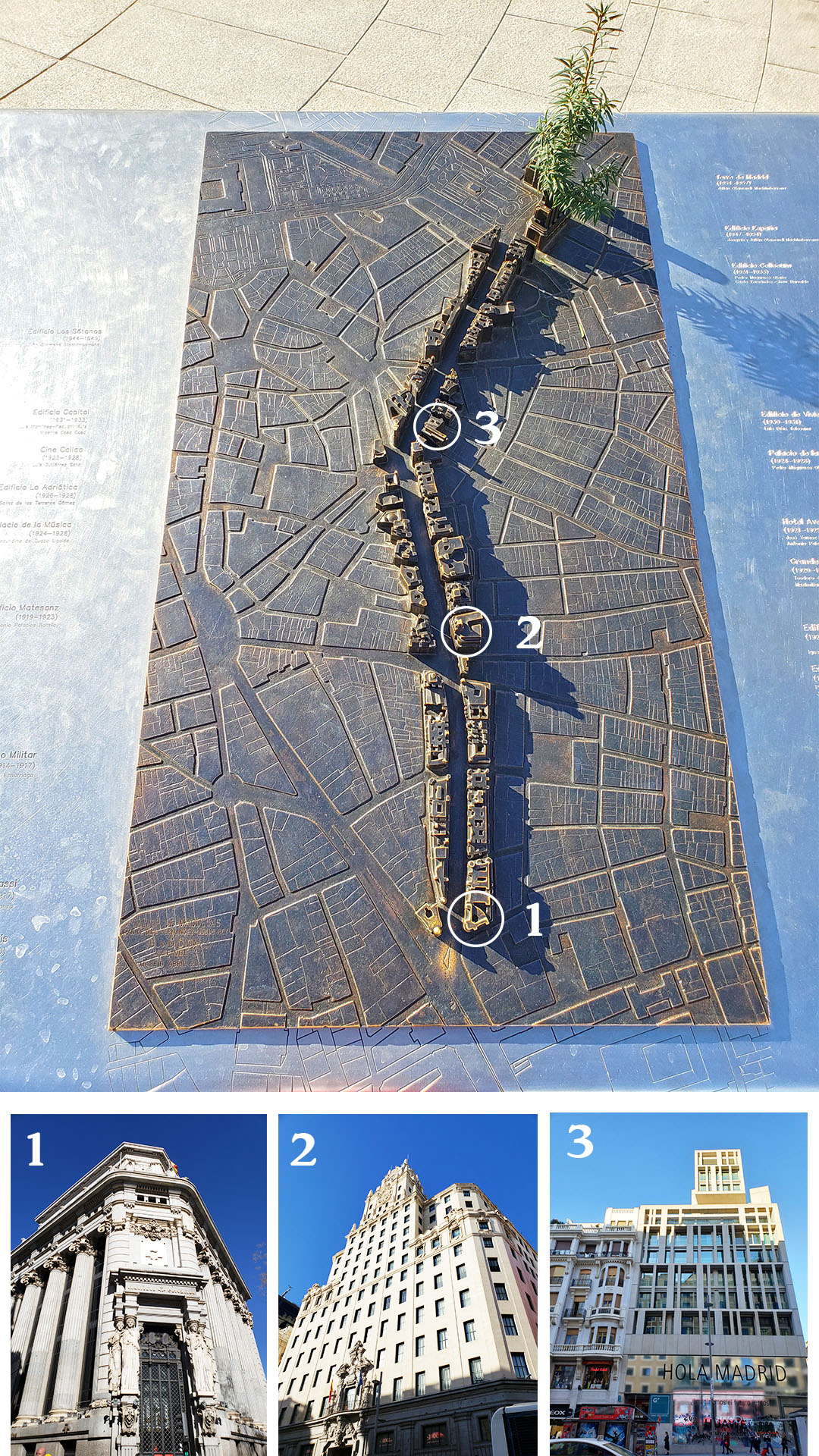
Small model of the historic Gran Via street where we can learn of the progression of time along the road as it was built. As we move north along the street we can see the gradient of architectural design trends from 1920 – 1950 and the difference in feel the street has from beginning to end.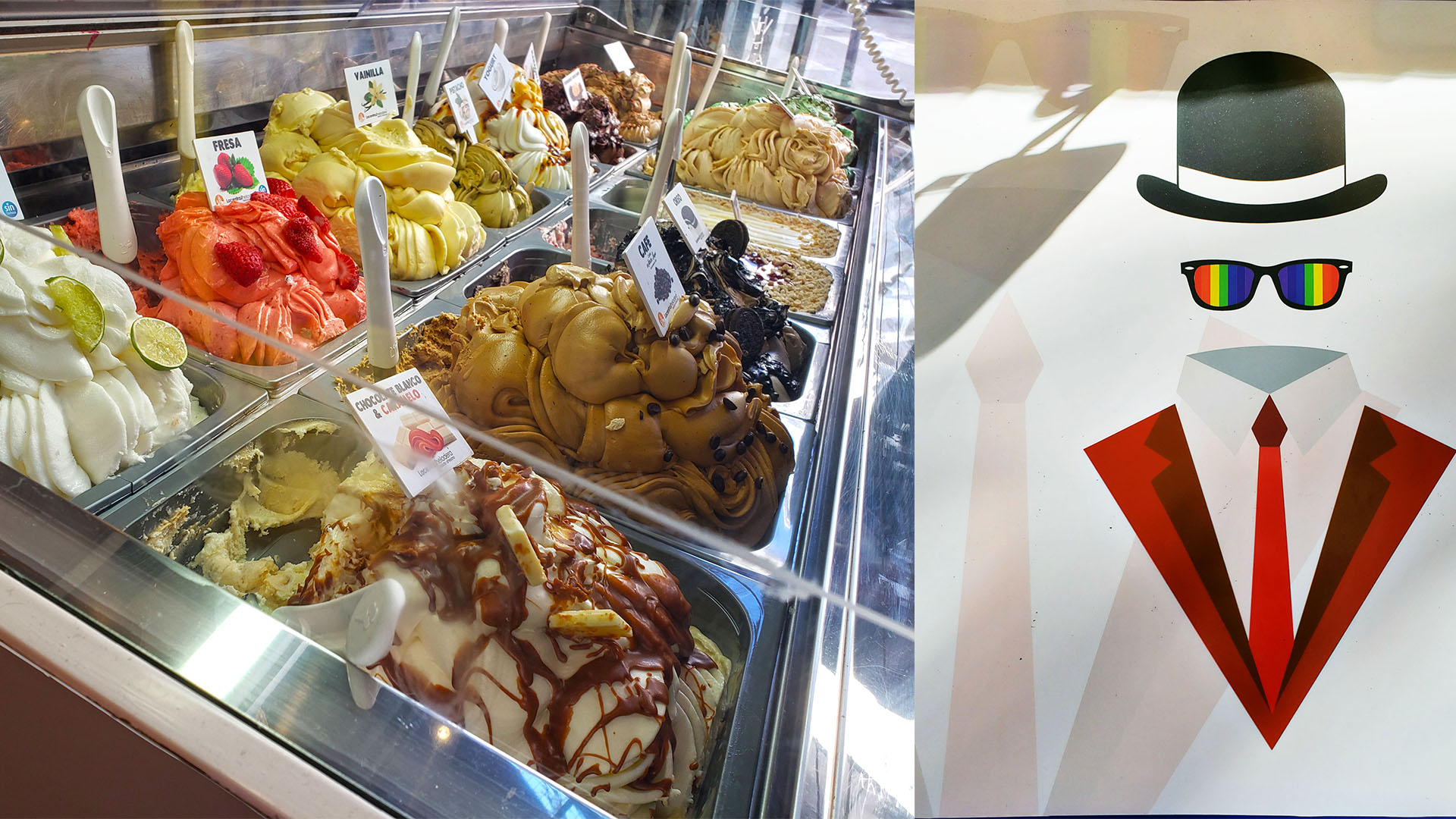
Trendy Chueca neighborhood art and food. Some of our group stopped to purchase ice cream at the Mercado San Anton.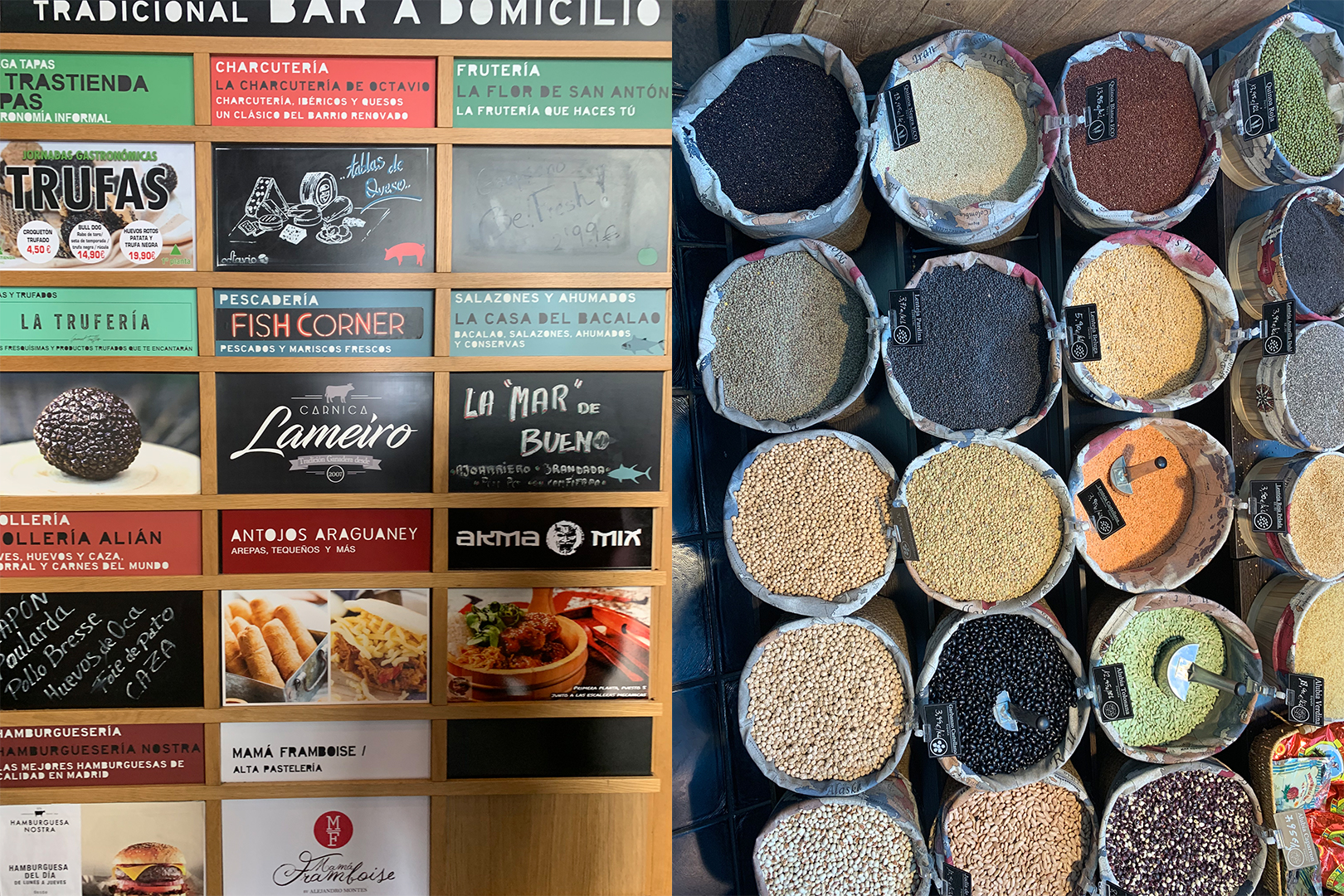
Colorful layouts at Mercado San Antón in Chueca.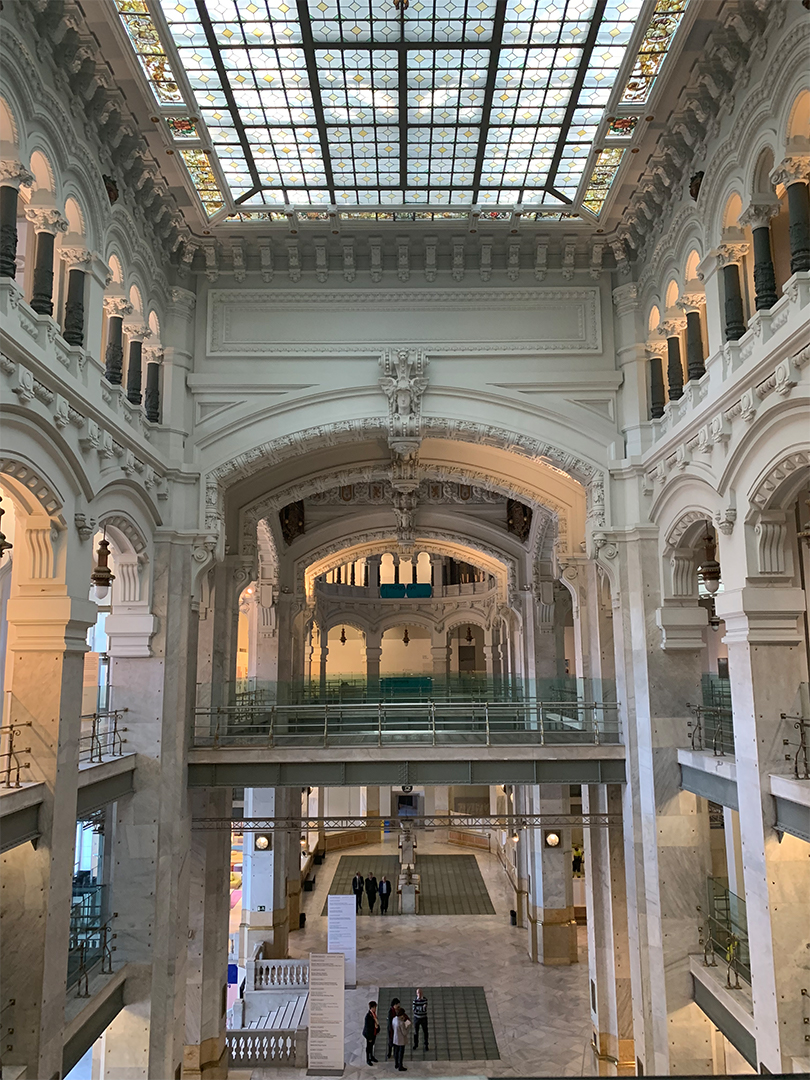
The interior of the former Post Office turned City Hall, designed by Antonio Palacio in 1910. Some of the old infrastructure for the postal service (like dropboxes and tubes) still remain.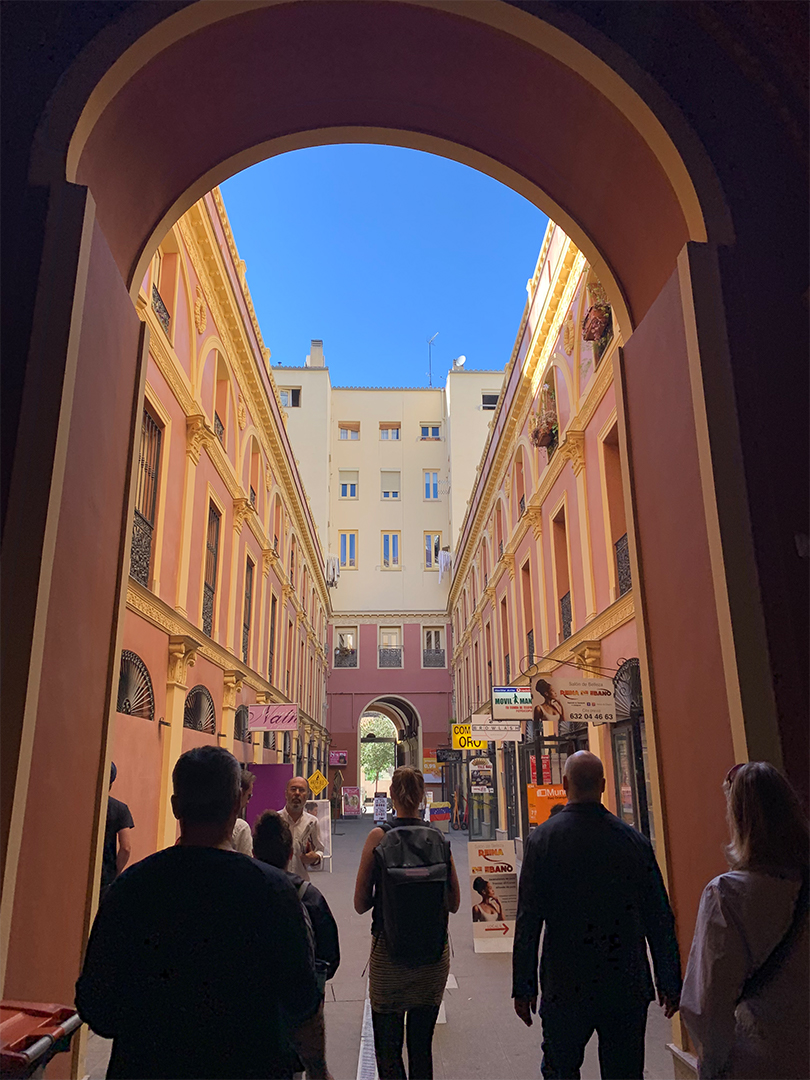
A paysage, which is common in Paris. Spanish urban designers and architects often took cues from the French. They’re typically full of antique shops and other more curious businesses, but this one had a salon and a convenience store.
Part I: Dakota Carlson
On our fourth and last walk with Pablo we began in Plaza de Chueca. The Chueca neighborhood is known as Madrid’s gay neighborhood. The neighborhood is also known for its many street cafes and boutique shops. Over the last few years it has become a centre for gay art and festivals. As we made our way through Chueca we then arrived at Mercado de San Antón a food market with some very delicious looking food. The market has been there since 1945 with more recent updates to the interior and more food venders moving in. After we left Mercado de San Antón some of us quickly purchased some delicious looking frozen yogurt to withstand the hot afternoon sun. While some of us looked over with the slightest hint of jealousy. We continued to make our way to Calle de Alcala a main street that would eventually lead us to the main focus of the walk the Gran via a major street with many adorned building facades. As we walked down Alcala we arrived at a massive building that looked similar to a palace or a major government building. The building at one point in time was primarily a post office. The building is Palacio de Cibeles which now houses space for avant garde art exhibitions. The interior was beautiful with thick glass floors in some areas that increased the amount of light in an already illuminated space.
Part II: Andrew Beck
Standing at the beginning of Gran Via, we looked at a small model of the historic street. It shows that the Gran Via is divided into three main sections. The area where we gathered was marked on the model to have been built in the 1920s, with the sections ahead having been built in the following decades. Final constructions were completed in the 1950s.
Although the street was built in the 20th century, it intentionally evokes architectural elements of iconic late 19th century commercial avenues. The street’s heritage and intention as a commercial hub has been maintained with a combination of historic shops and new additions. The avenue was initially imagined as an artery between the east and west of the city, and for us, served this purpose. Our walk along the Gran Via brought us from the Plaza de Cibeles in the east almost to the doorstep of the Casa de Campo in the west.
The arterial significance of the street has both literal and symbolic meaning. Throughout its history, the Gran Via has pulsed with political significance. It has been called by many names, from those of communist nations in support of republicans to that of the Nationalist leader Jose Antonio Primo de Rivera. It has also been called “Howitzer Avenue” for the dangerous reputation it earned during the siege of the city.
While the street maintains a significant level of architectural continuity, there are some modern additions that are likely to receive varied levels of appreciation. One particularly interesting modern addition reflects in its homogenous and cold glass facade the historic building on the other side of the street. In a way, this hybridized facade of old and new, real and affected, captures the complex history and meaning of the Gran Via as a whole.
 Cities on Water 2019