Part I: Yungui Cai
Today is a really sunny day. We are on our trip to Segovia is an old town in the northern part of Spain. It is easy to see that the town isn’t big and has beautiful architecture and scenery. Also, the town is located on a high and separated area where it was hard to be defeated.
Our first stop is the famous Roman aqueduct. The stop is also the start of the old town. The aqueduct is much bigger than I thought it would be. From what we can see nowadays, it has two layers of arches. The lower ones are about three to four floors high and the top ones are about one floor high. The aqueduct is completely made of stone. It’s hard to see what the ancient people used to glue all those giant stones together. How did people carry all the stones from other places and stack them together? At the same time, all the stones should follow the engineering requirement. It is no doubt this project is very precise and technical.
The next stop is the cathedral. The fantastic architecture is the landmark of the town, it can be noticed from many places of the town. It is said that the cathedral was rebuilt in 1525 since the old one was completely destroyed during the war. The entrance of the cathedral is set in the middle. Once we entered, the main altar and choir area are on both sides. This cathedral has really amazing structure that can hold the big architecture.
The last stop is Alcazar. The castle is on the highest point of the town and is built by the cliff. After we went up, the cathedral and the surrounding buildings all form a beautiful picture. The best part is the snow mountain stands at the background, contributing to a really breathtaking view. The exhibition in the castle shows many weapons from the old time. It helps to imagine what the castle has been through.
The interesting part of Segovia for me is high technicality of the town, from the location people chose for building the town to the complex construction. These spots all reflect people’s wisdom from that time. Also, these are the clues for people from nowadays to imagine what the old life could be. Another interesting part of the tour is the understanding of the stone material. Many old-age architectures are made of stones and stone can be considered as the way people used to convey the old time feeling.
Part II: Jiangchen Zhu
We walk along the river that on the north boundary of the city, there are two stone bridges and two wood bridges on the river. The materials differentiate the time of bridges were made, wooden ones representing the modern world, stone ones representing the old era. When time passes, the wood bridges will slowly age, losing its color, towards pale. Stone bridges will not, the time will gain its life, the moss will grow, the water will leave marks on its surface.
Movement is the nature of water, it needs carries by stone, by the statics. As we later see many systems and structure were made in stone, the irrigation system has a stone-made pool, the man-made waterfall are stone, so is the drainage system on one side of the road. When we arrive beneath the castle, the castle is a lot bigger than when standing in front it. Because the location of the castle, it takes advantage of the cliff, and uses it as a natural barrier.
In fact when we walk around the city wall, the whole city was built on high ground, surrounded by the cliff, river and canyon. The canyon on the north of the city forms a nice shaded space, the growing of moss, the locals running past, and a couple of people fishing on the river. We also saw some vegetable gardens behind the walls then we walk to the higher ground, back to the city and cut across to the aqueduct.
When the sun went down, the aqueduct cast a much longer shadow on the ground, made it more spectacular.
Images: Sydney Shea and Mattie Wong
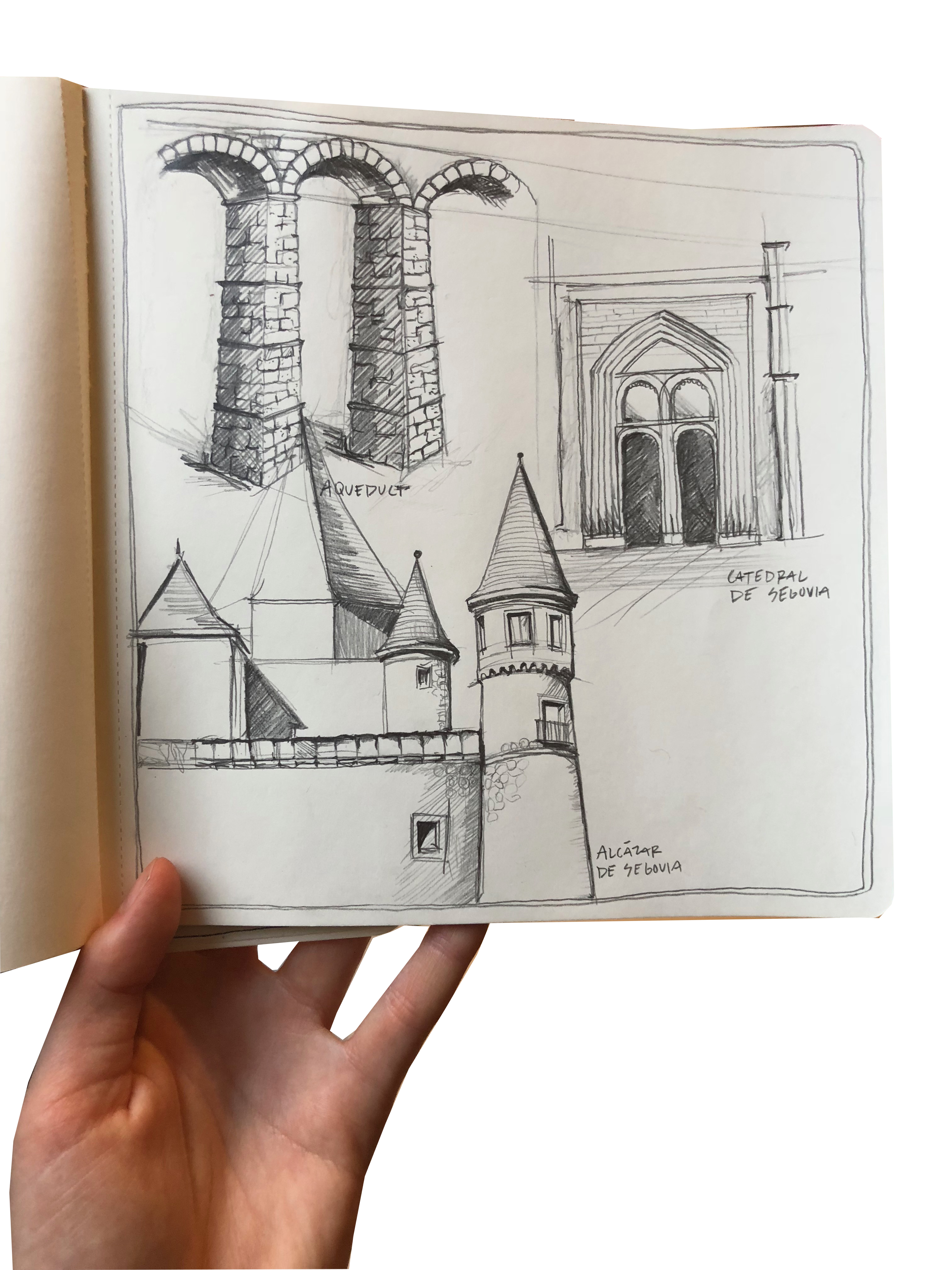
Sketch of Aqueduct section, door at Cathedral, and section of the Alcazar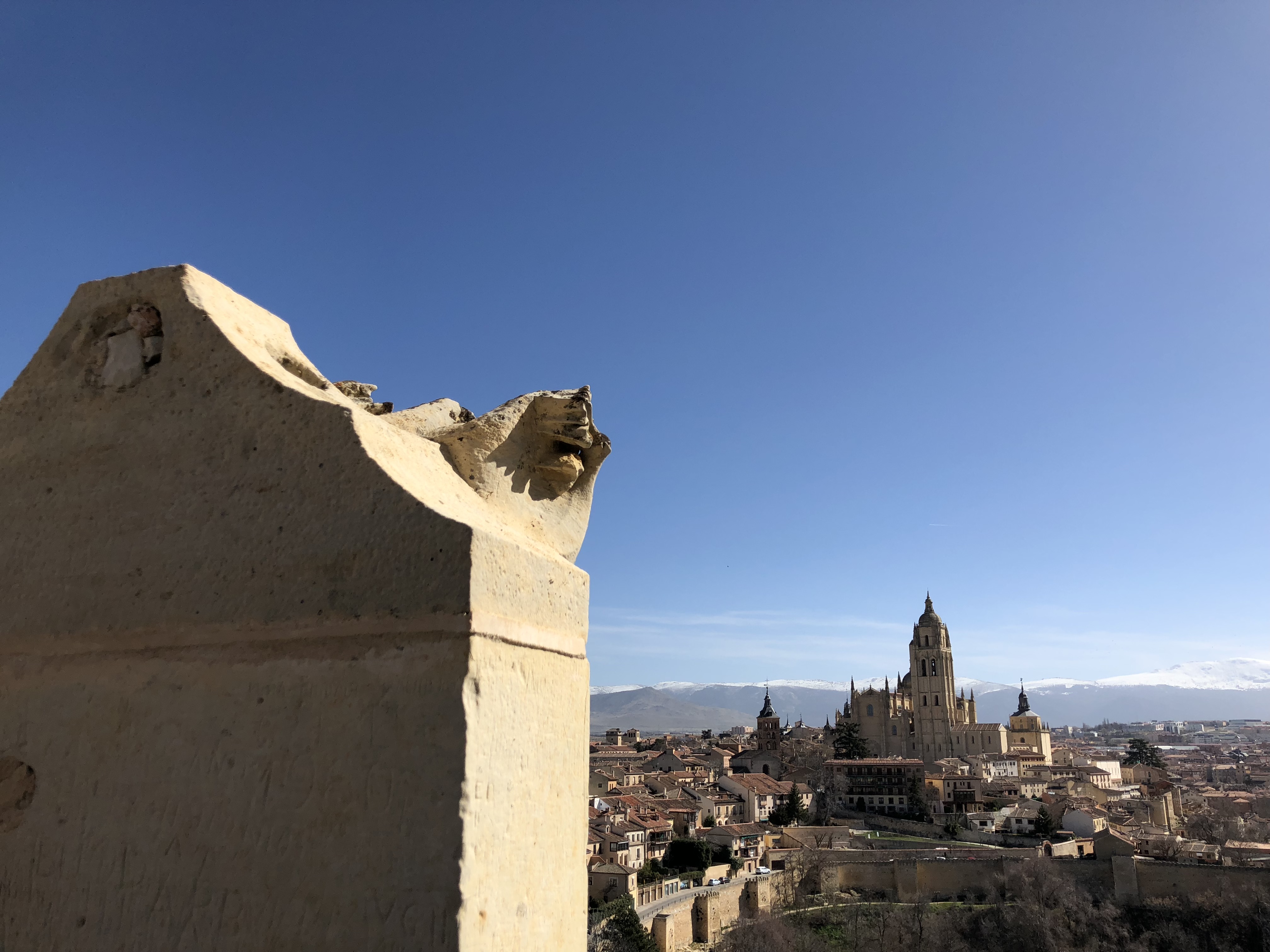
View from the top of the Alcazar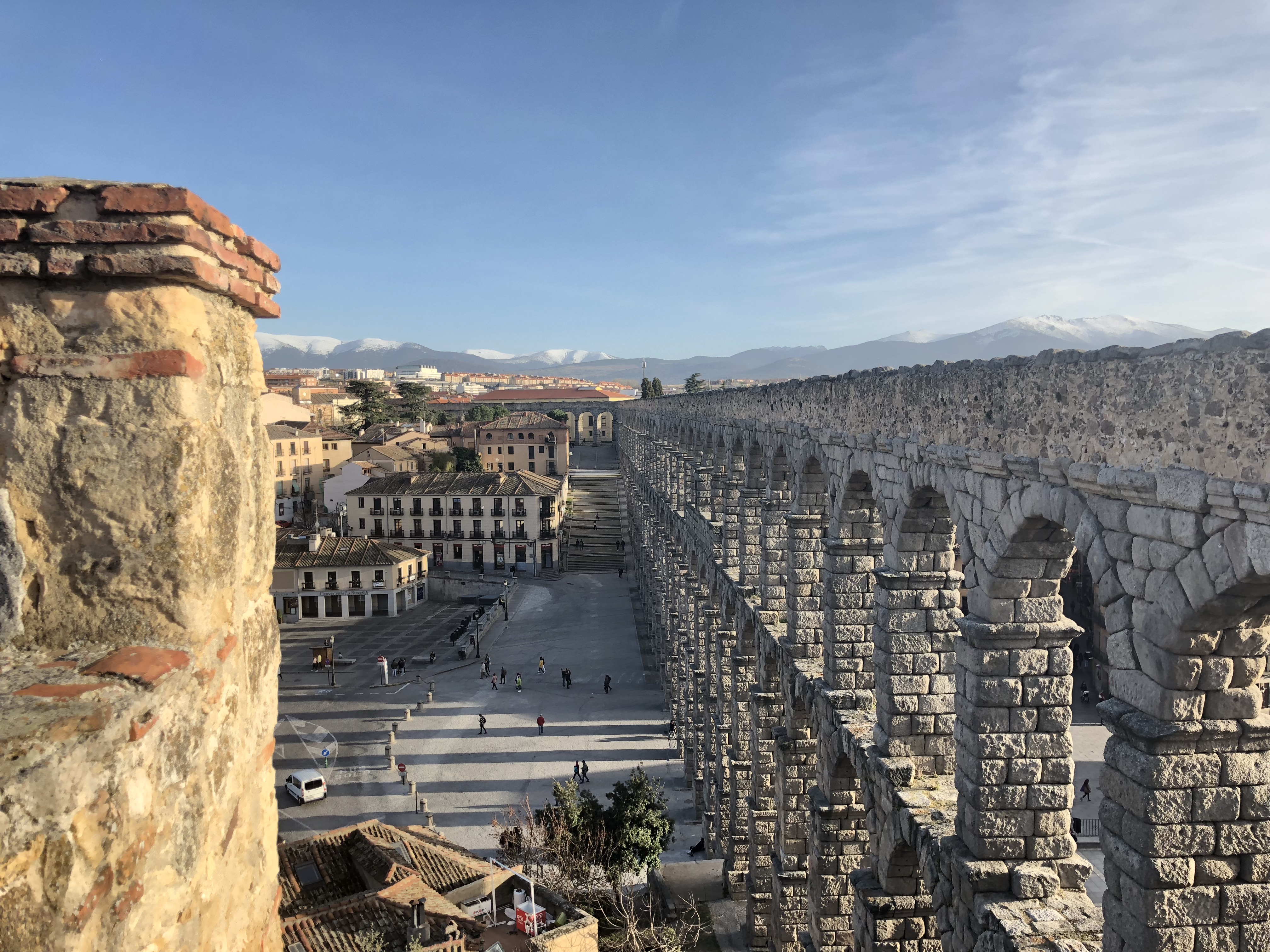
View of the aqueduct cutting through the town center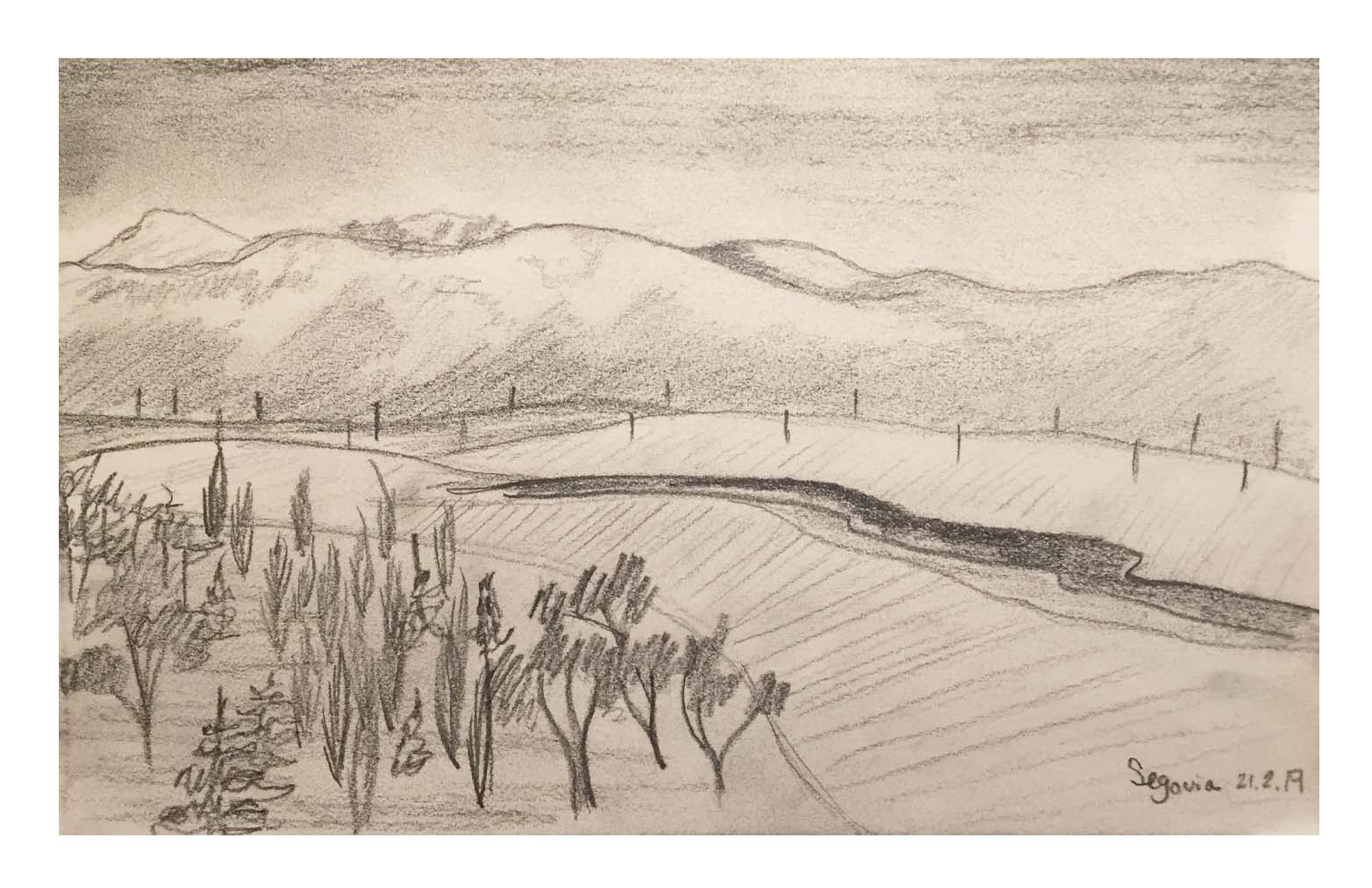
Sketch of the countryside and mountains surrounding Segovia from the top of the Alcazar.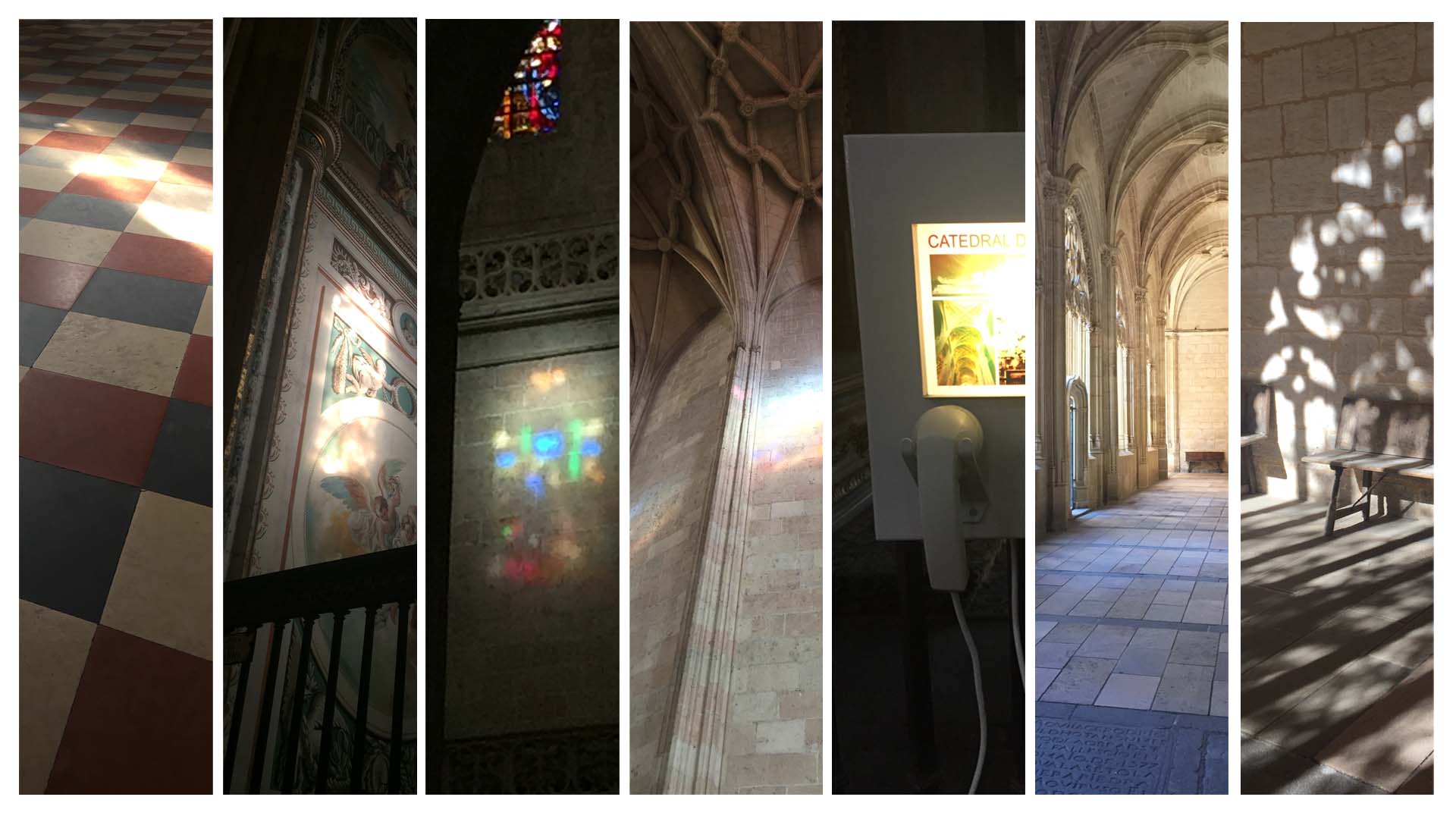
Different light in the Cathedral of Segovia.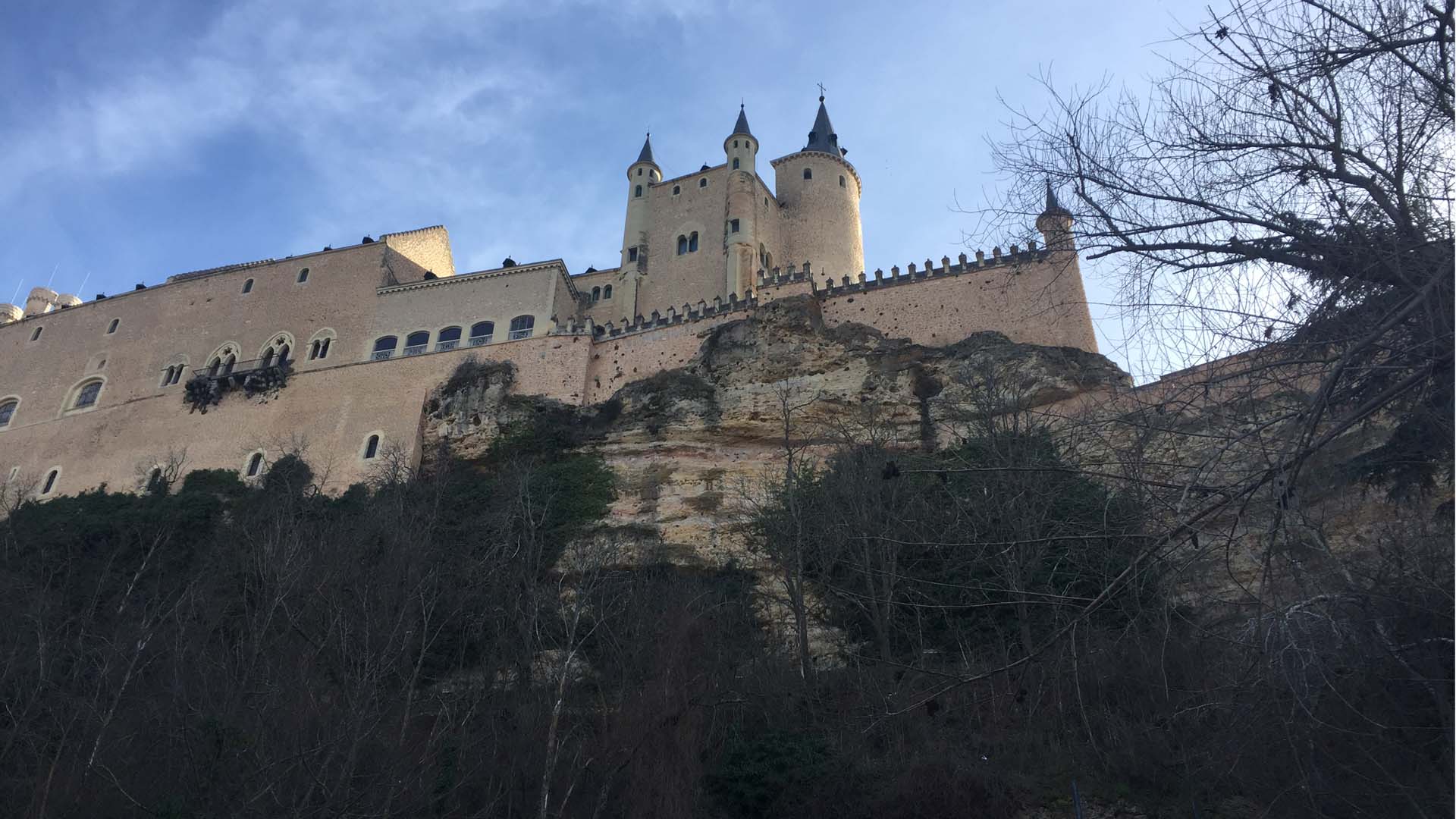
The Alcazar, imposing and seemingly impenetrable from down below.
 Cities on Water 2019