Images by Will Linscott and Nikolai Fjelstad DeSantiago F
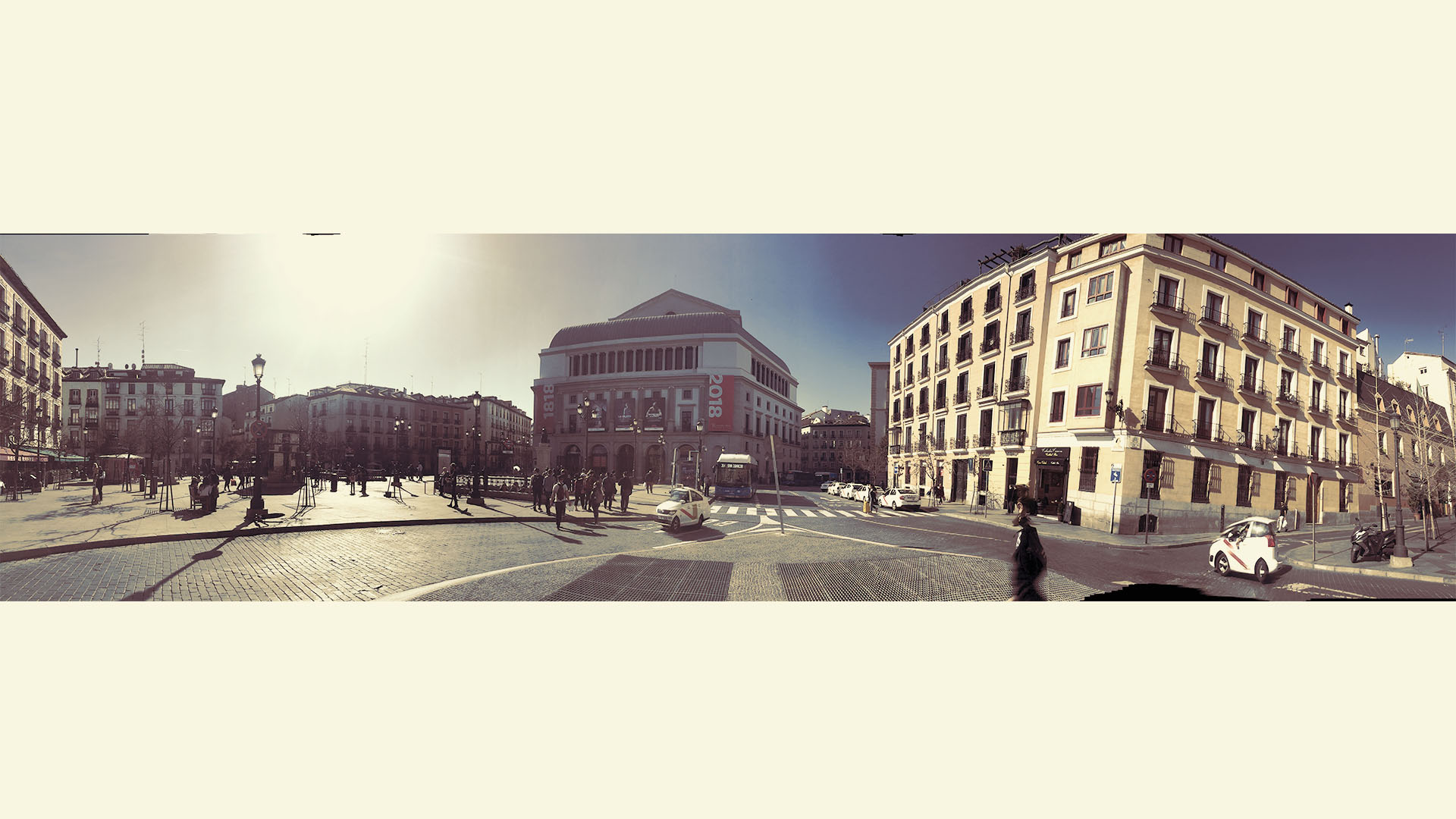
Panoramic view of Plaza de Isabel II, facing the Opera.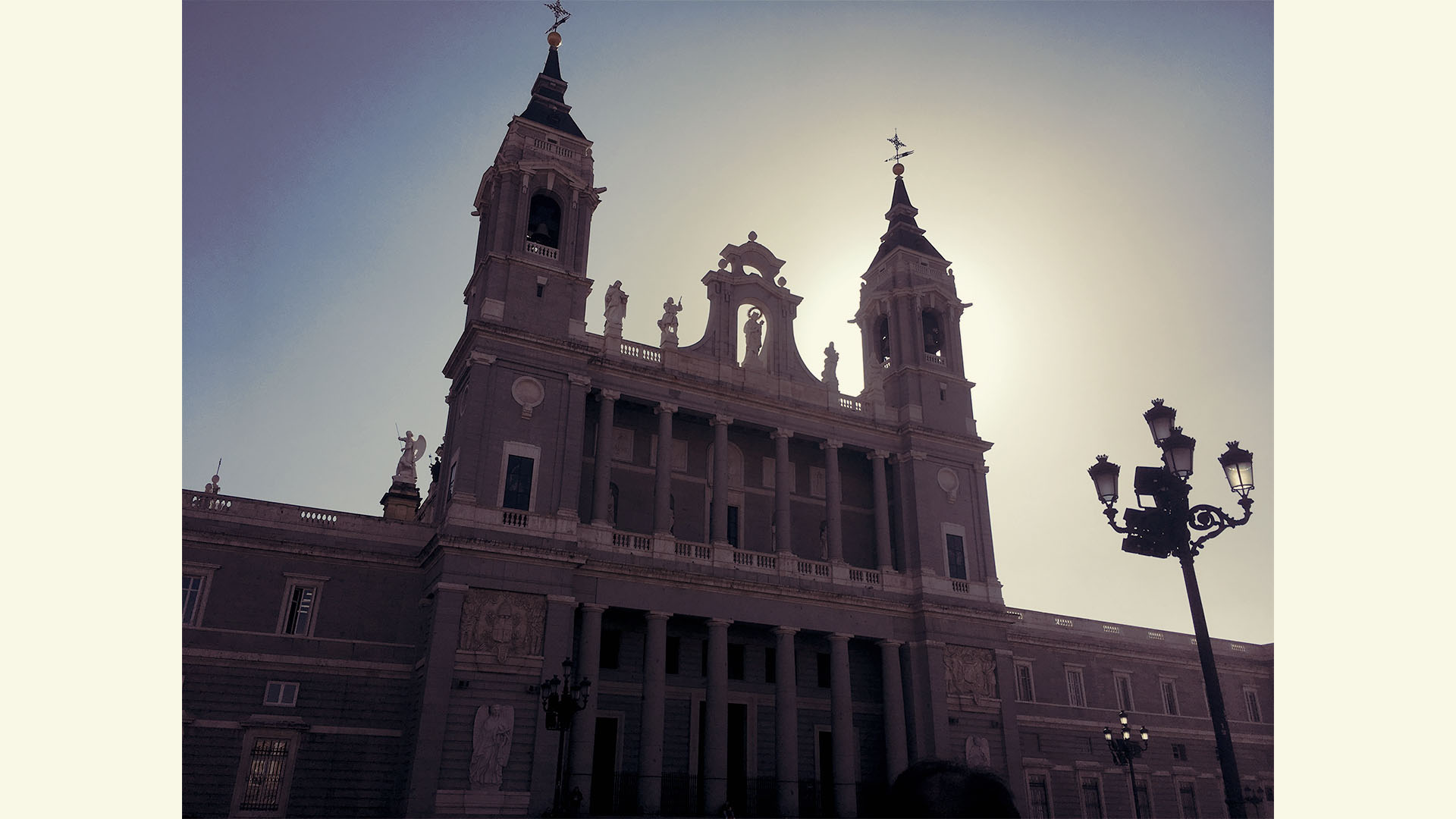
Photograph of the Catedral de Santa Maria la Real de la Almudena.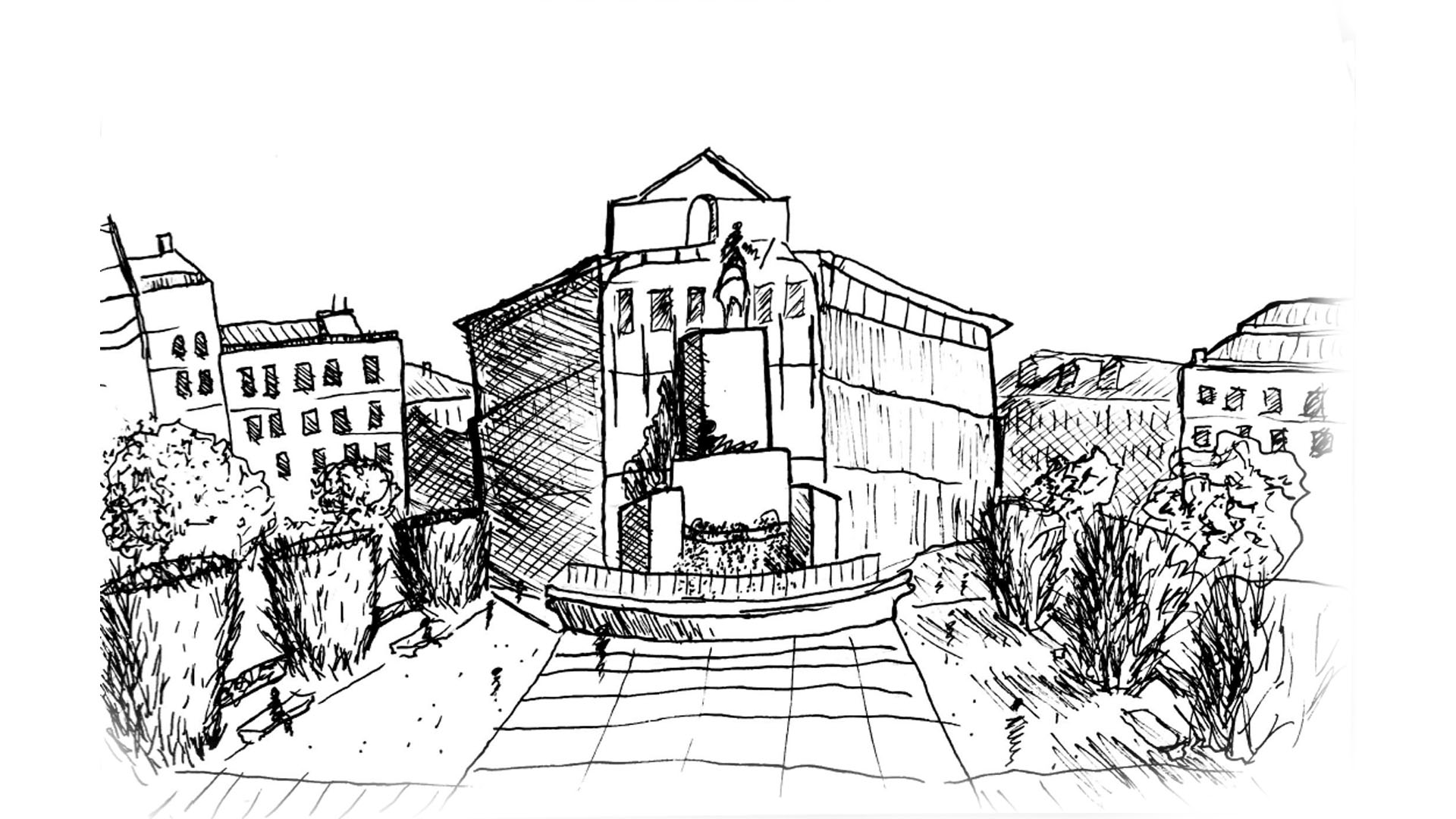
Sketch of behind the Opera in the Plaza de Oriente. This location is right in front of the Palacio Real de Madrid.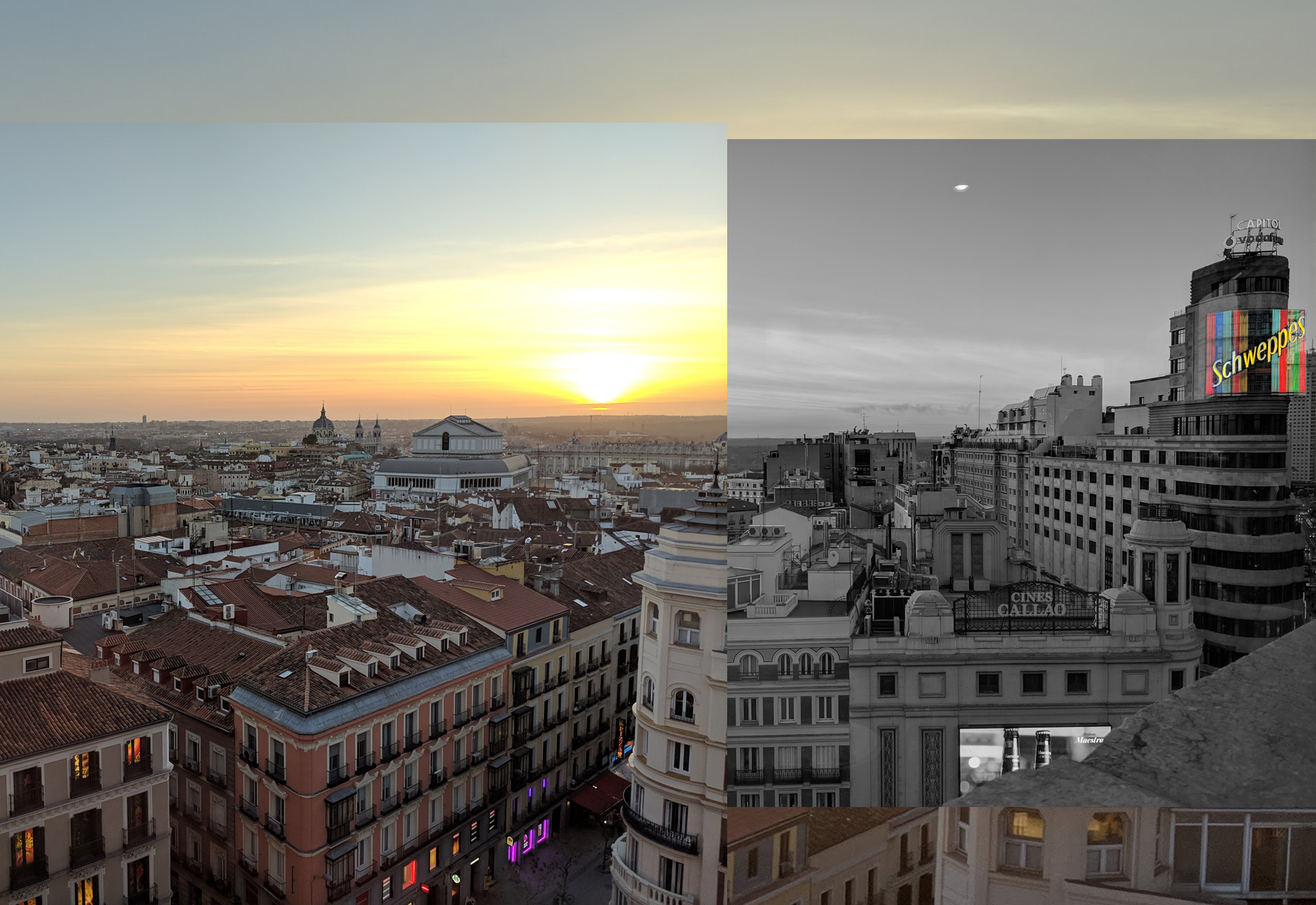
A panorama collage of the skyline of Centro, you can see the Madrid’s Opera House, the Teatro Real, as well as the Royal Palace in the background. In the foreground, the historical buildings are juxtaposed with newer architecture built up around the Plaza de Callao, including the iconic Schweppes sign.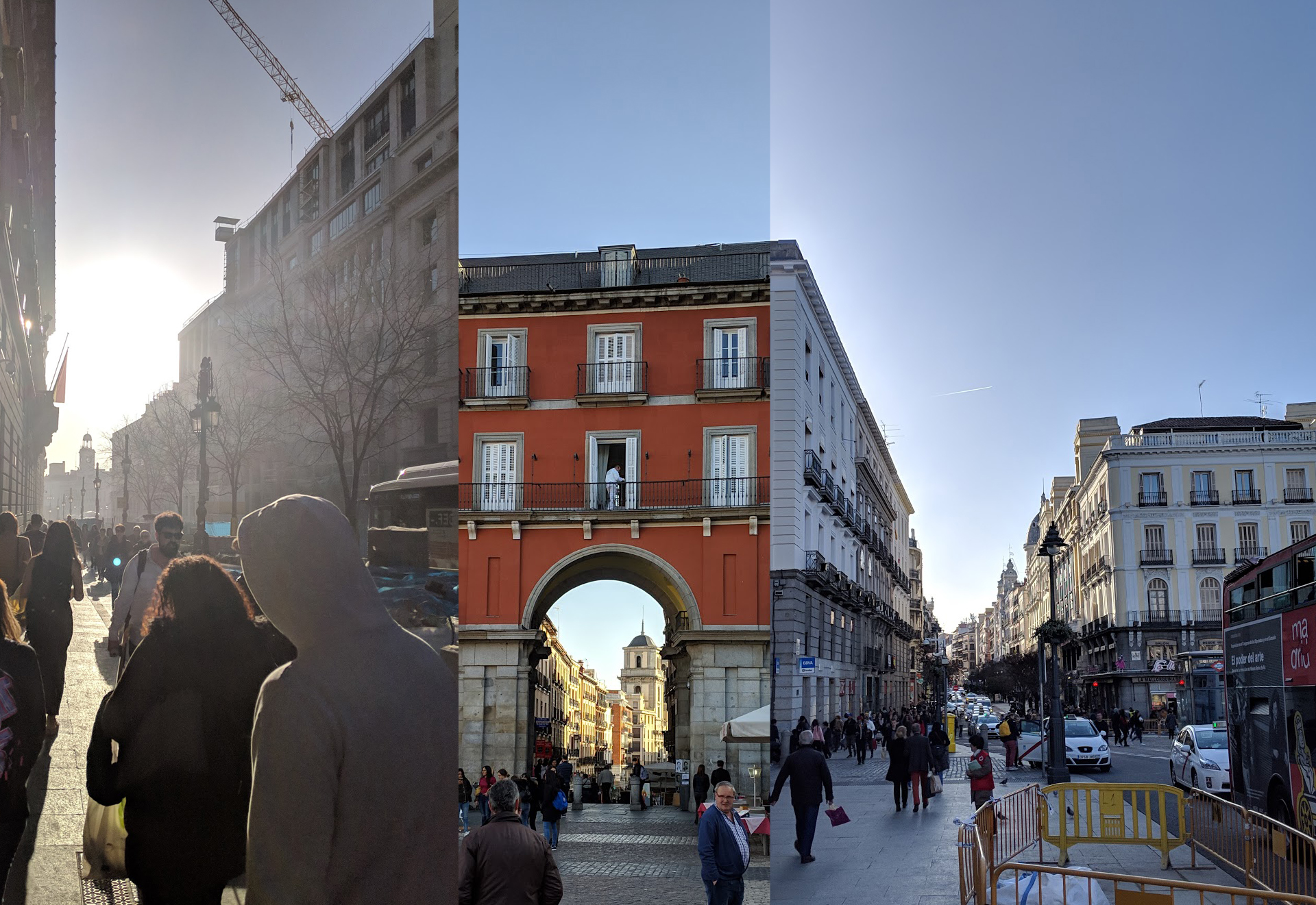
On sunny days, those exploring Madrid’s Centro are often gifted with long views down streets lined by buildings that are hundreds of years old. This collage shows some of the conditions that one might see, down long building lined alleys, through Mudejar keyhole shaped entryways, or into the sun, dust, and air pollution.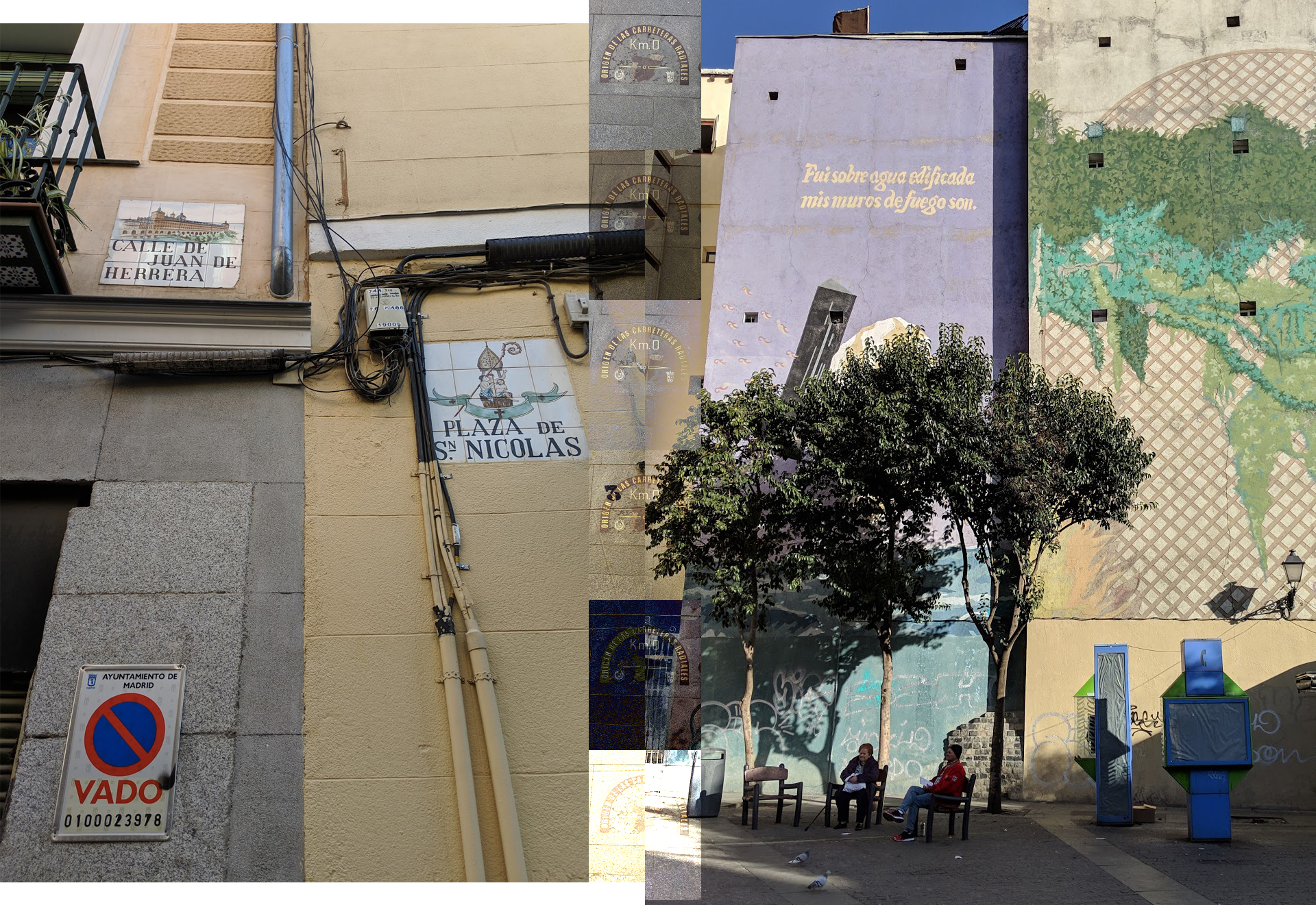
Madrid’s Streets are marked by tiled street signs attached to buildings at the intersections. Some areas of Centro are covered in art and writing, while signage is ubiquitous throughout most of the district. This collage shows street signs, the Km 0 marker that supposedly marks the starting point of all roads in Spain, and street art referencing the historical origins of Madrid.
Part 1: Anya Moucha
Our third history class walk with Pablo took us to the center of Madrid to understand the layers of the city. We met at the Plaza of Isabel II near the Opera station and walked a few blocks to the Monastery of Las Descalzas Reales, the oldest preserved monastery in Madrid. It was fascinating to see this historic site, which still holds a community of cloistered nuns, next to newer construction and major shopping centers. This example is representative of Madrid’s loose approach to city planning.
As we head west from the Monastery, we passed many more buildings that reveal traces of the city’s past life, such as building entrances large enough to allow for carriages to pass through.
Three particularly prominent buildings sit in this neighborhood: the Opera building, the Senate building, and the Royal Palace. Of course, the Royal Palace was especially stunning to see. The palace sits on the site “where the city was born”, having also been the site of an early Moorish castle and an important Alcazar. Ultimately this dramatic palace was built between 1735 and 1770. With nearly 3000 rooms, it is one of the biggest palaces in Europe.
Across from the palace is another example of Madrid’s varied history and loose urban planning, the Catedral de la Almudena. Because Madrid was not considered an important city or town during the Middle Ages, no Romanesque or Gothic cathedral was ever built there. In the 1890s, city leaders decided Madrid, which had since become the capital, deserved a proper and grand cathedral. Construction on this building was incredibly slow and stopped and started numerous times. Finally completed in 1993, the cathedral’s neoclassical exterior and neo-gothic interior provide further evidence for the informal planning of the city.
Part 2: Evan Furr
This church has recently been in the news because there are talks of Franco’s remains being transferred from the Valley of the Fallen to this church, although many of his supporters oppose the move. Alternately, many Spaniards believe that having Franco’s tomb at the Valley of the Fallen shows disrespect to those who died as a result of the Spanish Civil War. Just south of the church is a large section of Moorish wall that was uncovered in the 1950’s. The area inside the wall is known as La Morerilla.
Pablo mentioned that in addition to the strategies being put in place outlining a cleaner Madrid, signs are showing up in many parts of the city saying “Suerte es tener un barrio limpio” to make sure that owners are cleaning up after their pet. This happens to be a minor issue in a heavy populated city with many pets. Pablo is great at pointing things out as we walk, such as the oldest standing church, St. Nicolas, or telling us the meaning of the seven stars that represent Madrid. They pay tribute to the constellation Ursa Minor that can be seen in the sky from the city. We walked down many small streets with coffee shops and tapas bars, one street in particular is named Calle de la Pasa. An old phrase says “si no pasas por la calle de la pasa no te casas”, which means if you don’t walk down this street in Madrid you won’t get married. The marriage office is on that street.
Continuing on our walk just south of the Plaza Mayor we came upon a restaurant called Botín, considered the oldest restaurant in the world because it opened in 1725. It’s also famous because it is mentioned in many novels by famous Spanish and American authors, including Hemingway. We made it into Plaza Mayor and took a trip around the outer edges paying a visit to the tourist center to pick up information on current events in the city. We walked into Puerta del Sol to find the center where all the roads in Europe originate, since they are organized radially from that point. At the end of our tour we found ourselves outside the Spanish Parliament by walking down Calle de Alcalá, one of the two main streets from Sol. This walking tour was an incredibly interesting journey from the Opera House to the Spanish Parliament on a sunny day in Madrid.
 Cities on Water 2019