Photos by Will Metcalf and Anya Moucha
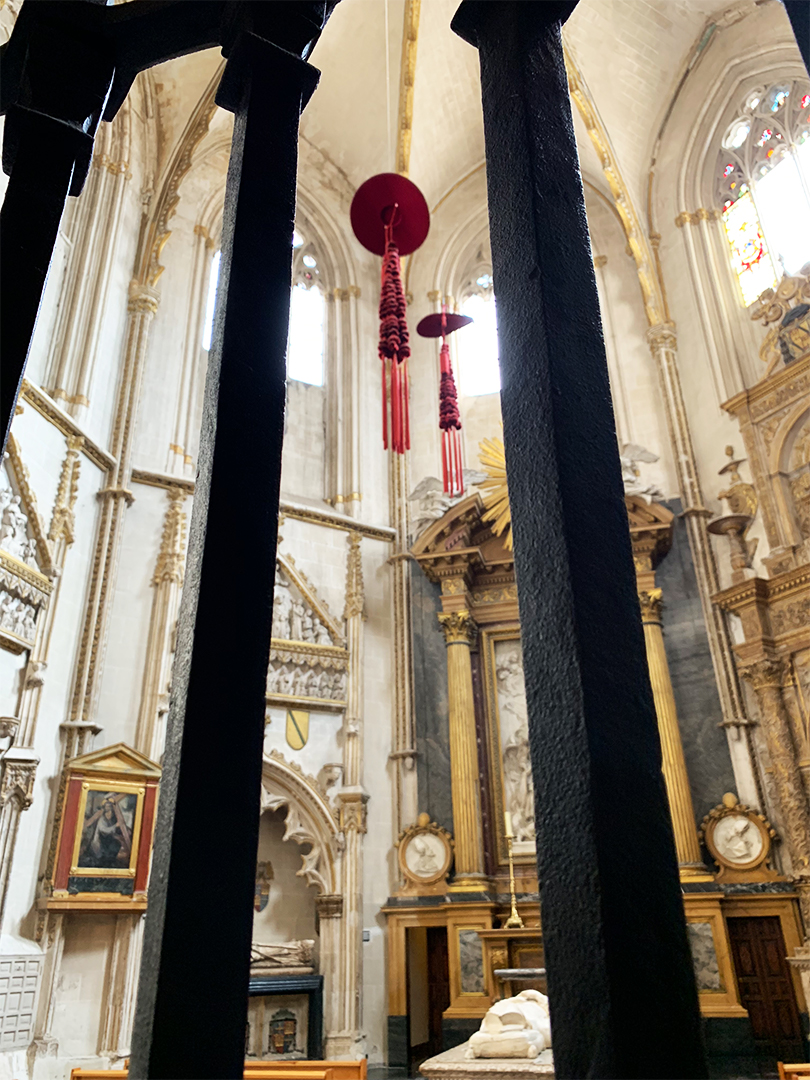
Hanging cardinal hats in the Catedral Primada. My mom visited in the 80s and said to look for the hanging cardinal hats. When a hat finally drops to the floor, it’s said the cardinal has finally ascended to heaven.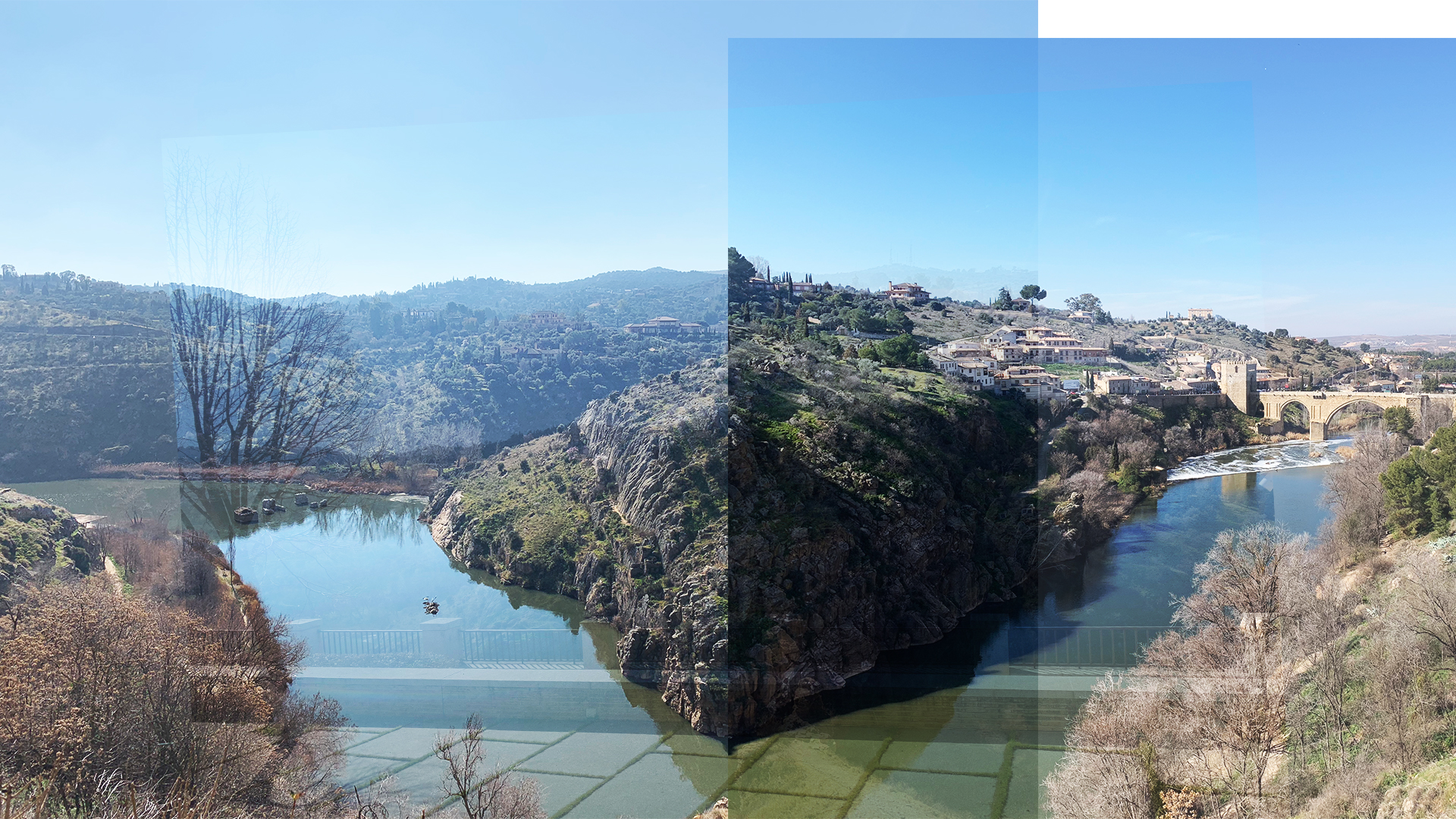
A collage of the Rio Tajo from three vantage points, one of which several of us traversed to following a worn path from Paseo del Tránsito.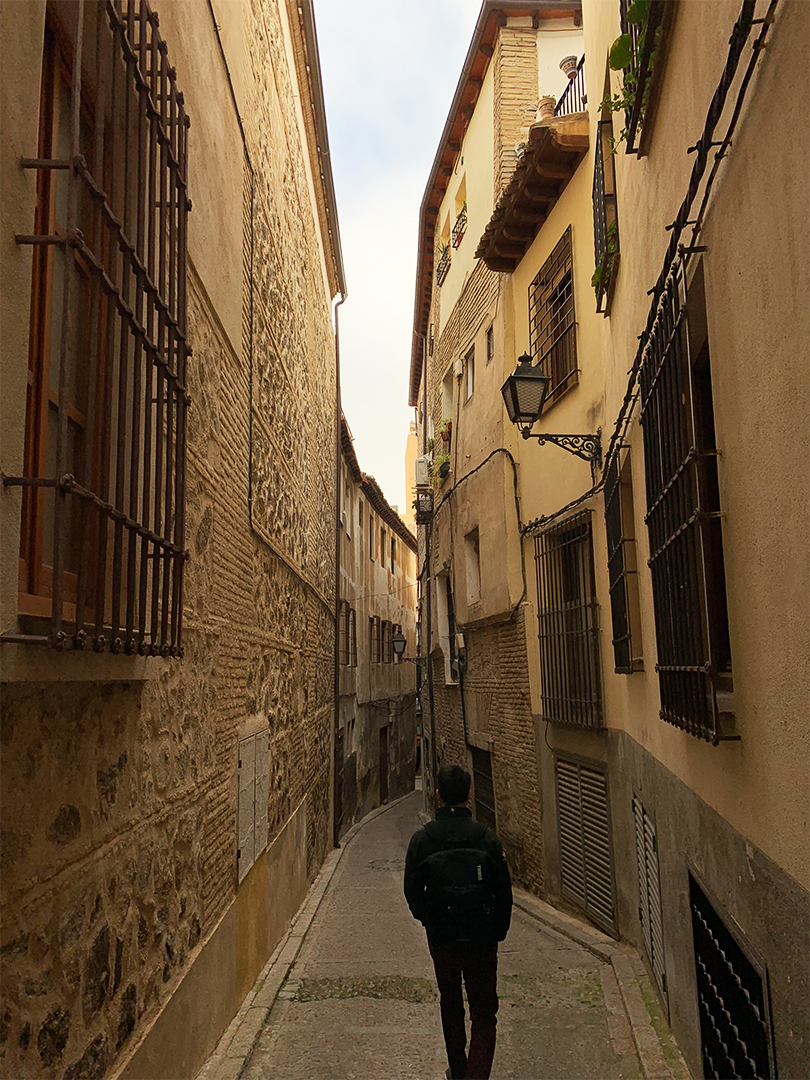
Wandering the streets of Toledo toward one of our stops for the day. The narrow streets create wonderful effects with light, and it’s easy to get lost in the central part of the city.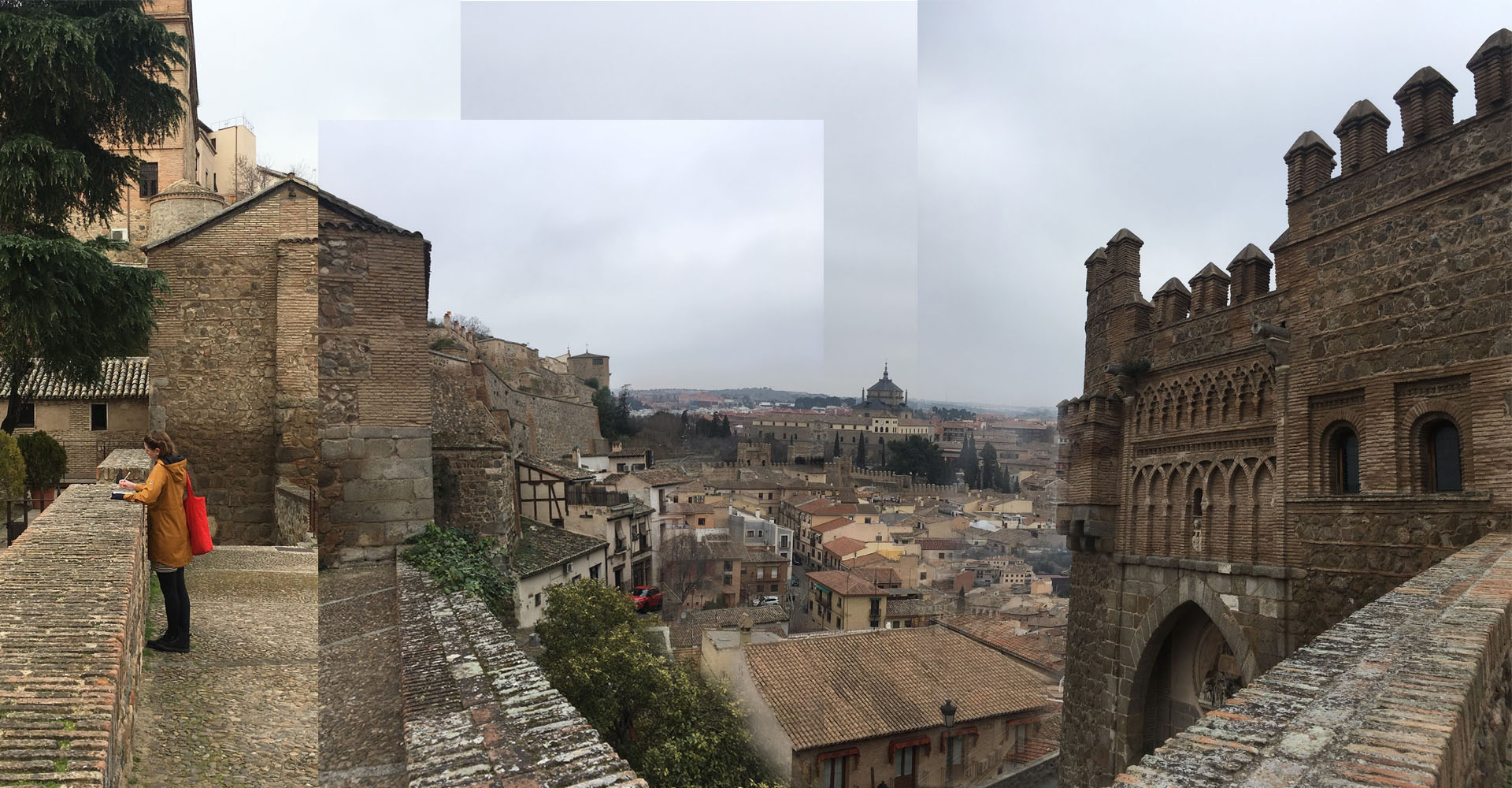
Image collage of view from Mezquita Cristo de la Luz. On the right side is an entrance to the walled city and the left side of the image shows the wall system.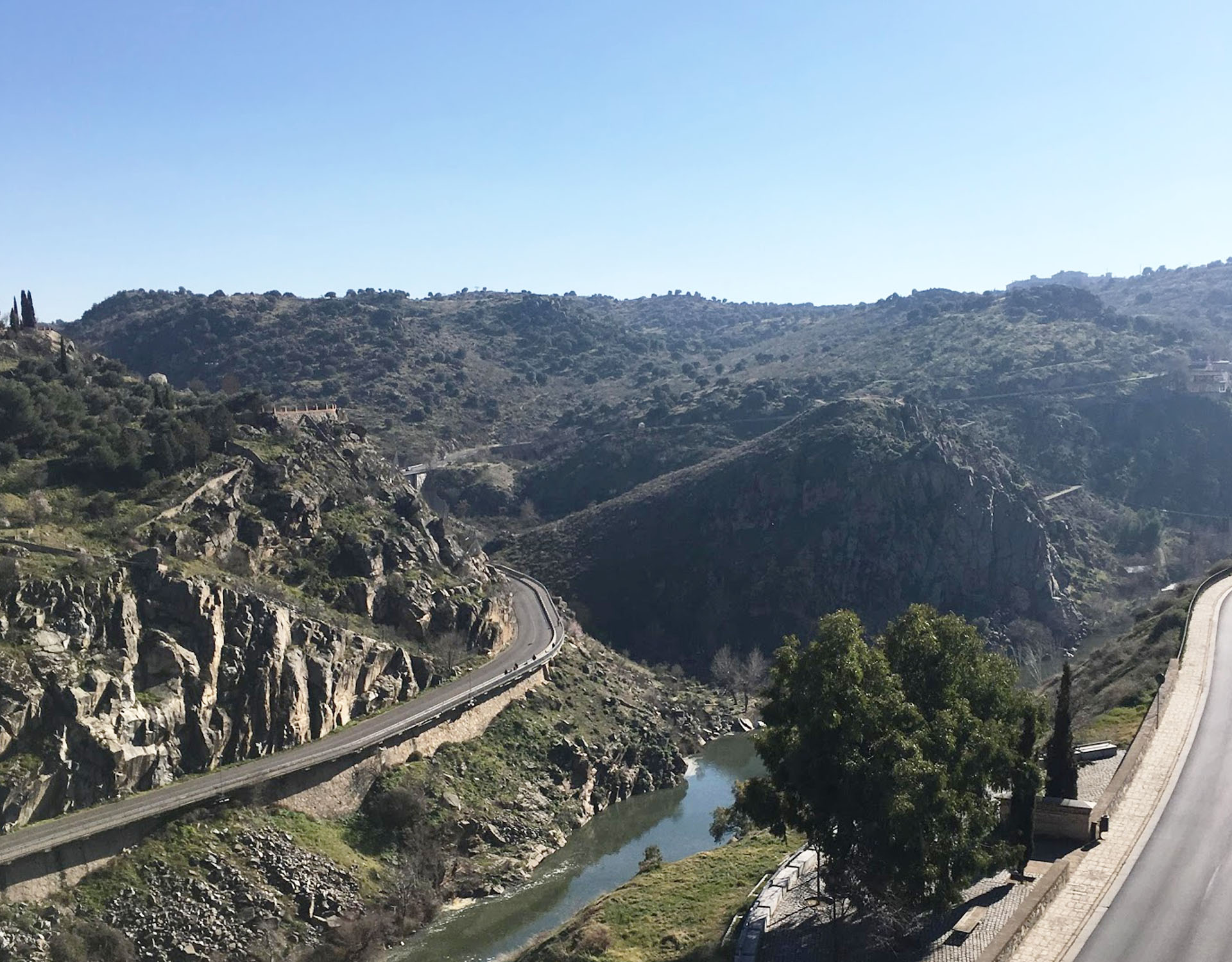
View of the Tagus River from the Alcazar, a stone fortress that serves as a prominent feature in the city.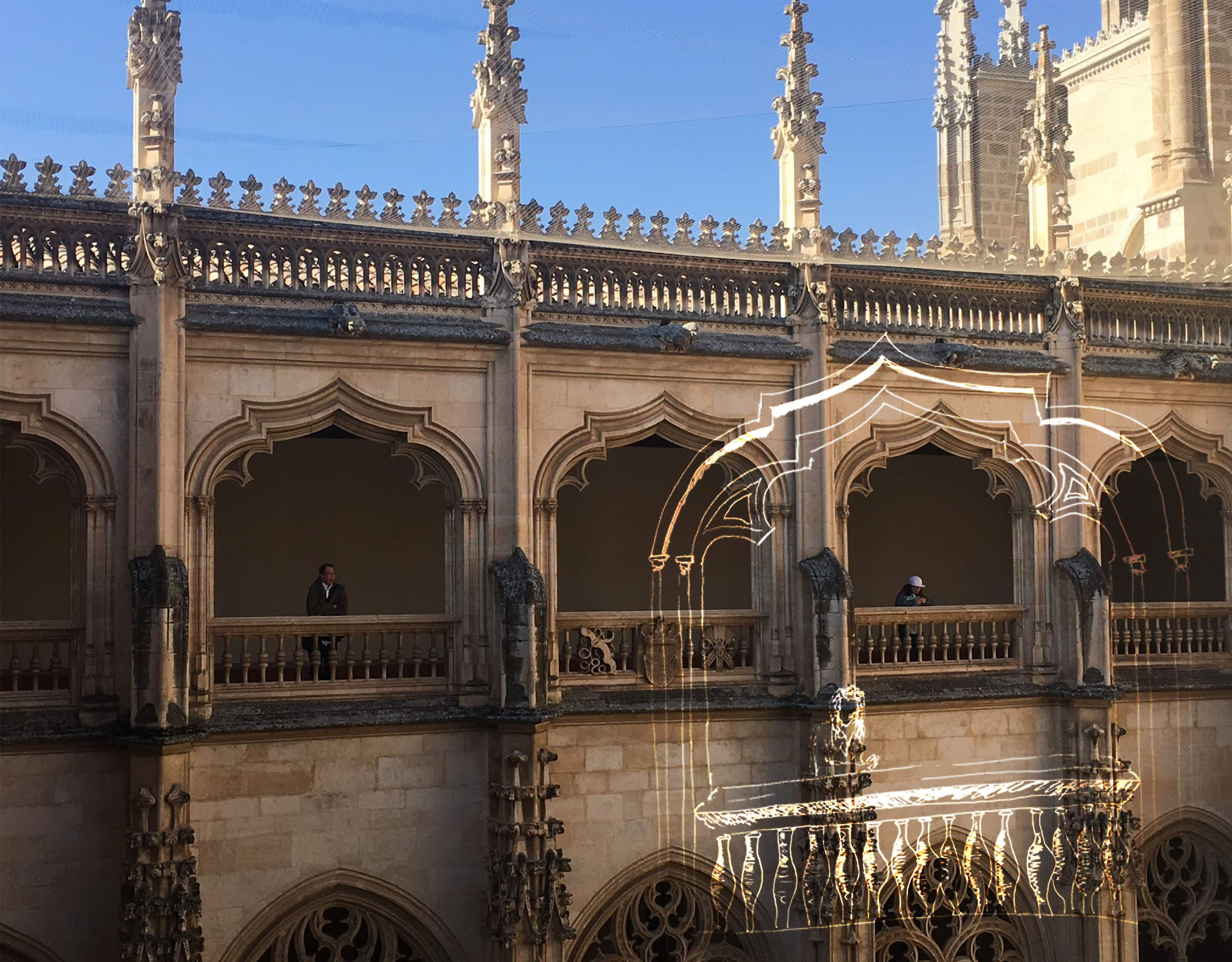
Interior courtyard of the Monasterio San Juan de los Reyes, overlaid with a sketch from the site.
Part 1: Will Linscott
Toledo, a city mentioned by Roman historians as early as 1st Century B.C.E., makes the transitioning of major world empires through history look like shifts in political majority in the U.S. Due to these changes there are standing and fairly well preserved relics and writings from over two millennia of cultures that flourished in the Iberian Peninsula, namely the Romans, Visigoths, Moors, Jews, and Castillan Catholics. The great walled city on a hilltop was the capital of Spain during its maritime colonial heyday, and thus contains opulence that could have only been funded by the mineral wealth of the New World.
Our visit to Toledo was our first class trip outside of Madrid, and though the current capital city continues to impress and surprise us with its density, vibrancy, and world class air pollution, driving out of the smog to Spain’s previous capital city was an eye opening glimpse into a more “traditional” time. Upon arriving, we used one of Toledo’s few doors to the interior of the walled city and headed through the steep, crooked, and almost unreasonably narrow streets to the Cristo de la Luz.
What was once a Moorish mosque became a Christian church when Reconquista forces from Castile took control over the city in 1085. Contrary to what most might expect, it was fairly common for mosques to be converted into churches without much work at all during this time period. The building itself is refreshingly humble, a small rectangular room and an alter with a dome not more than 40 feet high, with a total area that surely does not exceed 500 square feet. The modest architecture is one of the primary reasons that the conversion of mosques was such an easy undertaking, as there were not shrines or monuments decorating the building. Perhaps most surprisingly, there is still Arabic writing over the main arch of the altar that sits in front of a Romanesque fresco and beside a crucified Jesus. Though, as the day went on, I learned that this was not an uncommon juxtaposition at all in the ancient city.
I did not previously associate medieval cities, especially those in Spain, with tolerance, however I was pleased to learn that Muslims, Jews, and Christians all lived together in peace for centuries in Toledo. When empires changed, books were not burned and places of worship were not destroyed, but rather academics of the times translated the works into the new language of rule. And, though eventually Spain was plagued by intolerance and inquisition, walking through the cobbled streets and seeing small tiles in Hebrew beside churches and monasteries, in conjunction with the knowledge that this was once a major Arab cultural center, was certainly a highlight of the excursion.
Part 2: Sydney Shea
The second stop on our tour of Toledo was the Catedral Primada, an overwhelmingly grandiose church that dates back to the thirteenth century. Under construction from 1277 to 1493, the cathedral was strategically planned to cover the footprint of a prominent Islamic mosque that was seized by force and converted by Christians in 1087. This saga follows an important pattern in our readings and discussion of attempted erasure of Muslim cultural and architectural influence during the Spanish Reconquista. As much as the Catedral Primada and other Catholic building projects sought to shroud the presence and truth of Islam, Christian architecture nontheless took strong cues from Moorish trends and workmanship. Interlaced, multifoil arches typical of the Mudéjar style can be found both inside the five chapels of the cathedral and its exterior cloister garden.
There is no shortage of sculpture, painting, and intricate ornamentation to flood the senses inside the cathedral. Of particular interest, however, is the Monstrance of Arfe, a grand receptacle for displaying the consecrated host in the Catholic Church. The monstrance and its base, called the pedestal of angels, stands at ten feet tall and is made entirely of solid gold, silver, and jewels. It is said that the gold of the monstrance was the first of that brought back by Christopher Columbus from the New World. This claim raises obvious ethical flags when considering who benefits and suffers in the construction of over the top religious symbols of dominance and wealth that may, in part, be funded by exploitation.
After a subsequent visit to the awe-inspiring cloisters of the Monasterio de San Juan de los Reyes, we were set free to explore the city. Given you don’t fall into the trap of walking in circles down its narrow and winding streets, crossing Toledo on foot only takes about ten minutes. Escaping from the tourist ridden town center, many of us discovered incredible views overlooking the Tagus River. The rocky, vegetated hillsides and fast flowing river free of concrete embankments was a welcome and restorative sight and hiking ground before our journey back to Madrid.
 Cities on Water 2019