Authors: Will Metcalf and Anya Moucha
Images: Sydney Shea and Mattie Wong
We started the beginning of a busy week with a trip to the world-renowned Museo Nacional del Prado. Housing a famous collection of European painting, the Prado Museum opened in 1819 and is currently celebrating its bicentennial.
Among the many impressive collections, one of the most striking was the work of Francisco Goya. In particular, the emotive Black Paintings were especially compelling. This series of 14 works is aptly named after the dark shades of paint used and the haunting subject matter. It is said that these paintings were found on the second floor of Goya’s former house (Quinta del Sordo). Some time after his death in 1828, they were cut from the walls and transferred to canvas. They have been housed at the Prado since 1889.
While profoundly visually powerful, these works are also shrouded in mystery. Goya never publicly showed the paintings, nor was he the one who named them. Furthermore, research and conversations in the last few decades have suggested that these works may not have been created by Goya, but by his son or grandson as a way to make a profit.
In addition to questions of attribution, the removal of the Black Paintings from the walls of Quinta del Sordo raises questions of context. It is unclear if there was significance to how these paintings were originally placed in the home. In fact, the placards at the Prado tell the viewer that Saturn (a particularly graphic piece) and A Manola (a reserved woman, said to be Goya’s companion), were facing each other across the room at Quinta del Sordo, yet at the Prado, they are placed next to each other. How do these shifts in context change how we interpret the meaning of the pieces?
Other placards admit that some of the works were damaged over time and have been restored to varying degrees of success. In Hombres leyendo (Men Reading), we see a group of men gathered around a book. However, one of the faces in this painting was added after Goya’s death by another artist.
These questions of addition, modification, context, and attribution do not necessarily change the visual power of these dramatic works, but they certainly add a layer of complexity. How do we approach these types of questions when they relate to projects in the built environment?
These themes also appear in the extensive collection of religious artwork, both commissioned work of the old masters and iconography lifted from churches throughout the world. Wandering through the first and second floors, one will come across various renditions of Virgin and Child or Adoration of the Magi. Taken as a collection, it’s possible to study the varied composition and techniques portraying these narratives. But on a broader level, it is only as a collection that the importance of these narratives to Western culture begins to emerge.
It’s important to note that many of these paintings originally hung in the context of church walls or private homes. In the case of churches, such as Iglesia de la Cruz (reconstructed as an installation within the Prado), these images were the foundation of a culture of visual storytelling. The narratives in each painting were didactic in addition to aesthetic, but also produced and reproduced the power of the Church over daily life. Transposed from a religious institution to a secular one, albeit still cultural, these images still move us today with their technique and scale, in addition to the pedigree of the artist.
Attribution to particular painters is an interesting question–are we drawn to certain images because of their artist? What makes pedigree so attractive in the art world? For example, it was exciting to see The Last Supper by Juan de Juanes, which is unapologetically described as “inspired by da Vinci” in addition to a Mona Lisa apparently done side-by-side the masterpiece that sites in the Louvre. While these paintings may be dismissed as “not the real one,” they’re reminders of the world of the artists we revere today.
Supported by a studio of anonymous apprentices and the wealth of benefactors, they were not the sole producers of the images that shaped and continue to shape our culture today. The power produced by art is shaped by social constructs, economics, and turns of history. But over time, art shapes our perception of who we are and where we’ve come from.
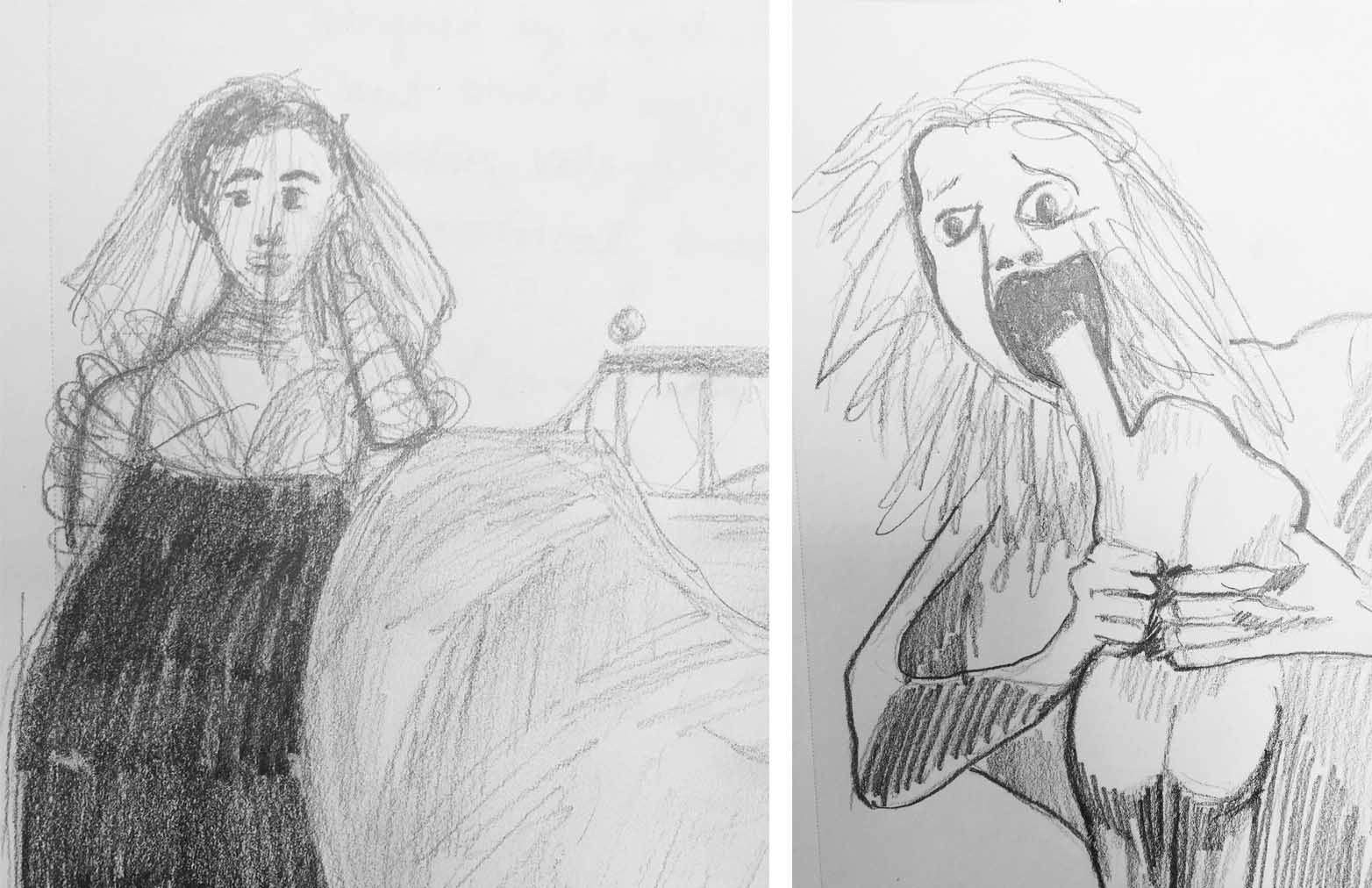
Goya’s black paintings were removed from the second story of his house, a context lost when hung in an art museum. For example the painting of his companion, A Manola: Leocadia Zorrilla was just opposite his infamous Saturn. In context we have a relatively serene yet somber woman staring nonchalantly at the god Saturn eating one of his sons to keep his power.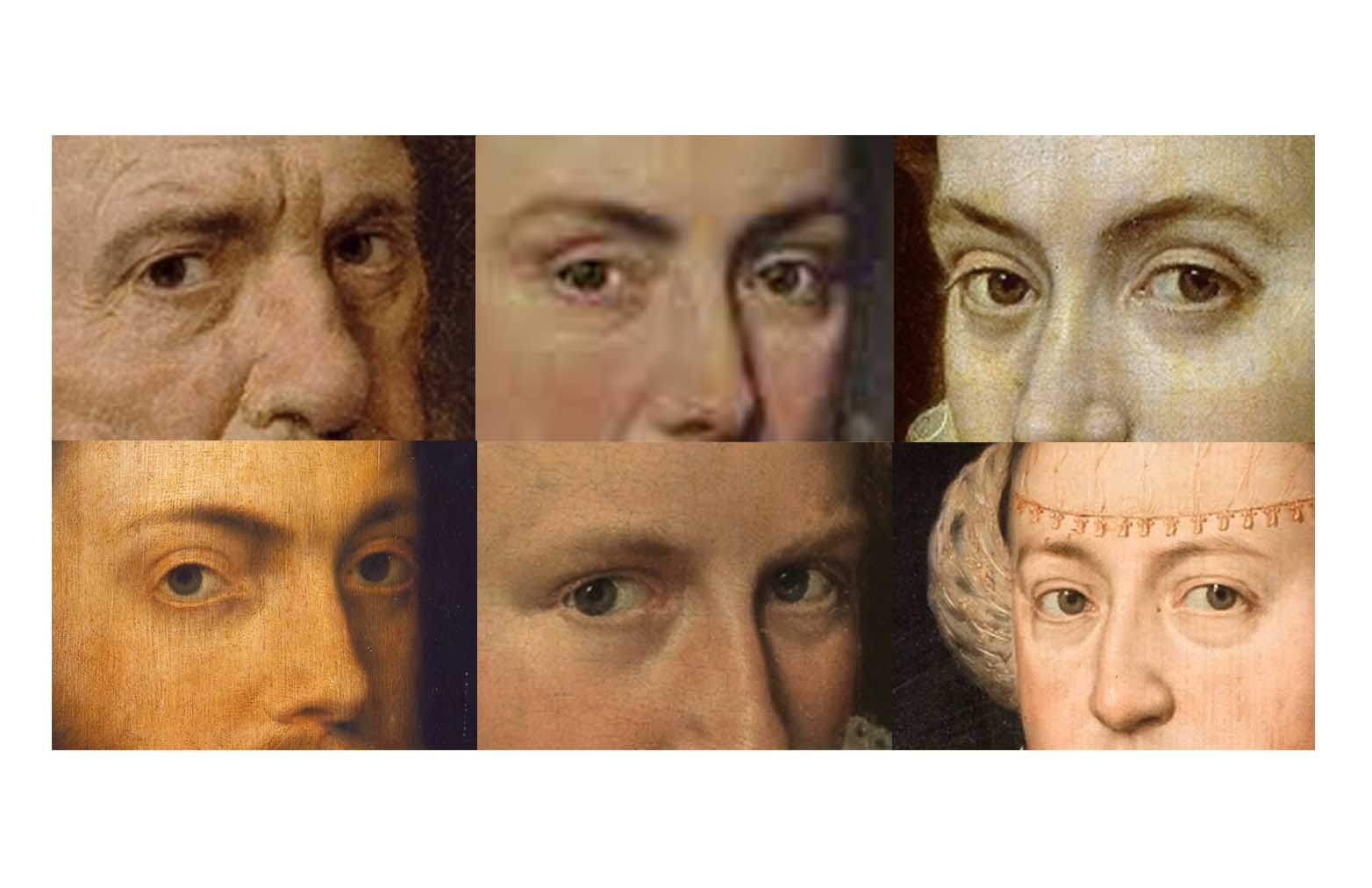
Antonio Moro was known for having his subjects stare at the audience. Here are a collection of some of his eyes hanging in the Prado.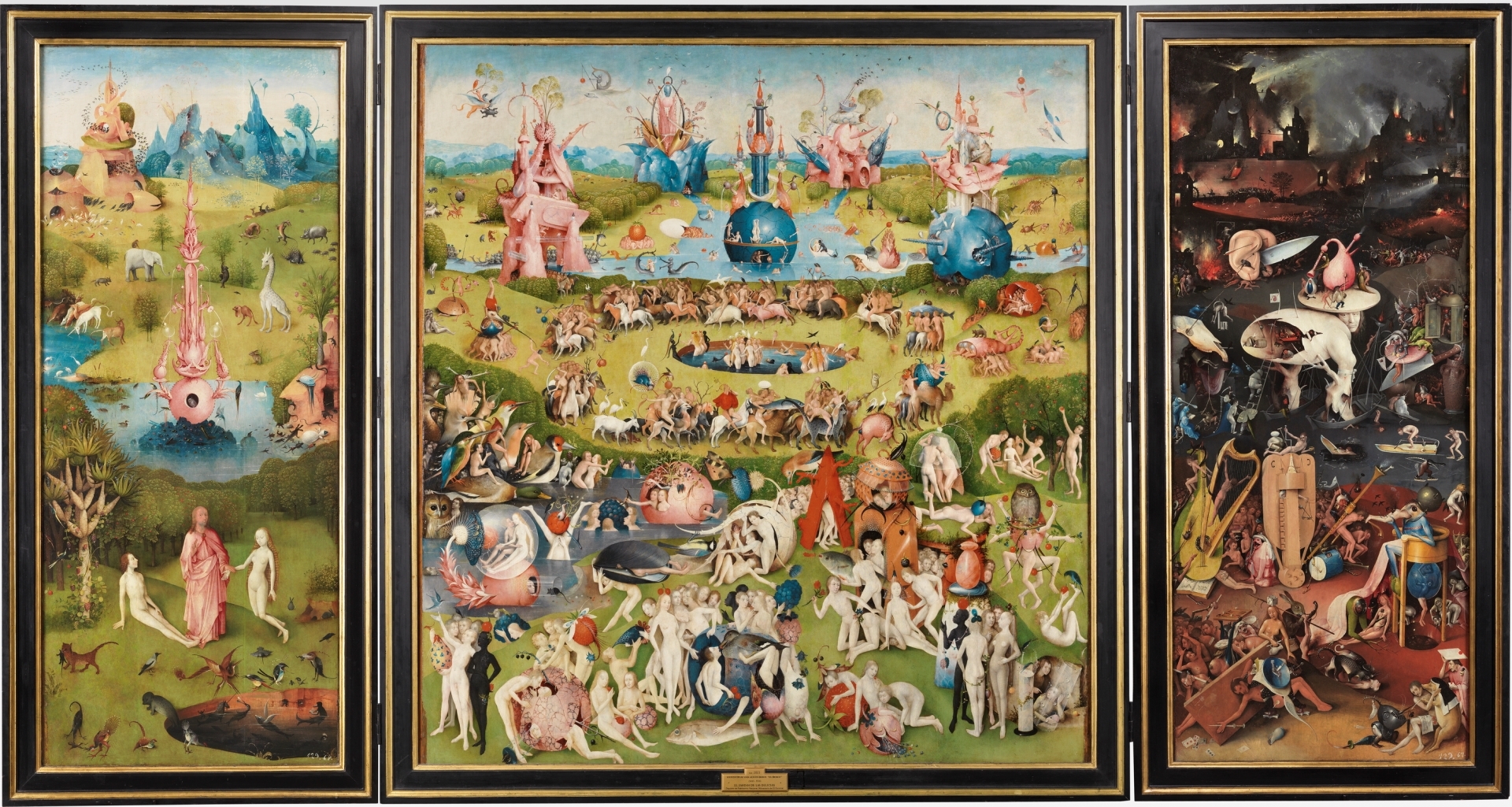
This is the original El Bosco’s “Garden of Earthly Delights”, painted between 1490-1500. This futuristic-looking scene actually explores themes about sin and the descent into hell.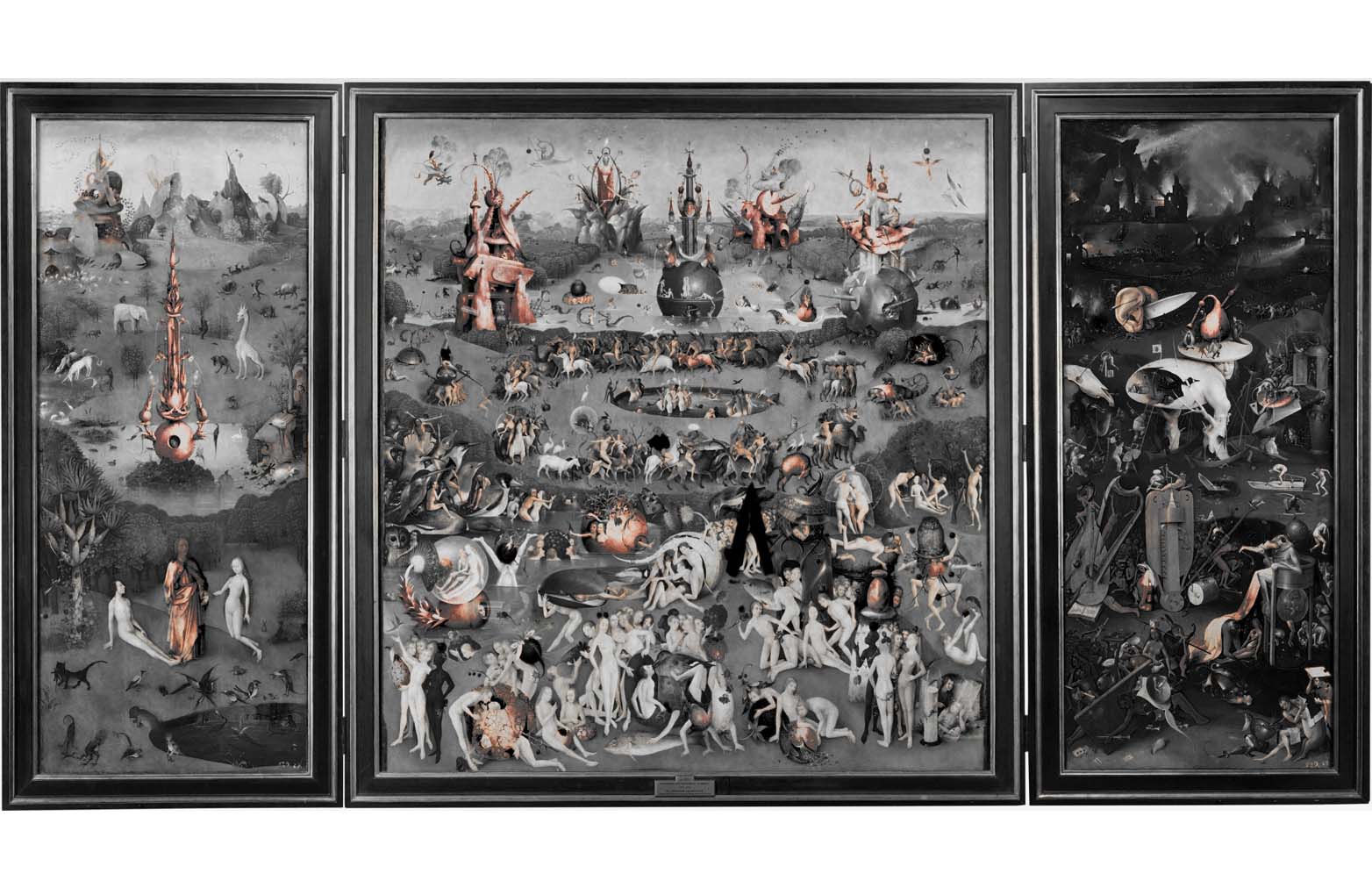
The use of pink is especially interesting in El Bosco’s “Garden of Earthly Delights”, here pulled out and amplified.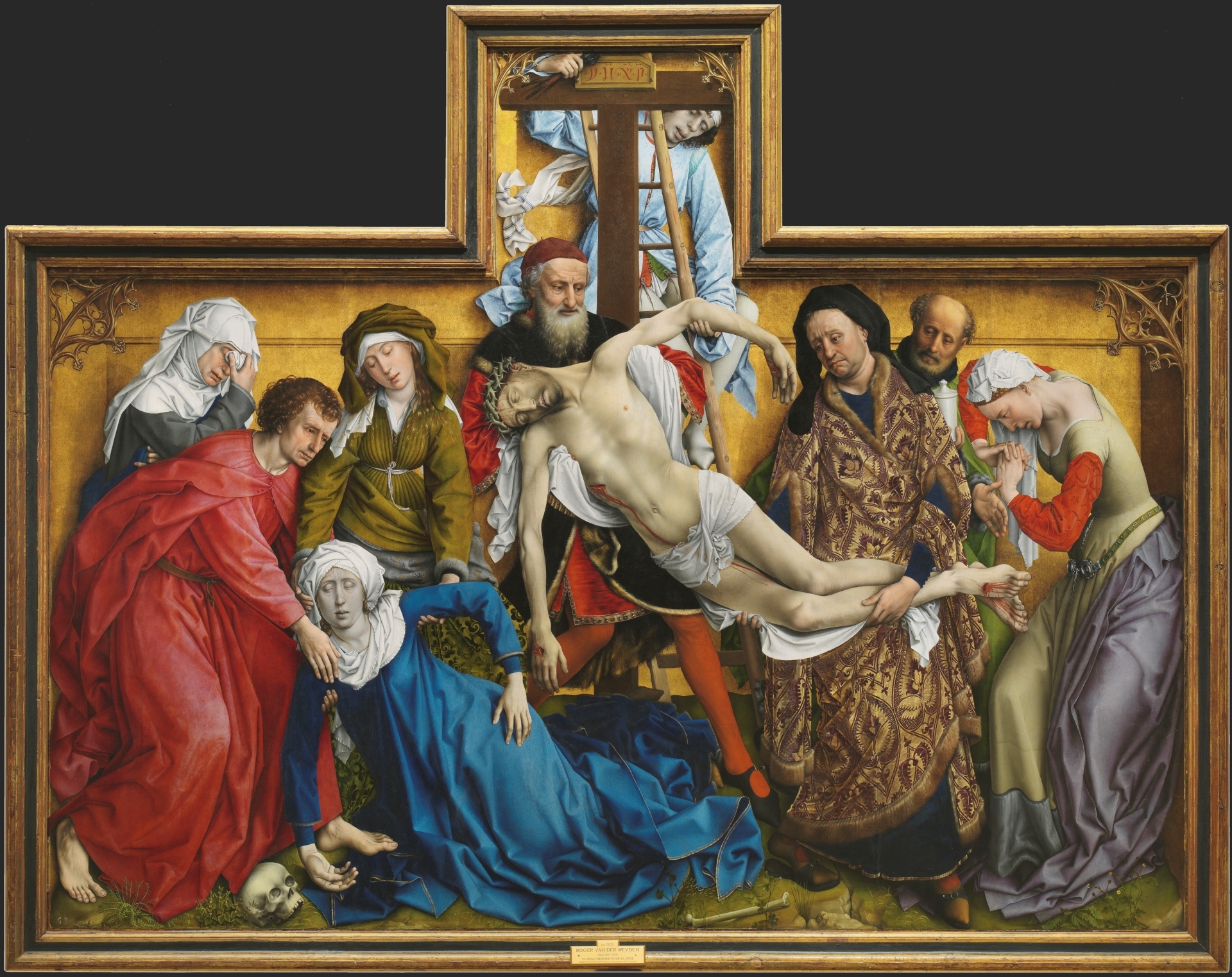
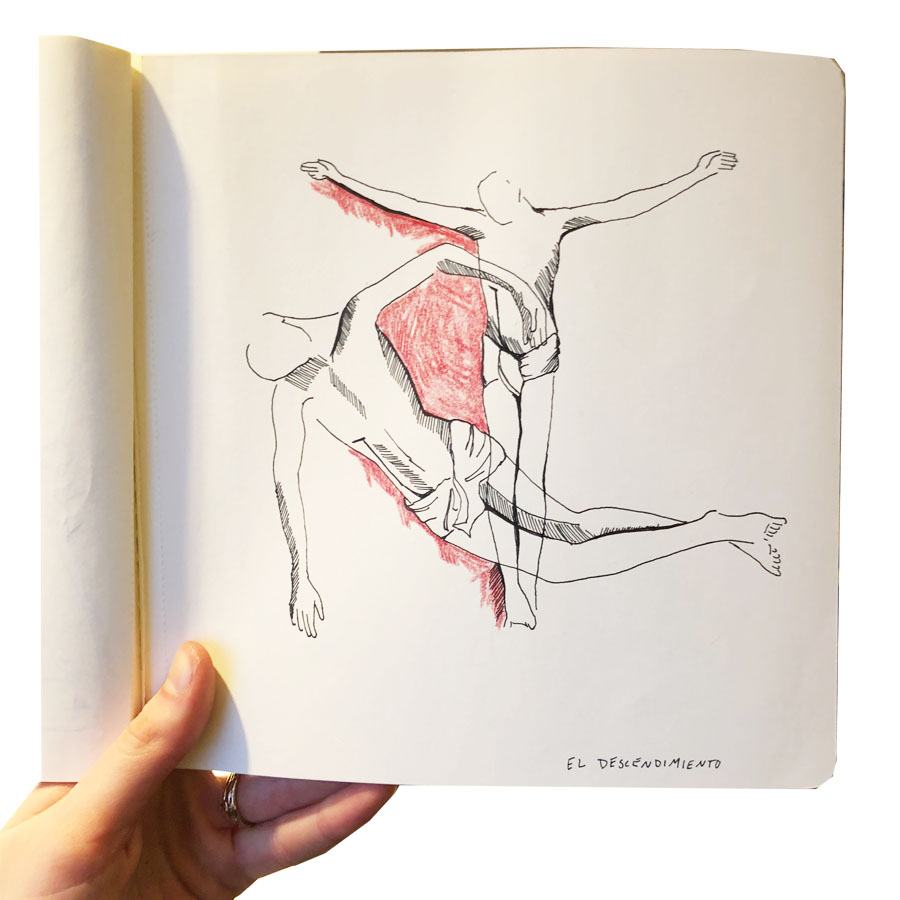
Sketches of paintings by Juan de Flandes and Rogier Van Der Weyden. “The crucifixion” by Juan de Flandes and “The Decent from the Cross” are two of many altarpiece paintings removed from cathedrals or churches for display in the Prado. Both paintings convey deep sadness and suffering at the crucifixion of Christ, evident in the crimson blood, facial expressions, dark clouds, and skulls.
1a. “The Descent from the Cross”, Rogier Van Der Weyden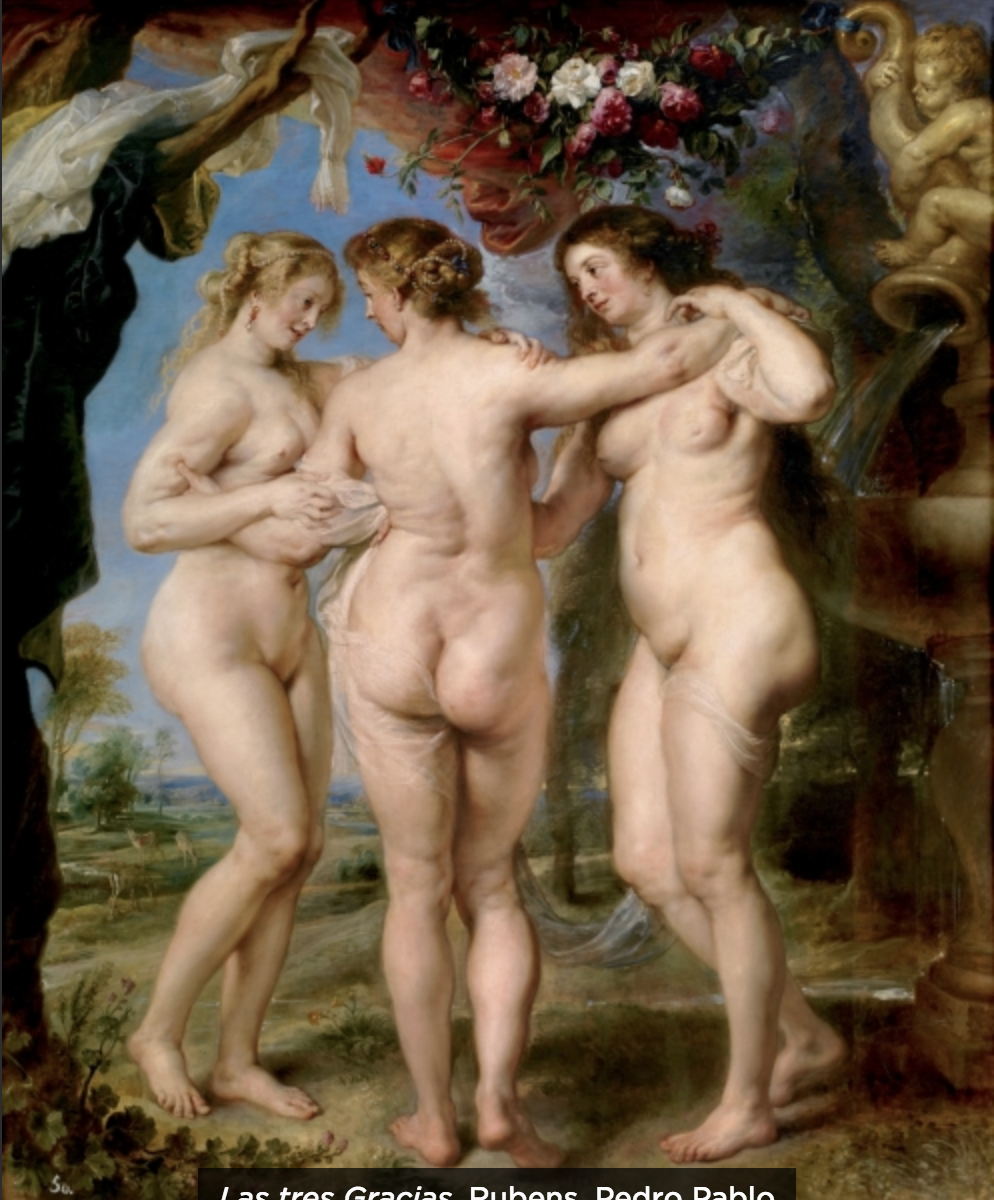
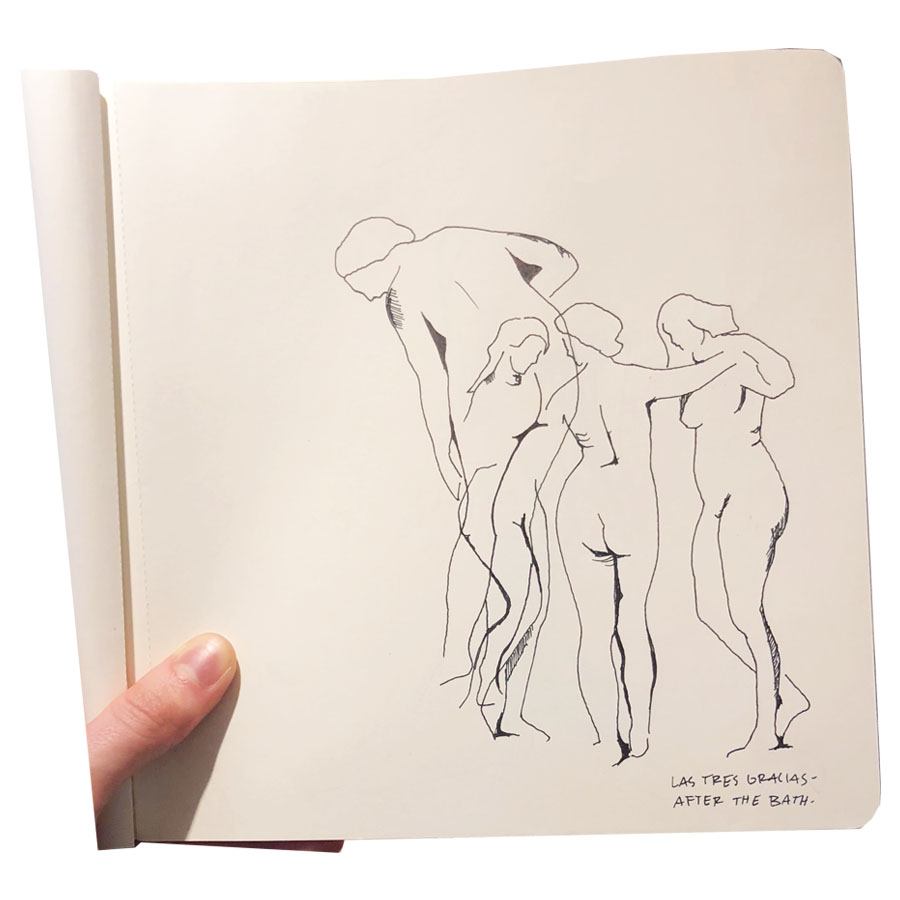
Sketches of paintings by Eduardo Rosales and Peter Paul Rubens, both exploring the female form. “After the Bath”, an intentionally unfinished piece, is considered the most beautiful nude in19th century Spanish painting.
2a. “The Three Graces”, Peter Paul Rubens
 Cities on Water 2019