Authors: Evan Furr and Alexis Kautzman
Photography: Matthew Kunnari and Will Linscott
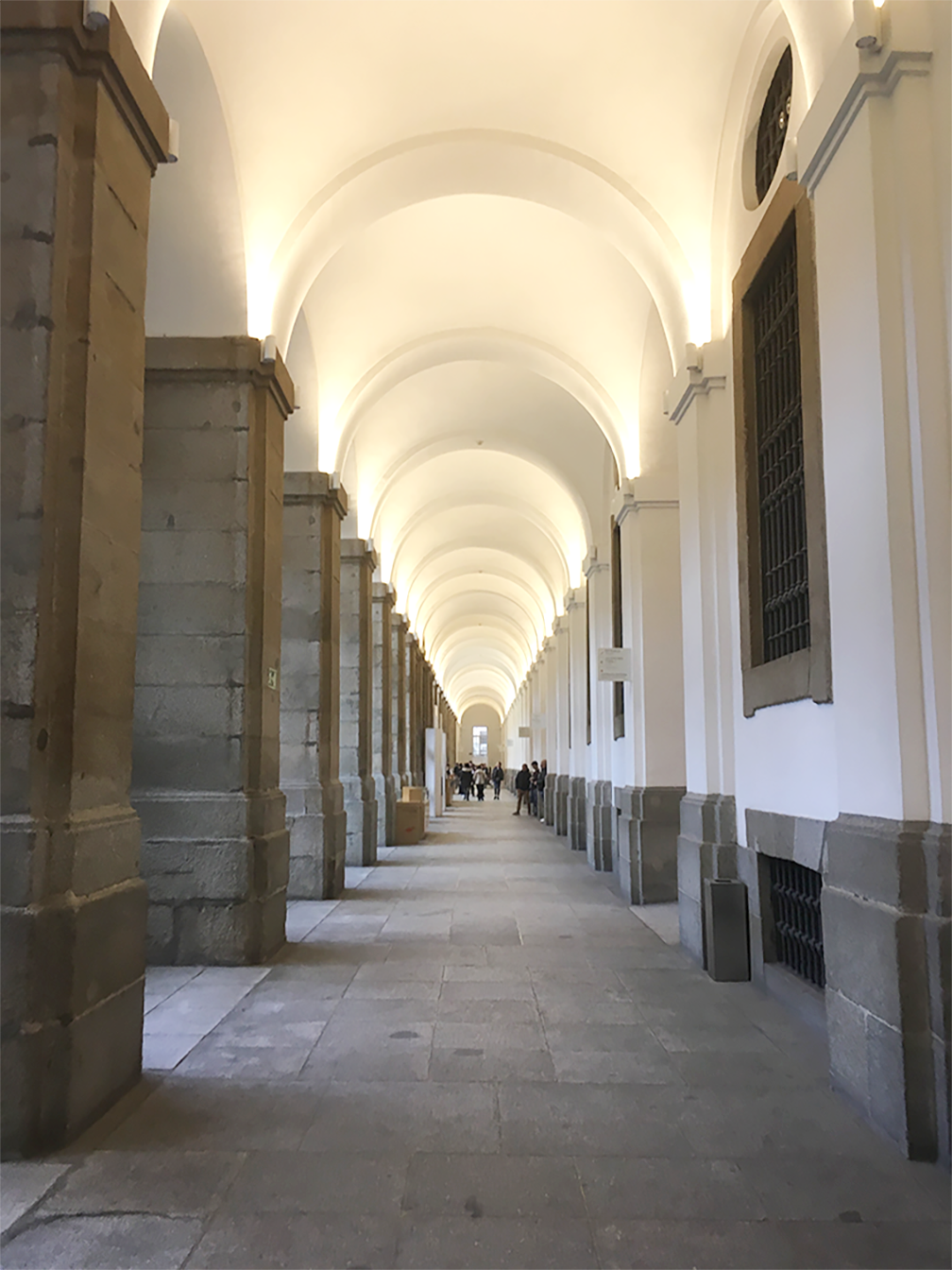
The long corridors of the Sabatini building within the Reina Sofia.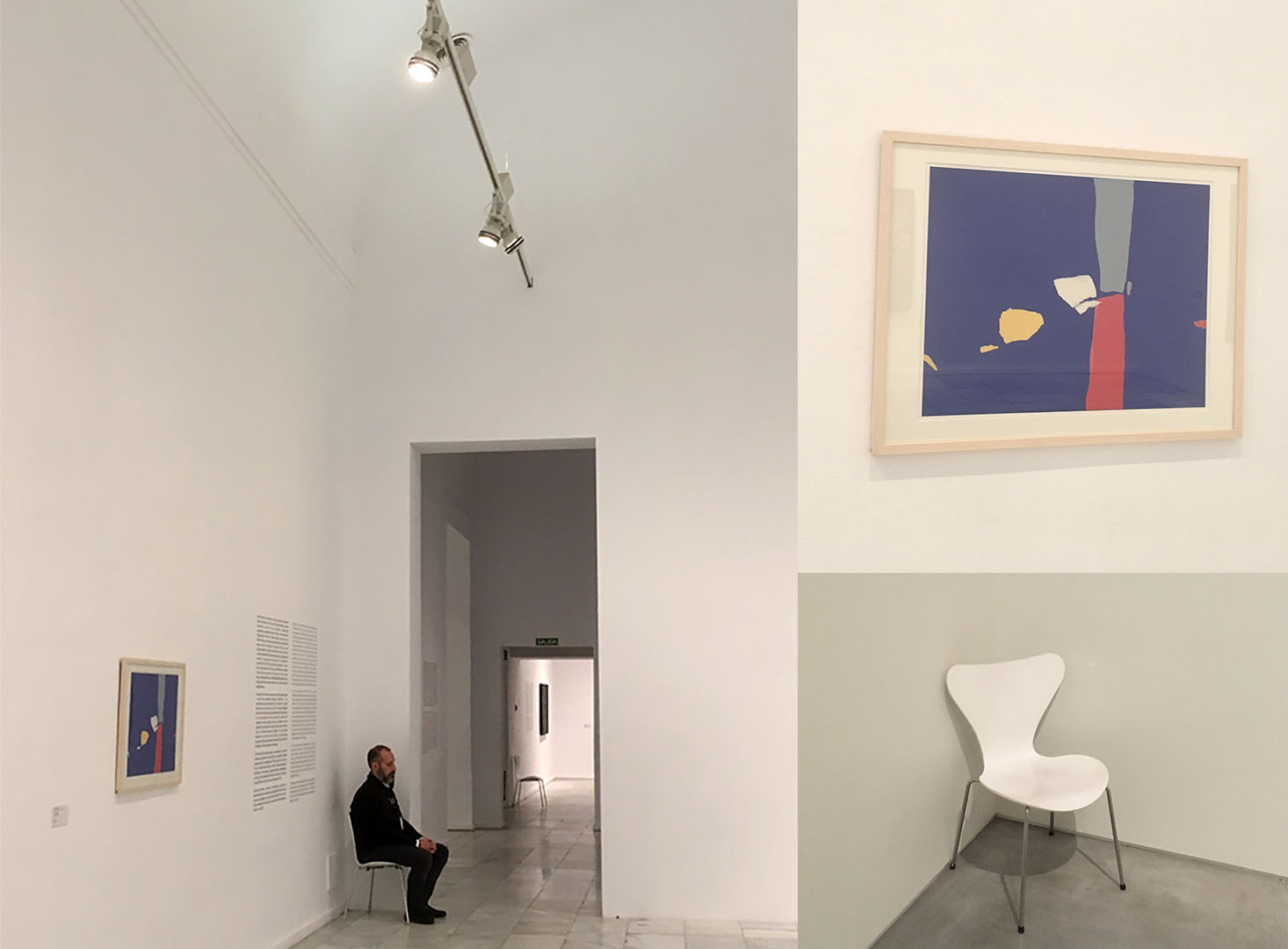
A common site throughout the Reina Sofia: seated security guards. Here the guard is seated near Nicolas de Staël’s Collage on Blue Background.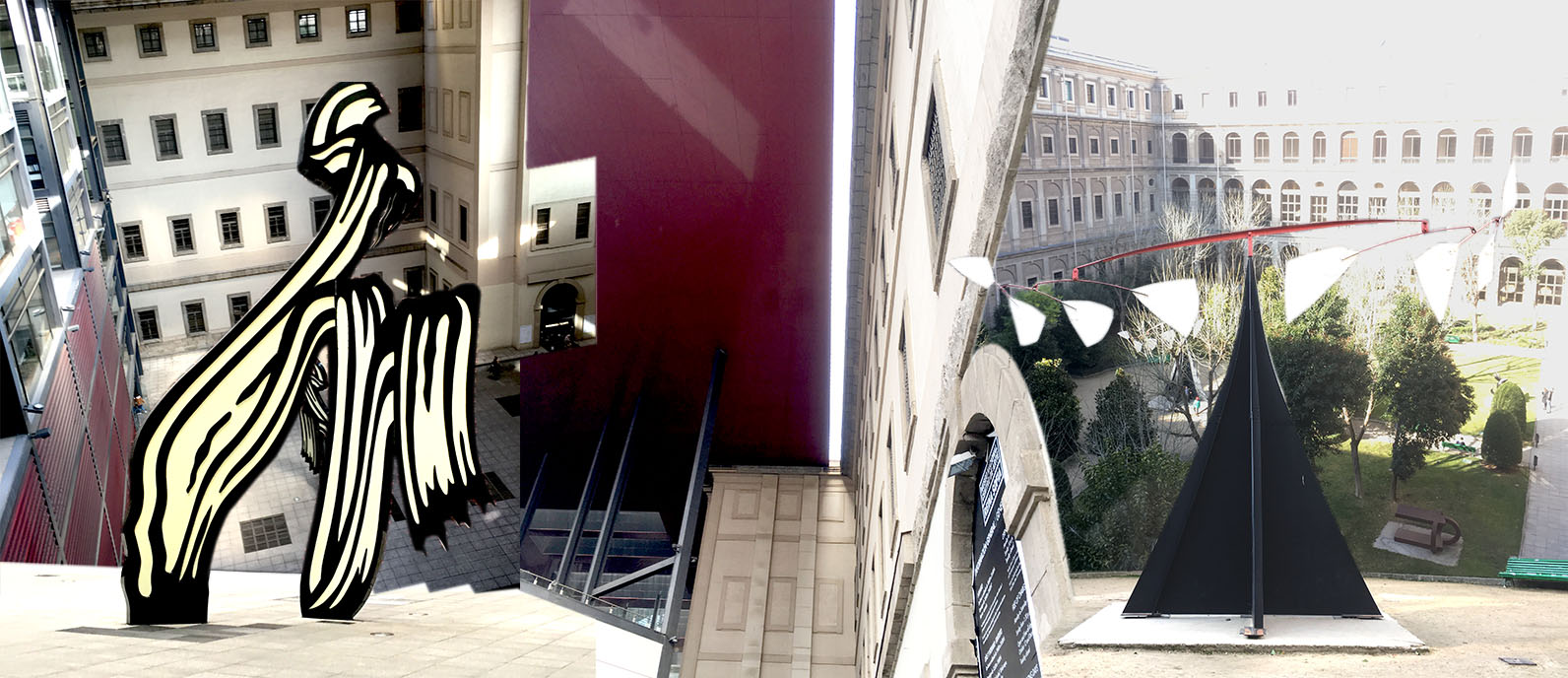
A collage of the two courtyards of the Reina Sofia: the classic building designed by Francisco Sabatini featuring Carmen by Alexander Calder and the contemporary building by Jean Nouvel featuring a Brushstrokes by Roy Lichenstein.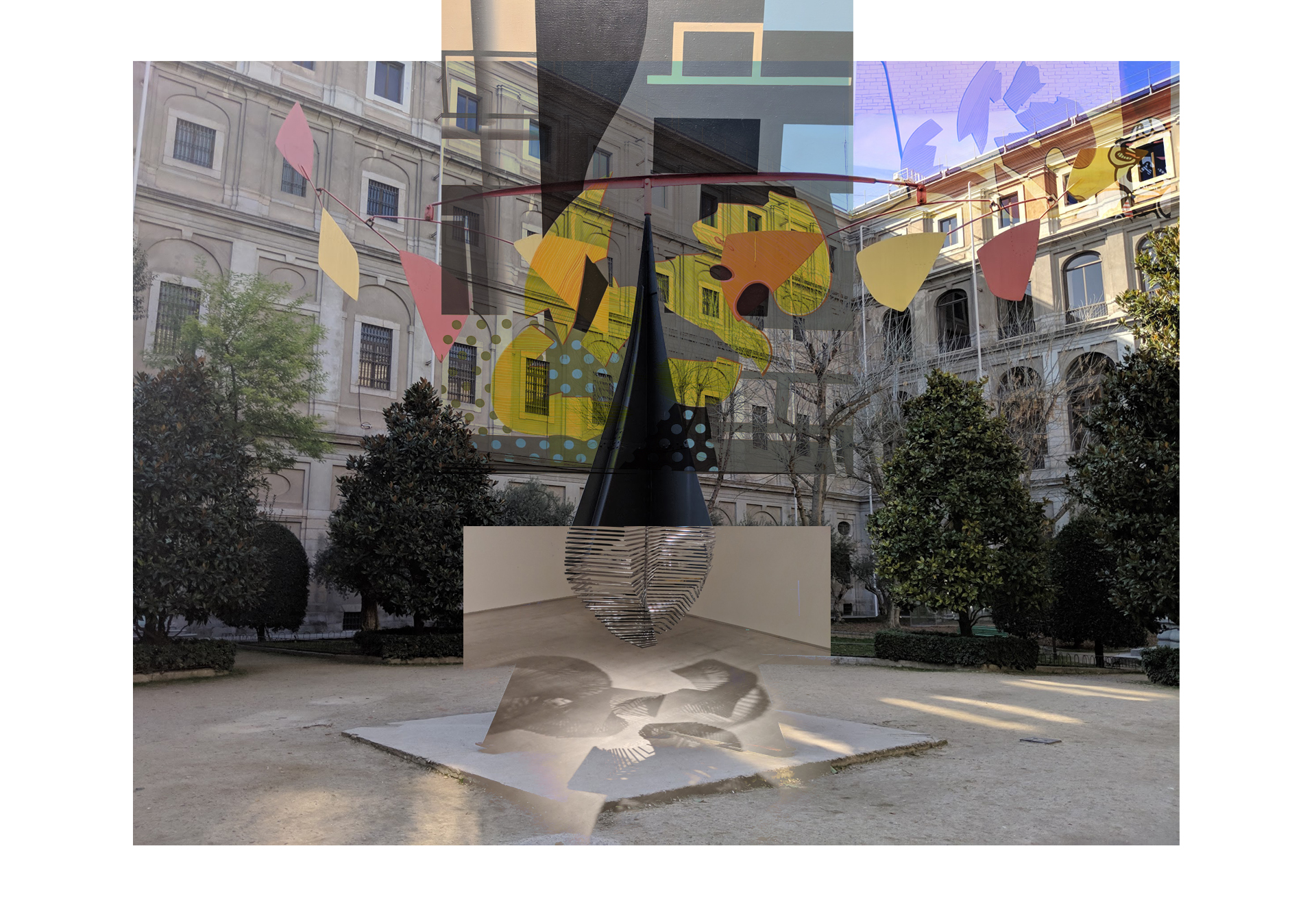
Picture of Courtyard at the Reina Sofia, collaged with photographs of exhibits from the modern and post-modern collections.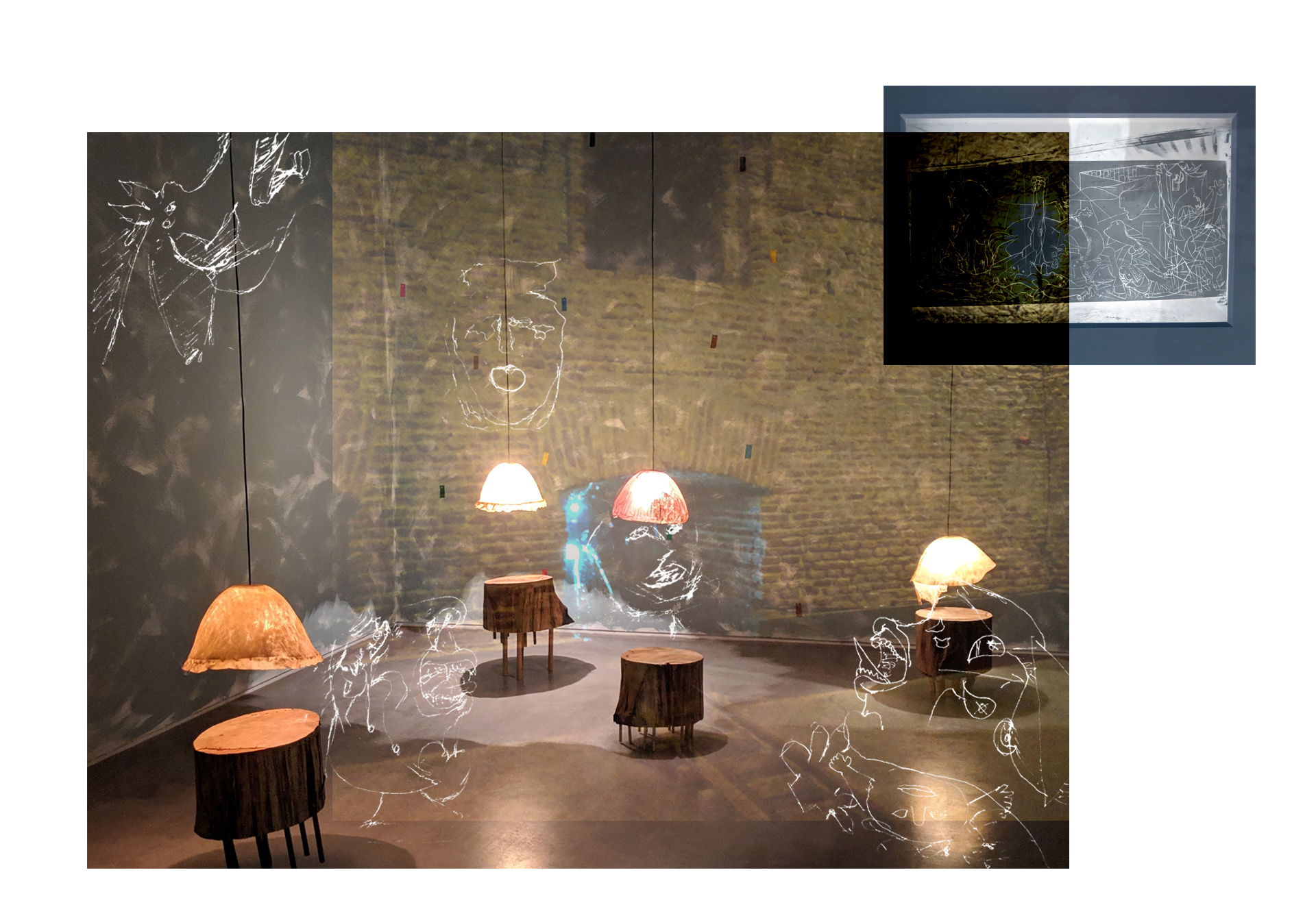
Picture of the museum’s basement as part of the Mápa Teatro exhibition, collaged with sketches of faces from Guernica, a Guernica process sketch by Picasso, and an exhibit in the post-modern collection.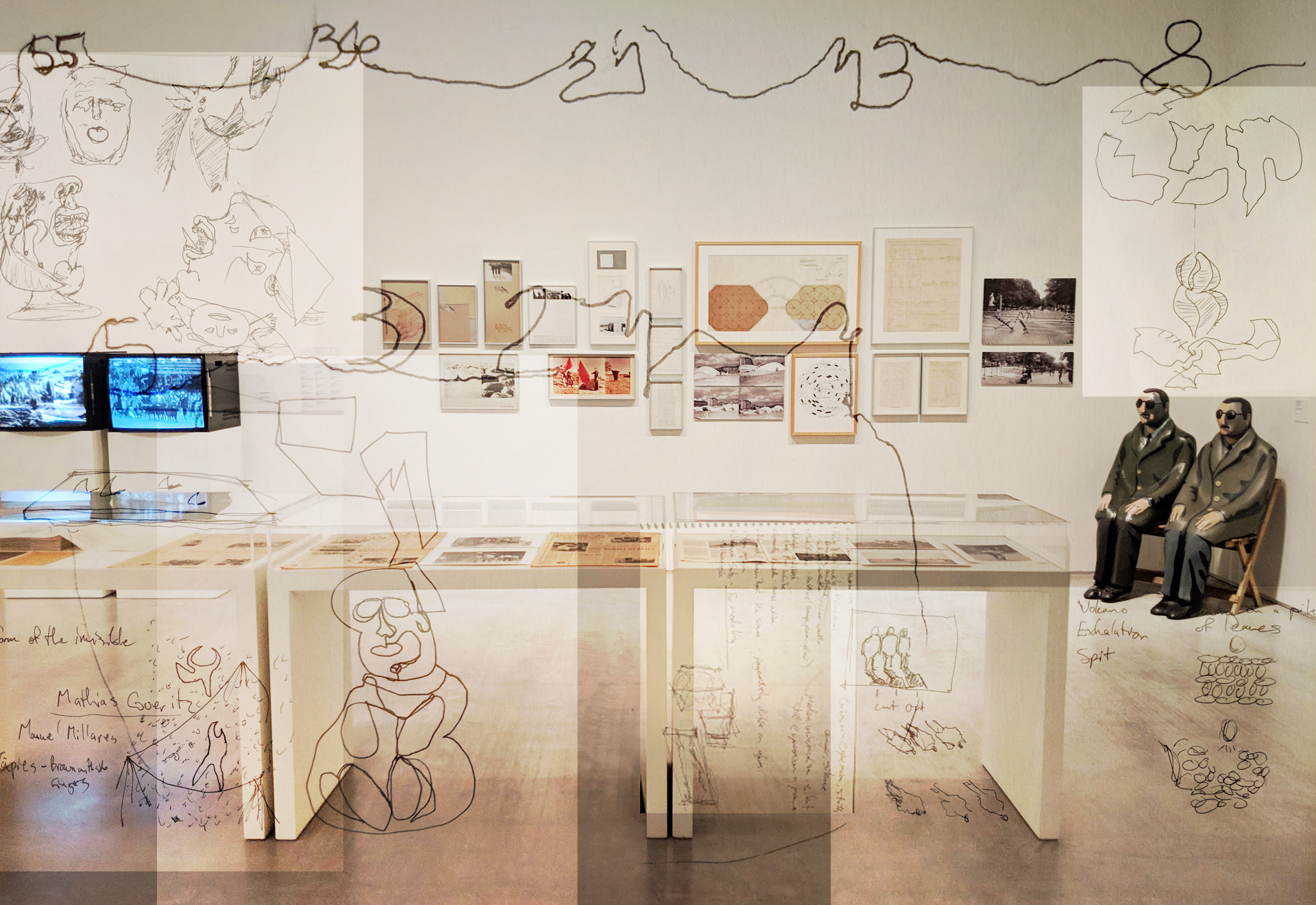
A picture of a room in the new museum, collaged with sketches from various exhibits that stood out stylistic examples of expression and examination.
Reina Sofia is one of Madrid’s famous museums located on the Paseo del Prado in an area known as the Golden Triangle of Art. This area is home to Madrid’s three major cultural museums with Reina Sofia being dedicated to Spanish art in the 20th century featuring two of Spain’s master artists, Pablo Picasso and Salvador Dali. It is one of the worlds largest collections of contemporary and modern art.
The site itself was once home to Madrid’s first General Hospital. As the facilities of the hospital became insufficient for the city a new structure was designed by Jose Hermosilla and Francisco Sabatini. In 1805 the building became operational after only 1/3 of the original design was completed and remained a hospital until 1969. Intensive remodeling began in 1980 to transition the building into an art museum. In 1988 it was officially established as the Museo Nacional Centro de Arte Reina Sofia. In 2005, an 8000 sqm expansion was added to the museum designed by the French architect Jean Nouvel costing 92 million euro.
Exploring the first floor of the museum, visitors take a journey through the historic politics of Spain in the exhibition: The Poetics of Democracy. Here visitors can experience the many faces of the Spanish Transition, a period during which Spain denounced its dictatorship under Franco for democracy. As one walks through the exhibition there is a clear sense of struggle, determination, retaliation and hope. Each room touches on important subjects during the transition, a few including Art and Political Commitment: The Boundaries of Meaning, Youth Transition, Feminist Vindications and ending with 1978. The Referendum. Forms of the Constitution.
The most interesting works are the ones that diverted from conventional classic norms. The works of the American artist Ree Morton, that center around the idea of abstract expressionism, are captivating. Her work titled To Each Concrete Man, 1974 is made up of ordinary everyday objects that command the viewer to enter and explore the forms within the room. This creates a dynamic that the artist describes as “a journey the viewer has to undertake”. The installation is meant to explore the space and relationship between oneself and the form. The softly lit room and minimalist scene demonstrates her intent to illustrate an imagery amongst the objects that alludes to a sense of animism within the room.
The museum houses the work of Salvador Dalí which are intriguing because of his unique ability to convey thoughts and emotions though the use of abstract objects and landscapes. Rich vivid colors are used with deep hues that draw the eye and inspire your thoughts to wander. These added excitement to the day trip because of their famous reputation and their timeless nature alluding to an otherworldly place where the constraints of the mind are set free. The paintings by Dalí and Picasso are some of the most renowned art in the museum. The large mural, Guernica, by Picasso depicts the tragic bombing of the Basque town of Guernica where there was a monumental loss of life and history. This painting brought awareness of the Spanish Civil War to the world stage. As you move through the museum it becomes evident the true breadth of work on display is from classic works to more contemporary art.
The third floor is home to the contemporary artist H. C. Westermann, another American. His work revolves around the ideas of environmental catastrophe and doomsday desolation. There is an air of insecurity, vulnerability and undecidedness that flows through the pieces in the gallery. This made this exhibit stand out decisively from the others.
The range of work in the Reina Sofia is extensive, with something to see for everyone. We spent the morning and the afternoon wandering the museum. There was so much to see in all the galleries inside the old building that wrapped around a large enclosed sun filled courtyard. The old museum is truly a work of art itself with its old Spanish character. Old meets new where two contemporary glass elevators on the exterior of the building assist viewers between floors. Our first museum tour was a great introduction to the history and culture of Spain, not to mention the other works from around the world.
 Cities on Water 2019