Part 1
Today Professor Pablo guided us around Reina Sofia museum and Lavapies neighborhood.
We met at the plaza in front of Reina Sofia museum. The museum is highlighted by its two transparent elevators on both sides of the entrance. Pablo introduced that the museum was used as a hospital and reconstructed by a French architect. The museum includes many art masterpieces from Pablo Picasso and Salvader Dali. The museum has both the history hints and modern appearance.
After we walked across Calle de Atocha road, which is an old street during 16th -17th century, we arrived at a street with some galleries, small stores and café shops.
Along the street, we reached Caixa Forum. This is a cultural center. The most impressive thing about the architecture is the combination of the material we can see from the outside. It’s obvious that the main body of the building is the brownish bricks. On the top of the building, the architect used steel with pattern as a façade. This makes the old building have a modern characteristic and fit into the art district. The place provides various events for people from different age groups to choose to get involved in the art atmosphere.
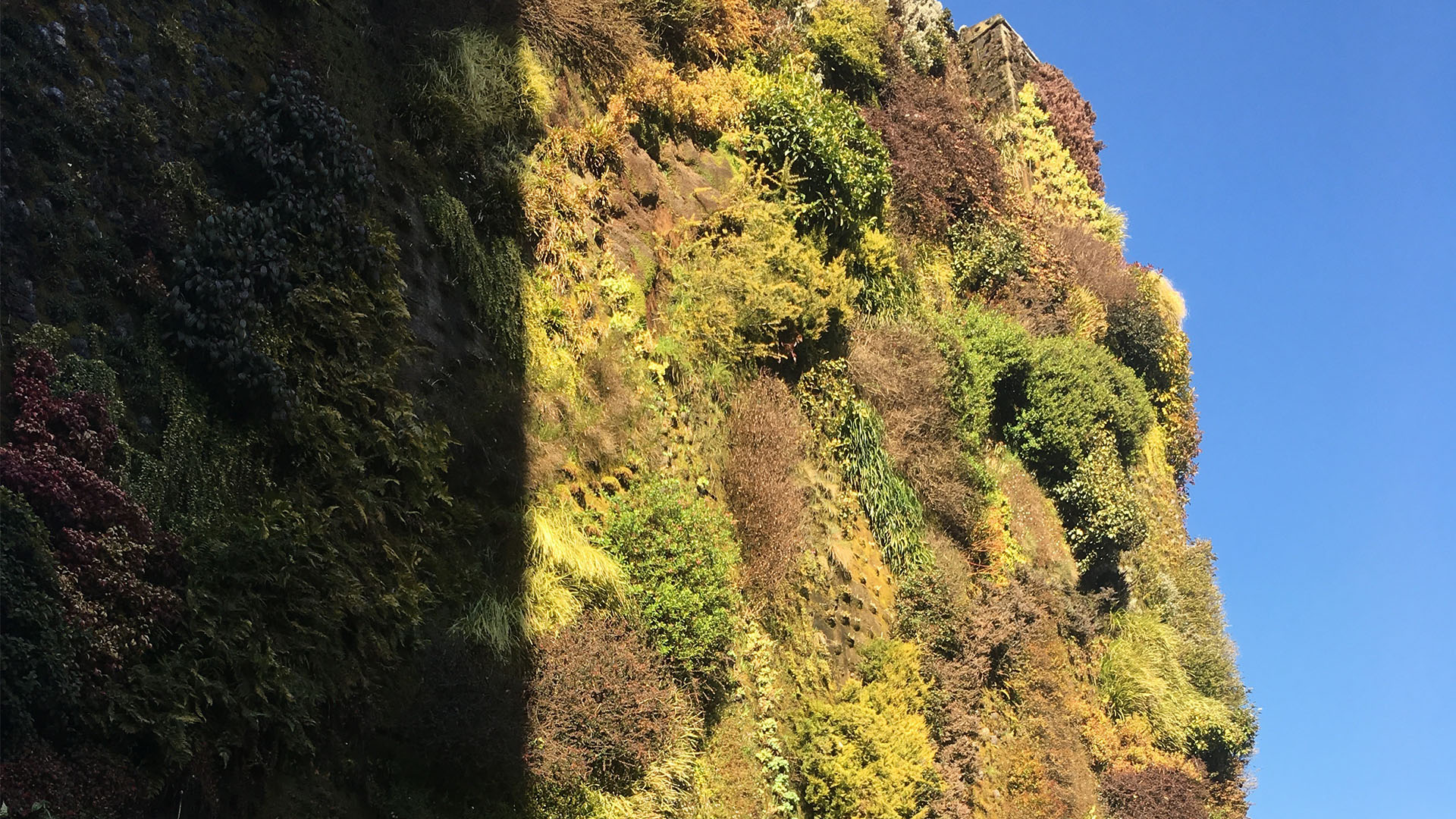
The striking point for me of the first part is how the designer redesign the old architecture. They apply creative ways like adding some modern elements to the buildings or combine the modern material to the old ones. On the one hand, this keeps the history of the construction, on the other hand, this can make the old building fit in with the modern trends.
written by Yungui Cai
Part 2
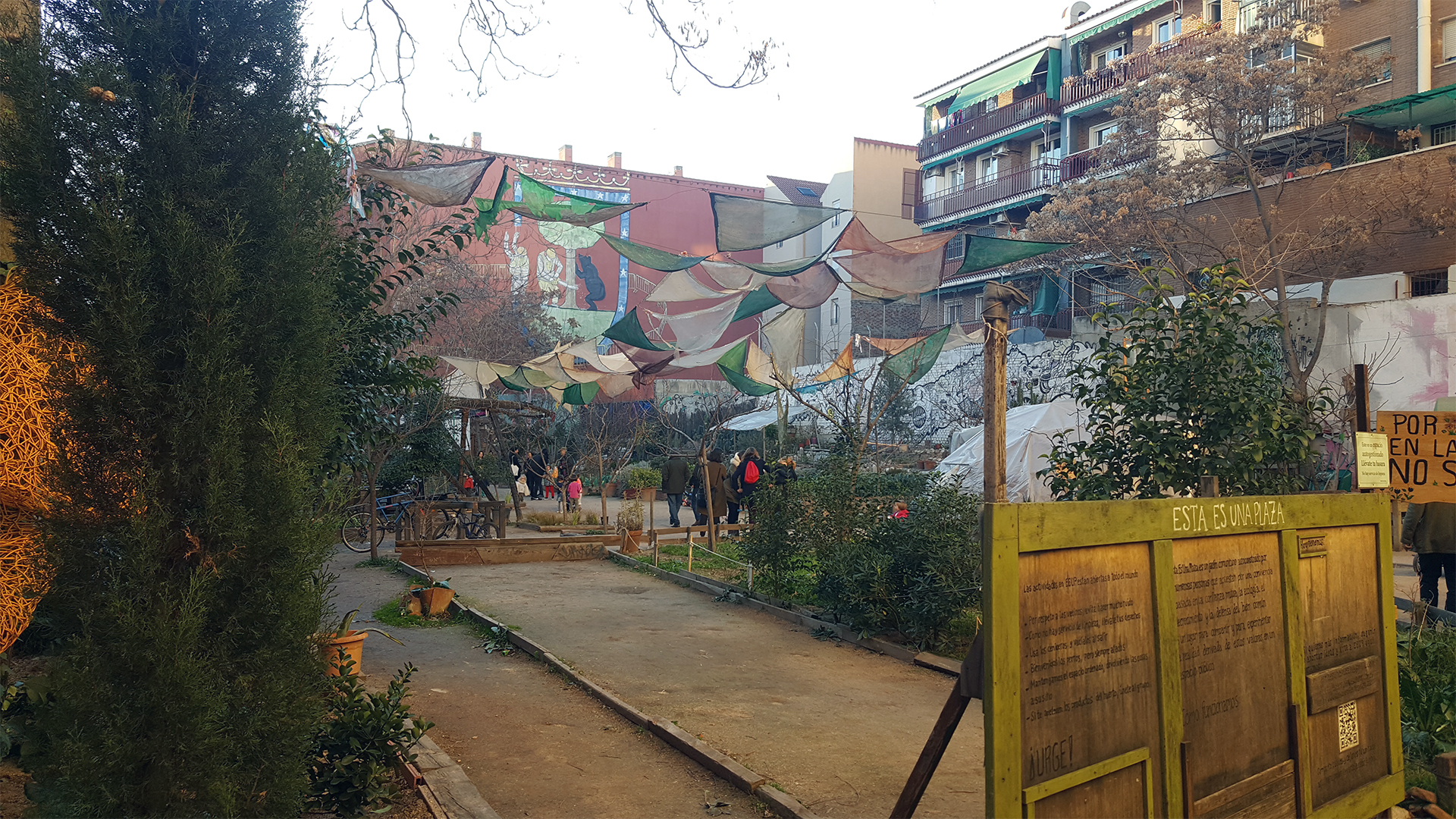
As the sounds of the traffic and congregated people around Atocha station started to fade away, we found ourselves rather suddenly in a small plaza that marked our entry into the neighborhood of Lavapiés. Beyond, we found narrow streets and vibrant plazas full of diverse and unique small shops, utility stores, theatres, galleries, and residences.
Since the sixteenth century, Lavapiés has been characterized as a neighborhood for working people. Historically, many residents moved into the neighborhood from areas across Spain. And as was typical of the Spanish immigrant experience in the city, they quickly found that “everyone [who lives in Madrid] is from Madrid.” For most of these early years, Lavapiés was like many of the other neighborhoods in the city.
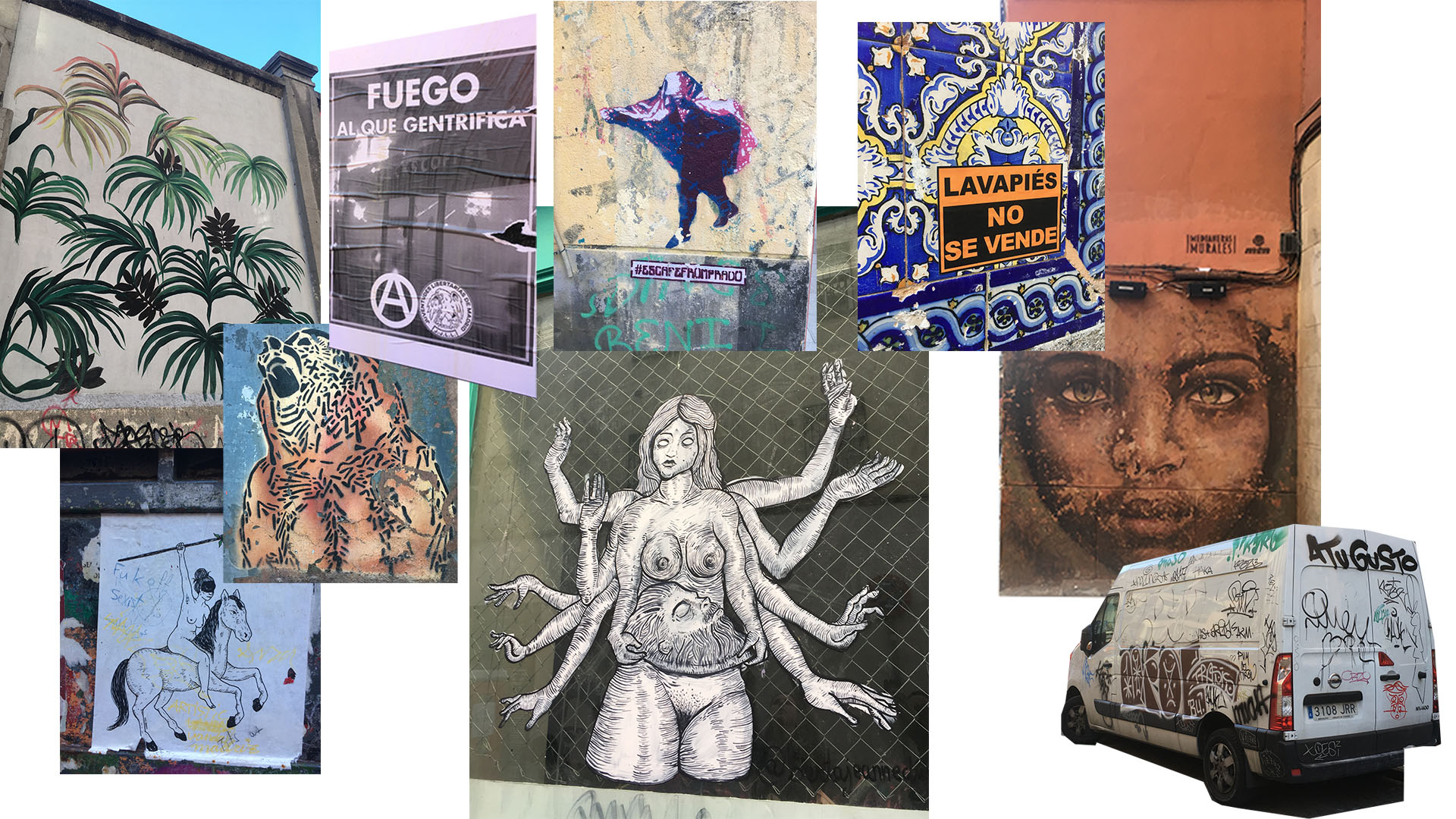
The neighborhood began to differentiate itself following a series of political and social events. First, during the civil war, refugees from the countryside found new homes in Lavapiés. Later, following an influx of drug use and crime in the late 1980s, and the associated lowered cost of local housing, liberal-leaning students began to move into the area. Additionally, in the 1990’s the neighborhood saw an increase in immigration from Latin America, Asia, and Africa. These local changes have all contributed to the neighborhood’s reputation as a place of diverse cultures and political and social activism.
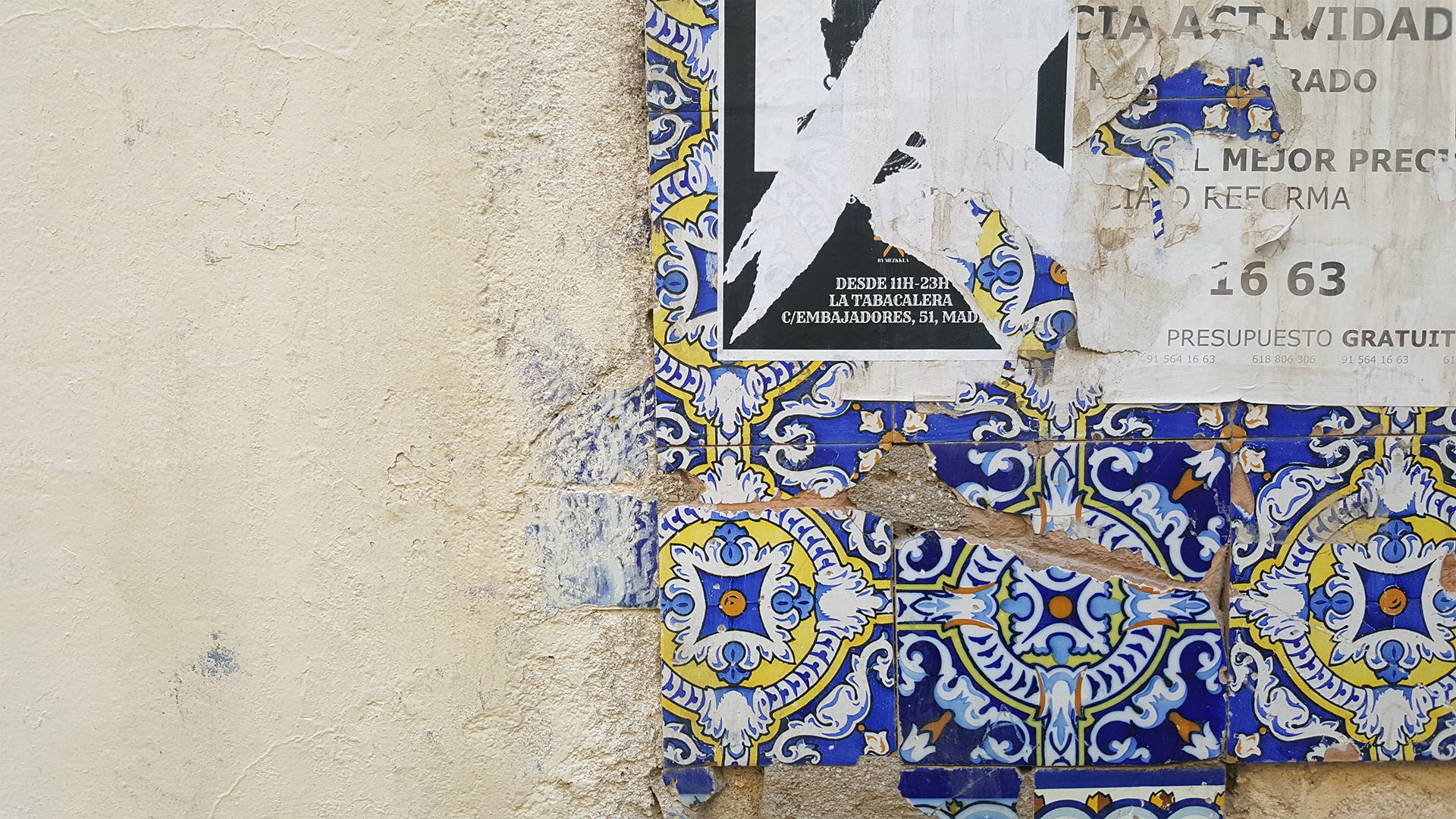
Following the transition to democracy and the later opening of the Reina Sofia in 1986, changes in Lavapiés were accelerated with nuanced results; the popularization and cultivation of the neighborhood’s reputation as a center for alternative theater, art, and activism, and the resulting gentrification of the neighborhood.
As we walked the streets of Lavapiés, we found many art shops, galleries, and art-related bookstores. Pablo commented that many of these are relatively recent additions to the neighborhood, likely flourishing in an artistic environment made possible by the nearby Reina Sofia. We saw and explored historic theaters such as the Sala Mirador and the informal performance halls hidden in the depths of traditionally built houses.
For me, the most interesting theater/art space was the Teatro Valle – Inclán, because it seems to sit at the crossroads of the neighborhood’s future… somewhere between maintaining its identity as an artistic and affordable niche and falling victim to the gentrification that follows when too many begin to recognize this value. The Teatro Valle is part of the Centro Dramático Nacional, a government sponsored art and culture initiative. What was once “alternative,” is now sponsored… and popular. And others are taking notice. Directly across the street, the Ibis Budget, a large and modern hotel, has been built. For some, this is likely a welcome economic addition to the neighborhood; for others, the shadow it casts is a harbinger for things darker to come.
written by Andrew Beck
images by Dakota Carlson and Nikolai Fjelsted de Santiago
 Cities on Water 2019